You match with someone who looks promising, trade a few strong messages, then the conversation dies for no clear reason. A week later, you are back in the same loop with a different face, a different bio, and the same flat outcome. If you keep asking why do dating apps feel broken, it is because most of them are not failing at their actual job. They are succeeding at the one they were built for.
That distinction matters. Most dating apps present themselves as tools for connection, but their mechanics are closer to entertainment platforms with a romantic theme. They reward activity, not clarity. They maximize browsing, not fit. And when a system is designed to keep you engaged, it will naturally resist the thing many serious users actually want - a good match that takes them off the app.
This is why smart, self-aware, relationship-minded people often feel strangely defeated by dating apps. The issue is not that they are bad at dating. The issue is that they are using systems built around the wrong incentives.
Why do dating apps feel broken to serious daters?
Because serious dating is an outcome problem, while most apps treat it like a volume game.
If your goal is to find someone genuinely compatible, random exposure to hundreds of people is not automatically helpful. More options can create more noise, more second-guessing, and more false positives. The app calls that abundance. Your nervous system calls it exhaustion.
Swipe-based design also overweights the fastest, shallowest signals. Photos, one-line prompts, and a few preferences become proxies for long-term potential. That can work for attraction, but attraction is not the same as alignment. Two people can look great on paper and still be incompatible in pace, communication style, emotional availability, relationship goals, or life-stage timing.
The result is a system that creates motion without traction. You feel busy. You may even feel wanted. But the process does not reliably move you closer to a durable relationship.
The business model is the problem
Most users assume the apps are broken because matching is hard. Matching is hard, but that is only half the story. The deeper issue is that the platforms are often optimized around retention.
A company that makes money when you keep returning is structurally different from a company that wins when you leave with the right person. That tension shapes the product in ways users can feel, even if they cannot always name them.
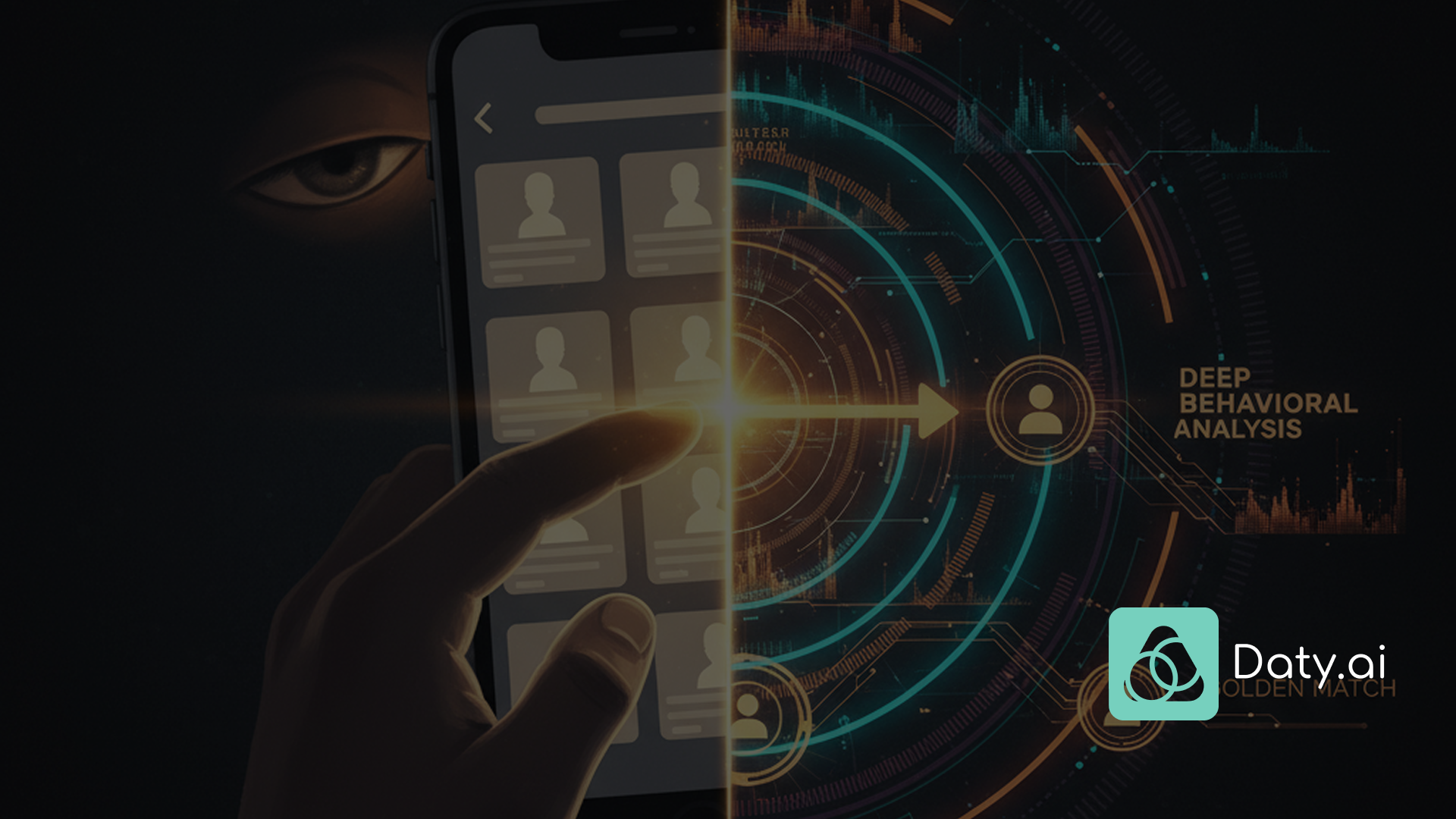
Think about the incentives. Endless swiping creates more sessions. Uncertainty keeps attention high. Intermittent rewards - a match here, a good message there, a date every few weeks - are powerful because they are unpredictable. The same psychology that drives habit-forming consumer apps can make dating platforms feel compulsive, frustrating, and oddly hard to quit.
That does not mean every dating app team has bad intentions. It means incentives leak into design. If the core metric is time spent, then the product will favor features that increase time spent. For someone looking for a real partner, that can feel less like support and more like a maze.
Matching is often too thin to be useful
A match usually means two people liked each other’s profiles. That is not nothing, but it is a very weak signal.
It says little about whether your lifestyles fit, whether your conflict patterns will clash, whether your communication energy is compatible, or whether both of you are actually available for the same kind of relationship right now. It also says nothing about whether the conversation will be easy, whether attraction will deepen, or whether your values line up where it counts.
When the starting filter is thin, the burden shifts to the user. You have to do the detective work through texting, scheduling, first dates, and repeated emotional recalibration. That is why dating apps can feel like a second job. The app handles discovery. You absorb the cost of sorting.
Timing gets ignored, even though it changes everything
One of the biggest blind spots in modern dating is timing.
Two people can be highly compatible and still fail because one is healing from a breakup, overloaded at work, unsure about children, planning a move, or emotionally unavailable in ways they do not fully understand yet. Traditional dating apps treat all active users as equally date-ready. Real life does not work that way.
For intentional daters, timing is not a side variable. It is core compatibility. Relationship potential depends not just on who fits, but when the fit is strongest. Ignore timing, and you end up blaming chemistry, effort, or yourself for outcomes that were structurally misaligned from the start.
Why the experience becomes emotionally draining
The fatigue is not just from bad dates. It comes from repeated ambiguity.
You are asked to make fast decisions with low-quality information. You are expected to stay open, optimistic, responsive, and attractive while managing ghosting, mixed signals, scheduling friction, and constant comparison. The apps normalize all of this as part of the process, but that does not make it healthy.
There is also a quiet identity cost. When you spend enough time in systems that reduce people to profiles, you can start relating to yourself that way too. You tweak photos, sharpen prompts, test different openings, and wonder whether your problem is branding rather than fit. For many users, the deeper frustration is not just romantic disappointment. It is the feeling that dating has become performative.
That is a real loss. Especially for people who want depth, the process begins to reward marketability over honesty. The question shifts from Who actually fits me? to How do I compete better in this environment? Those are not the same question, and they lead to very different outcomes.
What a better system would optimize for
If we were designing for relationships instead of engagement, the product logic would change immediately.
First, the system would care more about signal quality than option volume. It would not flood users with endless profiles. It would narrow intelligently, using richer indicators than surface attraction alone.
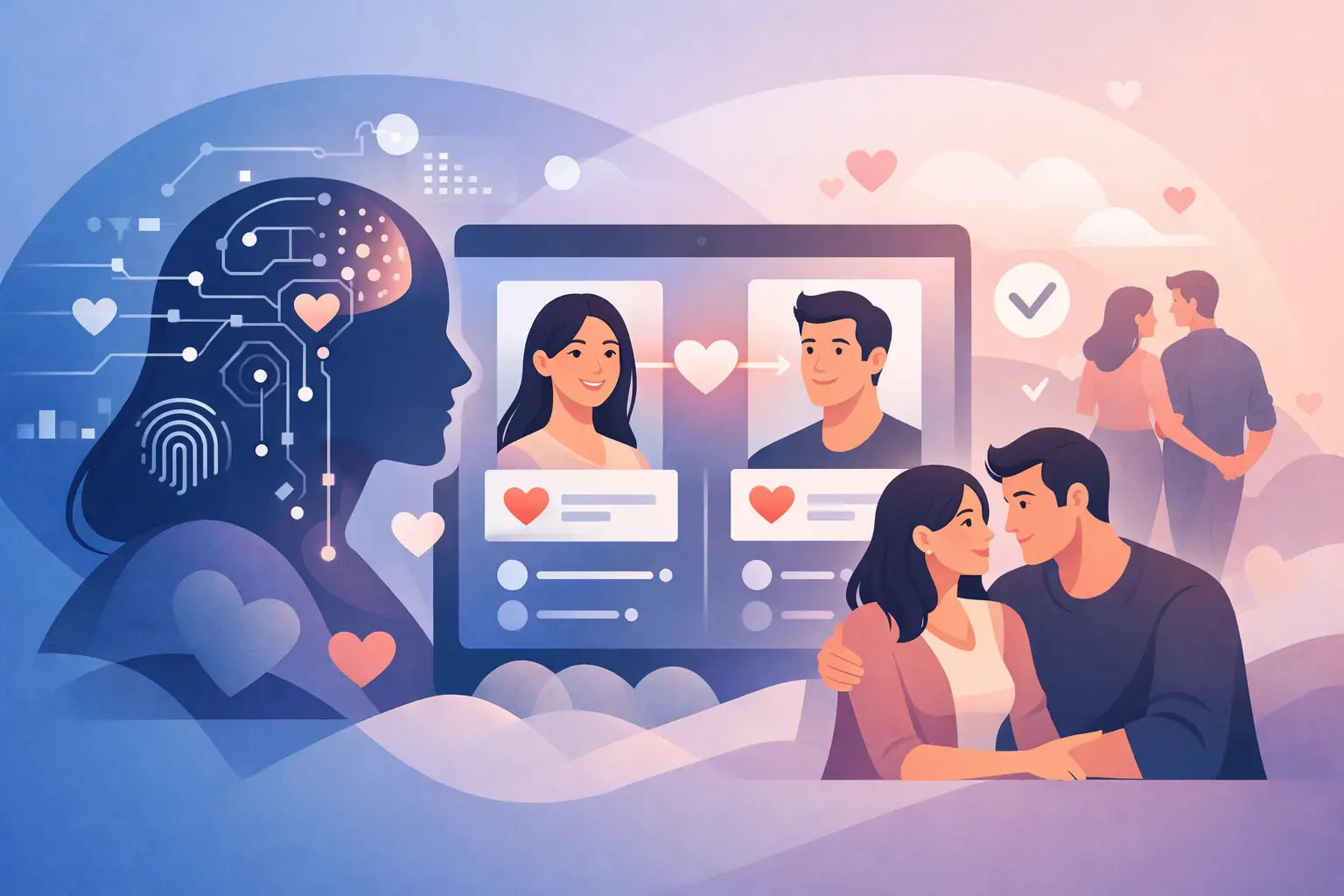
Second, it would treat compatibility as multi-layered. Not just shared interests, but personality patterns, emotional tendencies, life goals, pacing, communication habits, and behavioral consistency. A useful match is not one that looks plausible. It is one that can be explained.
Third, it would account for timing. Someone might be a strong long-term fit in principle but a poor fit right now. That distinction saves people from wasted months and false hope.
Fourth, it would reduce user guesswork. Instead of asking people to decode every interaction from scratch, it would help them understand why a match makes sense, where friction might appear, and what kind of dynamic is likely.
This is where dating stops being a discovery game and starts becoming an intelligence problem. That shift is overdue.
Why do dating apps feel broken when the technology is so advanced?
Because the technology has mostly been used to improve engagement mechanics, not relationship outcomes.
We live in an era where platforms can predict what you will click, watch, buy, and linger on. Yet in dating, many systems still rely on primitive sorting plus user labor. The intelligence layer often serves personalization at the level of content consumption, not compatibility reasoning.
That is a category failure. If the product knows enough to keep you swiping, it should also be able to help you stop wasting time on the wrong people. If it cannot explain why two people fit beyond vague similarity, the system is underpowered for the job users actually need done.
A smarter model would not just observe preferences. It would interpret patterns. It would separate attraction from alignment, activity from readiness, and match probability from relationship potential. That is a much harder problem than serving up another attractive profile, but it is the one worth solving.
Daty.ai is part of a growing push to rebuild dating around that premise: fewer but better matches, grounded in explainable compatibility instead of addictive browsing loops.
The real issue is not you
A lot of capable, thoughtful people internalize app failure as personal failure. They think they are too picky, too busy, too old, too guarded, or somehow bad at modern dating. Sometimes individual patterns do matter. But often the larger issue is that the system keeps forcing shallow selection, weak filtering, and high emotional labor onto people who want something serious.
You are not asking for too much by wanting a process that respects your time, your intent, and your emotional bandwidth. That should be the baseline.
The future of dating will not belong to platforms that offer more profiles, more swipes, or more noise dressed up as possibility. It will belong to systems that can answer three questions clearly: who fits, when they fit, and why. Once dating starts solving for those questions, it stops feeling broken and starts feeling useful.