If dating keeps producing the same disappointment in different packaging, the problem usually is not effort. It is signal quality. You can have good intentions, strong communication, and real relationship goals and still keep choosing people who were never a fit. That is why self discovery for dating success is not soft advice. It is decision infrastructure.
Most dating platforms train you to sort by chemistry first and make sense of compatibility later. That order is backward. Attraction matters, but attraction without self-knowledge turns dating into pattern repetition. You call it a spark, then six weeks later realize you were reacting to familiarity, fantasy, or urgency. Again.
Serious dating gets better when you stop treating your preferences as random and start treating them as data. Not sterile data. Human data. The kind that explains why one person feels exciting but destabilizing, while another feels calm, aligned, and strangely easy to talk to.
Why self discovery for dating success matters more than chemistry
Chemistry is real, but it is also noisy. It can reflect genuine alignment, or it can reflect old attachment dynamics, ego validation, timing pressure, or simple novelty. If you do not know what drives your choices, you cannot tell the difference.
This is where a lot of intentional daters get stuck. They know what they want in theory - a serious relationship, emotional maturity, consistency, shared values. But in practice, they keep responding to a completely different set of cues. Someone is charismatic, unavailable, impressive, intense, or hard to read, and the nervous system mistakes that for depth.
Self-discovery corrects for that mismatch. It helps you separate three things that often get blended together: what attracts you immediately, what sustains you long term, and what actually harms you. Those are not the same category.
The point is not to become hyper-analytical and date like a spreadsheet. The point is to stop outsourcing your romantic judgment to impulse. When you understand your patterns, your standards become more than slogans. They become filters.
The kind of self-knowledge that changes your dating outcomes
A lot of dating advice talks about knowing your worth. Fine. But worth alone does not explain behavior. Plenty of smart, self-respecting people still choose misaligned relationships because they have not mapped how they operate under attraction, uncertainty, and hope.
Useful self-discovery goes deeper than a list of deal breakers. It asks better questions.
What kind of attention pulls you in fastest, and why? Do you confuse emotional intensity with intimacy? Do you open up slowly and need steadiness, or do you bond fast and later feel trapped? Are you actually seeking partnership, or are you still unconsciously optimizing for validation, rescue, or momentum?
Then there is lifestyle compatibility, which gets minimized until it becomes the reason a promising relationship collapses. Your energy style, work rhythm, social needs, conflict patterns, family goals, and life-stage timing are not side details. They shape how love functions day to day.
This is where modern dating has failed people. It has overemphasized profile aesthetics and underweighted behavioral fit. It asks who looks interesting, not who operates in a way that works with you.
What to examine before your next date
You do not need a six-month solo retreat to know yourself better. But you do need honesty. Start with your last three dating disappointments. Not the stories you told friends. The mechanics.
Look for repetition. Did you ignore inconsistency because the connection felt rare? Did you project long-term potential onto someone who barely demonstrated short-term effort? Did you choose based on attraction and intelligence while sidelining emotional availability? Most people do not have random bad luck. They have recurring selection logic.
Next, examine your non-negotiables and your actual behavior side by side. If you say you want consistency but keep rewarding ambiguity, your real filter is not consistency. If you say communication matters but keep pursuing people who create confusion, your attraction system is overriding your relationship goals.
Also look at pacing. Fast starts are not always bad, and slow burns are not always better. It depends. But pacing is diagnostic. If you tend to accelerate intimacy before trust is earned, self-discovery means understanding what that speed is doing for you. Is it excitement? Relief? Control? A shortcut past uncertainty?
When you can name the function of your pattern, you are finally in position to change it.
Self discovery for dating success is also about timing
Compatibility is not just about who fits. It is about when the fit is strongest.
This gets ignored because mainstream dating apps treat everyone as equally available for the same type of relationship at the same moment. That is nonsense. A person can be emotionally intelligent, attractive, and values-aligned and still be in the wrong life stage for you. Another person might be a better long-term fit but unavailable in practice because of work intensity, healing, family obligations, or geographic instability.
Self-discovery means getting clear on your own timing first. Are you truly ready for partnership structure, or are you still recovering from the last emotionally expensive situation? Do you want closeness, or do you want distraction from loneliness? Are you making room for a real relationship in your calendar, choices, and emotional bandwidth, or just saying you are?
This matters because unclear timing creates false negatives and false positives. You dismiss stable people as boring when you are still calibrated to chaos. Or you overinvest in impossible dynamics because they match your current emotional bandwidth better than healthy intimacy does.
Dating gets more efficient when you stop asking only, Is this person great? and start asking, Is this person great for me, in the life I am actually living right now?
Why better matches start with better inputs
The swipe era built a massive machine around weak inputs. A few photos, a short bio, broad preferences, then endless browsing. It is an engagement model, not an outcomes model. It keeps people moving, not matching well.
If your inputs are shallow, your results will be noisy. That is not pessimism. It is systems logic.
Better romantic decisions require richer signals: personality patterns, relationship habits, emotional needs, communication style, conflict behavior, life-stage alignment, and the reasons certain dynamics repeatedly work or fail for you. Once those signals are visible, dating stops feeling mystical and starts feeling legible.
That does not remove uncertainty. People are still people. But it drastically reduces wasted motion.
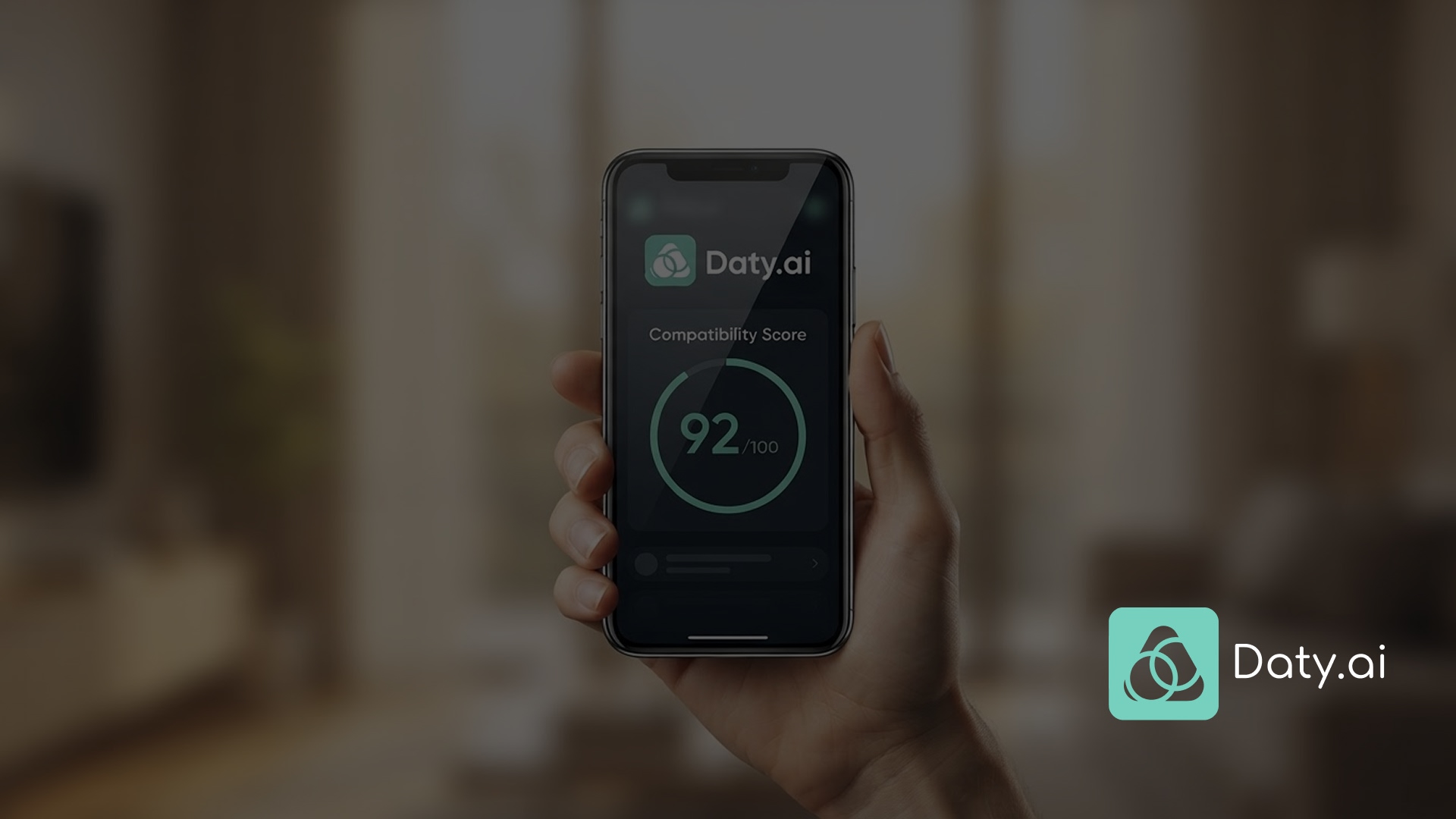
This is why a smarter dating process should create self-understanding alongside match recommendations. The goal is not just to show you someone new. The goal is to help you understand why someone is likely to fit, where friction may appear, and what kind of connection you tend to build under specific conditions. Daty.ai is built around that premise because compatibility should be explainable, not guessed.
What changes when you know yourself clearly
You stop being impressed by what is merely familiar. You get faster at spotting misalignment, not because you are cynical, but because your standards are operational now.
You also date with less noise. Less overthinking after mixed signals. Less attachment to potential that has no behavioral evidence. Less time spent trying to force clarity out of people who benefit from keeping things vague.
And perhaps most importantly, you become more available to the right kind of connection. Not just emotionally available in the abstract, but perceptually available. You can actually recognize a good fit when it appears because you are no longer filtering through old scripts.
That is the real win. Self-discovery does not make dating perfectly predictable. It makes you a better judge of fit.
For people who are done wasting months on almost-right connections, that shift matters more than any profile upgrade ever will. The right relationship is not found by scrolling harder. It is built on clearer inputs, better timing, and the courage to tell the truth about how you choose.
Start there. Not because self-knowledge is trendy, but because confusion has been expensive enough.