You can learn a lot about a broken system by watching what it rewards. Swipe apps reward speed, surface-level appeal, and repeat engagement. They do not reward clarity, timing, or actual romantic fit. That is exactly why so many serious daters are asking a sharper question now: what is the best alternative to swipe dating if you want a real relationship instead of a better distraction?
The answer is not another app with prettier profiles or slightly smarter filters. The best alternative is a different model entirely - one that treats dating as a compatibility decision, not a volume game.
What makes swipe dating fail serious people
Swipe dating was built on a simple mechanic: reduce people into fast decisions and keep the loop going. That design works if the goal is activity. It fails if the goal is outcomes.
For intentional daters, the biggest problem is not just superficiality. It is misalignment. You are often shown people based on proximity, broad preferences, and what keeps you engaged long enough to come back tomorrow. That means you spend time sorting through noise instead of moving toward clarity.
The result is familiar. Too many matches that go nowhere. Too many conversations that stall after three exchanges. Too many first dates with obvious incompatibilities that could have been spotted earlier if the system cared more about fit than clicks.
This is why dating fatigue has become so common among people in their late 20s, 30s, and 40s. It is not that they have lost interest in love. They have lost trust in a process designed to maximize motion instead of meaning.
The best alternative to swipe dating is compatibility intelligence
If swipe dating treats attraction as the starting point and hopes compatibility appears later, the best alternative to swipe dating flips that logic. It starts with compatibility, then uses attraction as one part of a much bigger picture.
That bigger picture matters. Real relationships are not built on profile aesthetics alone. They are shaped by personality patterns, emotional needs, relationship intentions, communication style, life-stage timing, and how two people actually tend to operate under stress, affection, conflict, and commitment.
A compatibility-first system looks for structured alignment across those dimensions. It asks better questions than most apps ever do. Not just who do you like, but who tends to work for you? Not just what looks exciting today, but what has the highest chance of becoming stable, mutual, and alive three months from now?
This is not about removing chemistry. It is about refusing to confuse chemistry with compatibility.
Why fewer matches often lead to better outcomes
One of swipe culture's biggest myths is that more options improve your chances. In practice, more options often create worse decisions.
When people are given endless profiles, they do not become more thoughtful. They become more impulsive, more distracted, and more likely to optimize for what is instantly legible. That usually means photos, quick bios, and familiar signals that say very little about long-term fit.
A better system narrows the field on purpose. It filters for high-probability alignment before you invest your attention. That changes the emotional experience of dating in a major way. Instead of managing dozens of low-context interactions, you spend time with a smaller number of people who make sense for you in specific, explainable ways.
That trade-off matters. Fewer matches can feel less exciting if you are attached to the dopamine hit of constant novelty. But if your goal is a real relationship, fewer stronger options are usually a feature, not a bug.
What to look for in the best alternative to swipe dating
Not every non-swipe product is automatically better. Some apps remove the gesture but keep the same shallow logic underneath. If you want a true alternative, the system should do more than slow down the interface.
First, it should be built around explainable matching. If a platform suggests someone, you should understand why. Vague compatibility scores are not enough. Serious daters want reasoning they can evaluate: shared relationship goals, complementary communication styles, aligned life rhythms, or timing that supports commitment rather than ambiguity.
Second, it should account for life stage, not just identity traits. Two people can look great on paper and still be wrong for each other because their timing is off. One is rebuilding after a breakup. The other is ready for a family. One wants exploration. The other wants immediate seriousness. Fit is not static. Timing changes everything.
Third, it should learn from behavior, not just self-description. People are not always accurate narrators of themselves. A stronger system looks at patterns, consistency, decision-making tendencies, and interaction behavior to build a more realistic view of compatibility.
Fourth, it should reduce wasted effort. The whole point of moving beyond swipe dating is not to create a more complicated ritual. It is to remove low-value repetition and increase the chance that each conversation has a reason to exist.
The emotional reason swipe alternatives matter
There is a practical argument against swipe apps, and then there is the personal one.
Swipe dating trains people to mistrust their own dating experience. You can spend months being active and still feel like nothing meaningful is happening. That creates a low-grade psychological drag. People start questioning their standards, their instincts, and sometimes their desirability, when the real issue is that they are operating inside a bad system.
The best alternative to swipe dating does something powerful: it restores context. Instead of throwing you into randomness and asking you to make it work, it gives you a clearer frame for why someone may or may not fit. That clarity reduces second-guessing. It also makes dating feel less like repeated personal failure and more like a process that can actually improve.
For self-aware daters, this matters a lot. Most do not need more exposure to strangers. They need better signal. They want to understand their own patterns, avoid predictable mismatches, and stop spending emotional energy on connections that were weak from the start.
Why explainability changes the game
One of the most underrated shifts in modern matchmaking is explainability. For years, dating platforms have asked users to trust black-box outcomes. You see a person, but you do not know why they were selected beyond broad assumptions and hidden ranking logic.
That is a bad model for serious romantic decisions.
Explainable matching creates a different relationship between the user and the system. It says: here is why this person may fit your values, your pace, your relational style, and your current life moment. You are not being asked to outsource judgment. You are being given better inputs for judgment.
That distinction is important. Good dating intelligence should not make you passive. It should make you more informed.
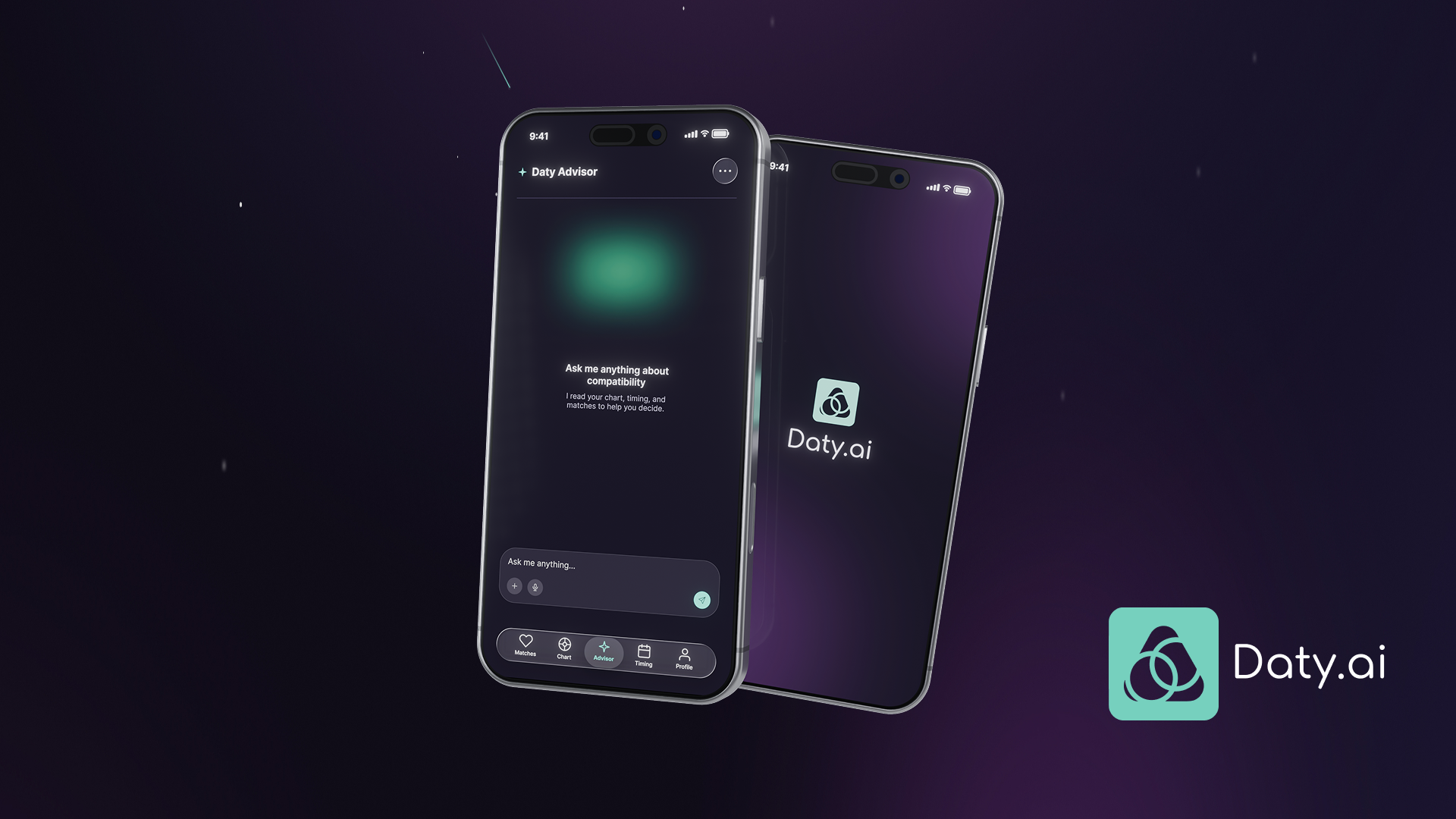
This is part of why compatibility intelligence feels more future-proof than swipe mechanics. It aligns technology with the actual complexity of relationships instead of flattening people into entertainment units. Daty.ai is part of that shift, building around the idea that dating works better when the system can explain who fits, when they fit, and why.
It depends on what you actually want
There is no honest answer to this topic without saying it plainly: the best alternative to swipe dating depends on your goal.
If you want casual novelty, swipe apps are efficient enough. They are built for browsing, low-friction access, and fast impression management. That is not accidental. It is the product.
But if you want a serious relationship, the old model starts to look irrational. Why rely on a mechanic optimized for engagement when your objective is discernment? Why sort people by split-second attraction if your real question is long-term fit? Why keep performing effort inside a system that benefits when you stay single and active?
Once you see that contradiction, it becomes hard to unsee.
The strongest alternative is any dating experience designed around compatibility, timing, and transparent reasoning instead of endless selection. That could take different forms as the market evolves. But the principle is stable: better romantic outcomes require better matching logic.
The future of dating will not belong to the app that keeps people swiping longest. It will belong to the system that helps the right people recognize each other sooner, with less noise and more confidence. If you are tired of gambling with your time, that is the shift worth paying attention to.