Most dating apps treat love like a slot machine. You pull, scroll, react, repeat. The system rewards activity, not outcomes. So when people ask, "how does AI matchmaking work," the real question is usually this: can technology finally stop wasting my time and start producing better romantic decisions?
The answer depends on what kind of AI system you mean. Not all matchmaking intelligence is built for the same goal. Some systems are still optimized for engagement - more swipes, more sessions, more chats that go nowhere. A serious AI matchmaking system does something very different. It tries to model compatibility, timing, and relational fit in a way that is structured enough to be useful and transparent enough to be trusted.
How does AI matchmaking work beyond swipes?
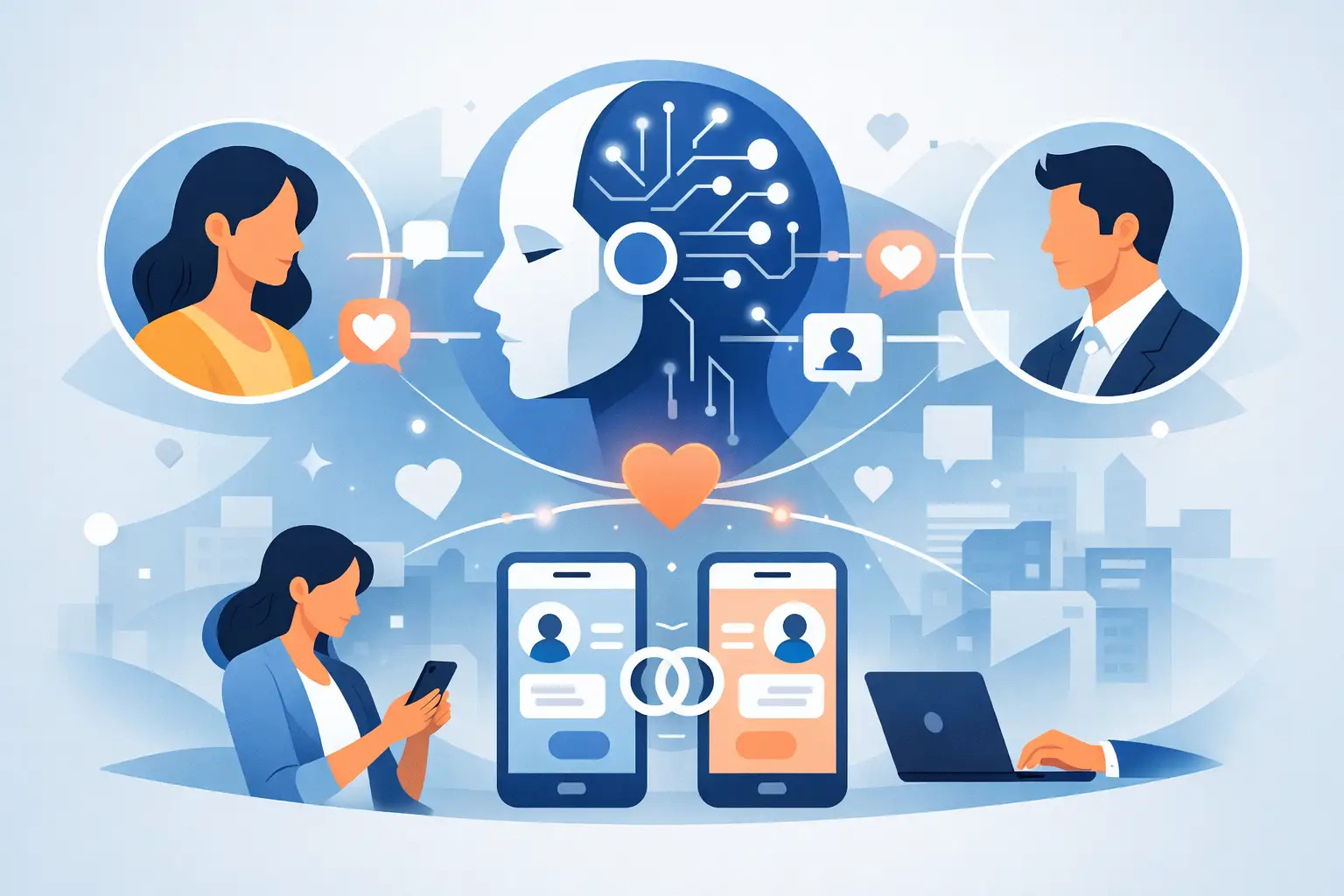
At the simplest level, AI matchmaking works by looking at patterns that humans either miss or cannot process at scale. Instead of sorting people mostly by photos, distance, and a few filters, the system analyzes multiple layers of information to estimate who is more likely to be a strong match and why.
That usually starts with inputs. Some are explicit, like what you say you want in a partner, how you describe yourself, what kind of relationship you are looking for, and which values matter most to you. Others are inferred from behavior, language, preferences, and response patterns. The AI does not just record your answers. It looks for structure inside them.
For example, two people might both say they want a serious relationship. That sounds like a match on paper. But one may mean marriage in the next two years, while the other means exclusivity without immediate long-term planning. One may want emotional intensity fast, while the other prefers steady trust-building. Traditional apps flatten those differences. Good AI matchmaking tries to separate them.
That is where the system starts moving from profile matching to compatibility intelligence.
The layers behind AI matchmaking
A strong AI matchmaking model is not one score pulled from a quiz. It is usually a stack of models working together.
The first layer is personality and relational style. This is not about labeling people for fun. It is about understanding how someone communicates, handles conflict, expresses affection, makes decisions, and responds to closeness. Chemistry matters, but relational patterns matter more once real life starts. If two people are both attractive to each other but consistently misread each other's emotional signals, that match may look exciting and still fail quickly.
The second layer is values and life direction. This includes things like ambition, family orientation, lifestyle preferences, geography, religion, finances, and social priorities. Plenty of dating products underweight this because it is less addictive than visual browsing. But long-term compatibility often breaks on practical realities, not opening-line banter.
The third layer is timing. This is one of the most overlooked variables in dating. A person can be highly compatible with someone in theory and still be the wrong match right now. Life-stage timing affects readiness, availability, emotional bandwidth, and willingness to build. Someone healing from burnout, navigating divorce, changing cities, or intensely focused on career transition may not be in the same relationship phase as someone who is fully ready to build a partnership now. Timing is not a minor detail. It changes whether compatibility can actually turn into a relationship.
The fourth layer is behavioral signal analysis. This is where AI has an advantage over static matchmaking forms. It can learn from how people actually behave, not just what they claim. Do they engage consistently or disappear? Do they respond thoughtfully or only react to appearance? Do they show patterns of selectivity, seriousness, or contradiction? Behavioral signals can sharpen match quality because stated preferences and lived preferences are often not the same thing.
Why explainability matters
One of the biggest problems with algorithmic dating is opacity. People get shown someone and have no idea why. That creates mistrust, especially for users who are already tired of being fed random or low-fit options.
The better question is not only how does AI matchmaking work, but how clearly can it explain its reasoning?
Explainable AI matters because romantic decisions are personal. If a system says two people are a strong match, users should be able to understand the core drivers. Maybe the fit comes from aligned conflict style, similar long-term pacing, complementary communication patterns, and shared family goals. Maybe the system sees a weaker fit because attraction is likely but emotional cadence is mismatched.
That kind of reasoning changes the experience. It turns matchmaking from black-box suggestion into usable decision support. People are not just told who to consider. They are shown why the fit may work and where the trade-offs are.
This matters even more for serious daters. If you are trying to build a relationship, you do not need endless options. You need signal. You need to know which differences are healthy and which are structural problems. You need a process that reduces noise instead of manufacturing more of it.
What AI matchmaking gets right - and where it can fail
AI can be dramatically better than swipe logic, but it is not magic. Its quality depends on the design of the system and the incentives behind it.
If the system is built to maximize engagement, AI may simply become a smarter way to keep users active. It can learn what catches attention without improving relationship outcomes. That is not matchmaking intelligence. That is attention engineering wearing a lab coat.
If the system is built for compatibility, the upside is real. It can process more variables than a human matchmaker could manage manually. It can find hidden alignment. It can adjust recommendations as it learns. It can reduce the false positives that make modern dating feel so repetitive.
Still, there are limits. AI only sees the data it is given or can reasonably infer. If a user is highly inaccurate about themselves, the model has a harder job. If someone wants a partner who is emotionally available but repeatedly pursues chaos, the system has to decide whether to trust their stated intention or their behavioral pattern. Good systems handle this tension carefully. Great ones use it to generate better recommendations, not just more flattering ones.
There is also the issue of overfitting. A model can become so precise that it starts filtering out people who might actually work because they do not match the expected template closely enough. Real relationships involve some unpredictability. The goal is not to remove human complexity. The goal is to improve the odds of meaningful fit.
AI matchmaking as decision intelligence
The strongest shift in this category is conceptual. Matchmaking should not be treated like product discovery. It should be treated like decision intelligence.
That means the system is not just asking, "Who might you click on?" It is asking deeper questions. Who fits your emotional architecture? Who aligns with your actual life? When is the fit strongest? What mismatch patterns are likely to create friction later? Which introductions are worth your energy?
This is the difference between entertainment-driven dating and outcome-driven matchmaking. One is built to keep you browsing. The other is built to help you choose better.
That is also why fewer matches can be a feature, not a flaw. When match quality rises, volume becomes less useful. People burned out by dating apps do not need a larger pool of bad options. They need a system that filters harder, reasons better, and respects the cost of wasted time.
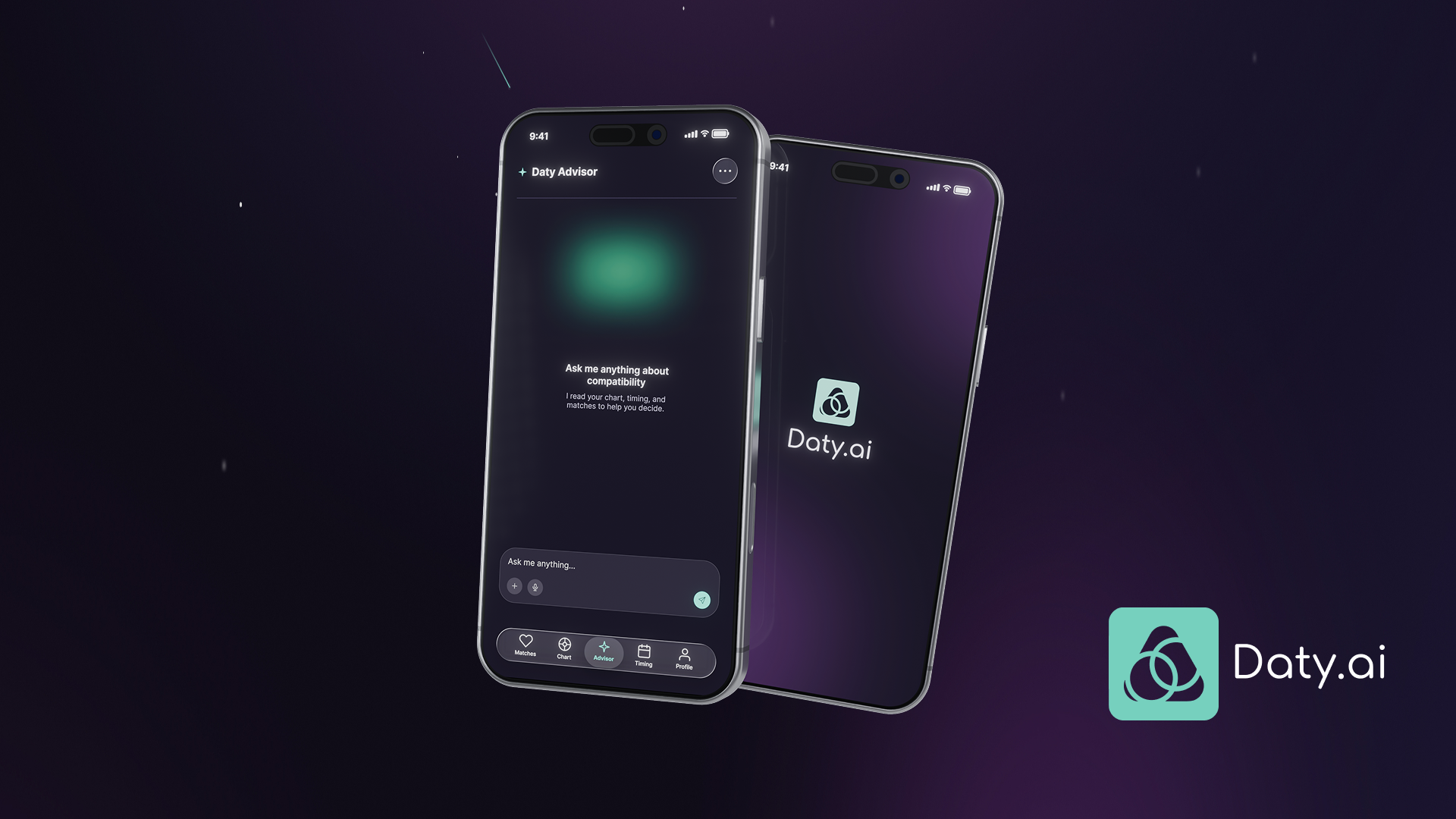
Daty.ai is part of that broader shift. The premise is simple but overdue: dating is not a discovery game anymore. It is a pattern-recognition problem, a timing problem, and a compatibility problem. Once you treat it that way, the product changes. The incentives change. The user experience changes.
So, how does AI matchmaking work in practice?
In practice, the best systems combine self-reported data, behavioral analysis, compatibility modeling, and clear explanations. They rank potential matches based on likely relational fit rather than surface-level popularity. They look at whether two people make sense together, not just whether they might briefly engage. And they keep learning over time as more data sharpens the model.
The result should feel less like shopping and more like intelligent filtering. Less chaos, more clarity. Less random attraction-first sorting, more evidence-based alignment.
That does not remove emotion from dating. It protects it. When the early sorting gets smarter, you spend less energy on dead ends and more energy on people who have a real chance of fitting your life.
If modern dating has felt noisy, shallow, or strangely inefficient, that is not your imagination. It is the product design. Better matchmaking starts when the system stops asking how long it can keep you engaged and starts asking who is actually worth your next conversation.