You open the app for five minutes and somehow lose 45. You skim faces, read the same recycled prompts, match with people you barely remember liking, and end the night more drained than hopeful. If you’re trying to figure out how to stop swipe fatigue, the real answer is not better stamina. It’s getting out of a system built to keep you browsing instead of choosing well.
Swipe fatigue is not a personal failure. It’s the predictable result of a dating model designed around volume, novelty, and endless re-entry. The apps call it discovery. What it often creates is decision overload, shallow filtering, and emotional wear that disguises itself as effort. You feel busy, but not closer.
That’s the trap. A lot of serious daters think they need more discipline, sharper texting, or a better profile. Sometimes those things help at the margins. But if the machine keeps rewarding quantity over compatibility, better behavior inside a bad system only gets you so far.
Why swipe fatigue happens in the first place
Most people describe swipe fatigue as boredom or burnout. That’s true, but it’s incomplete. What you’re really experiencing is a mix of cognitive fatigue, emotional ambiguity, and low-signal decision-making.
First, you’re being asked to make fast judgments with weak information. A few photos and short prompts are supposed to help you evaluate chemistry, maturity, relationship readiness, communication style, and long-term fit. That’s absurd. The brain fills in the blanks, which means you’re often reacting to projection rather than substance.
Second, swipe systems create a constant sense of almost. Almost a good match. Almost a promising conversation. Almost worth meeting. That ambiguity keeps people engaged, but it’s exhausting for anyone who actually wants a relationship. You’re stuck in a loop of low-confidence choices.
Third, the apps flatten everyone into the same interaction pattern. No matter how self-aware, relationship-minded, or intentional you are, you still move through the same motions: scan, tap, message, stall, repeat. The process treats serious dating like a casino with better lighting.
How to stop swipe fatigue by changing the system, not your willpower
If you want to know how to stop swipe fatigue, start by rejecting the idea that more exposure creates better outcomes. In entertainment platforms, more options can feel like freedom. In dating, too many low-quality options often produce worse decisions.
The first shift is to stop treating dating as a discovery problem. You do not need to see more people. You need a better method for identifying who actually fits. That means moving from attraction-first browsing to compatibility-first filtering.
Attraction matters. Chemistry matters. But when attraction is the first and loudest signal, everything else gets pushed back until after you’ve already invested time. That’s backwards. A smarter process asks different questions earlier: Are you aligned on relationship intent? Are your lives structured in ways that can actually work together? Do your communication patterns support each other or create friction? Are you both available for the same kind of future, at the same time?
Those questions reduce fatigue because they reduce waste. Every misaligned match costs energy, not just minutes.
Audit your current dating process
Before you replace anything, get honest about what your current approach is producing. Not what it promises. What it actually delivers.
Look at the last month or two of app use. How many matches turned into real conversations? How many conversations led to dates? How many dates felt genuinely aligned rather than merely available? If the funnel is wide at the top and empty at the bottom, that’s not a motivation issue. That’s a quality-control issue.
Then look at your behavior inside the app. Are you swiping when you’re tired, lonely, bored, or half-distracted? Are you saying yes to people you already suspect are a weak fit just to avoid missing out? Are you having the same dead-end exchanges because the app keeps serving the same profile type in slightly different packaging?
This part matters because swipe fatigue is not only caused by the platform. It’s amplified by unstructured use. A system can be broken, and you can still make it worse by engaging with it passively.
Set constraints that protect your attention
Attention is the scarce resource in modern dating, not access. If you don’t protect it, the apps will consume it.
Limit when and how often you use swipe-based platforms. Not as a productivity hack, but as a boundary against low-value repetition. A focused 15-minute session with clear standards is better than a nightly hour of aimless scrolling. If you keep using swipe apps at all, make them intentional and finite.
Just as important, cap the number of simultaneous conversations. More chats do not equal more momentum. They usually create split attention, generic responses, and shallow investment across the board. Serious dating gets better when you can think clearly about the person in front of you.
You should also define non-negotiables before opening any app. Not a fantasy checklist. Real filters tied to relationship outcomes: intent, life stage, emotional availability, location reality, communication consistency. These are not barriers to romance. They’re a defense against unnecessary friction.
Stop confusing attraction with alignment
One reason swipe fatigue lingers is that swipe culture trains people to overvalue immediate appeal and undervalue structural fit. You feel a spark in the profile, a little momentum in the banter, and you convince yourself that deeper compatibility can be figured out later.
Sometimes it can. Often it can’t.
Alignment is less intoxicating than novelty, especially at first. But it’s what keeps dating from turning into repeated disappointment with different faces. The people who exhaust you are not always the wrong people in some dramatic sense. Sometimes they’re simply poor fits that a better system would have filtered out much earlier.
This is where compatibility intelligence matters. Instead of asking, “Would I like to meet this person?” the better question is, “What evidence suggests this could work?” That shift sounds clinical until you realize how much emotional chaos comes from treating dating like pure instinct.
A smarter dating process does not kill romance. It protects it from noise.
What a better alternative actually looks like
If you’re serious about how to stop swipe fatigue, you may need to leave swipe logic behind entirely. Not reduce it. Replace it.
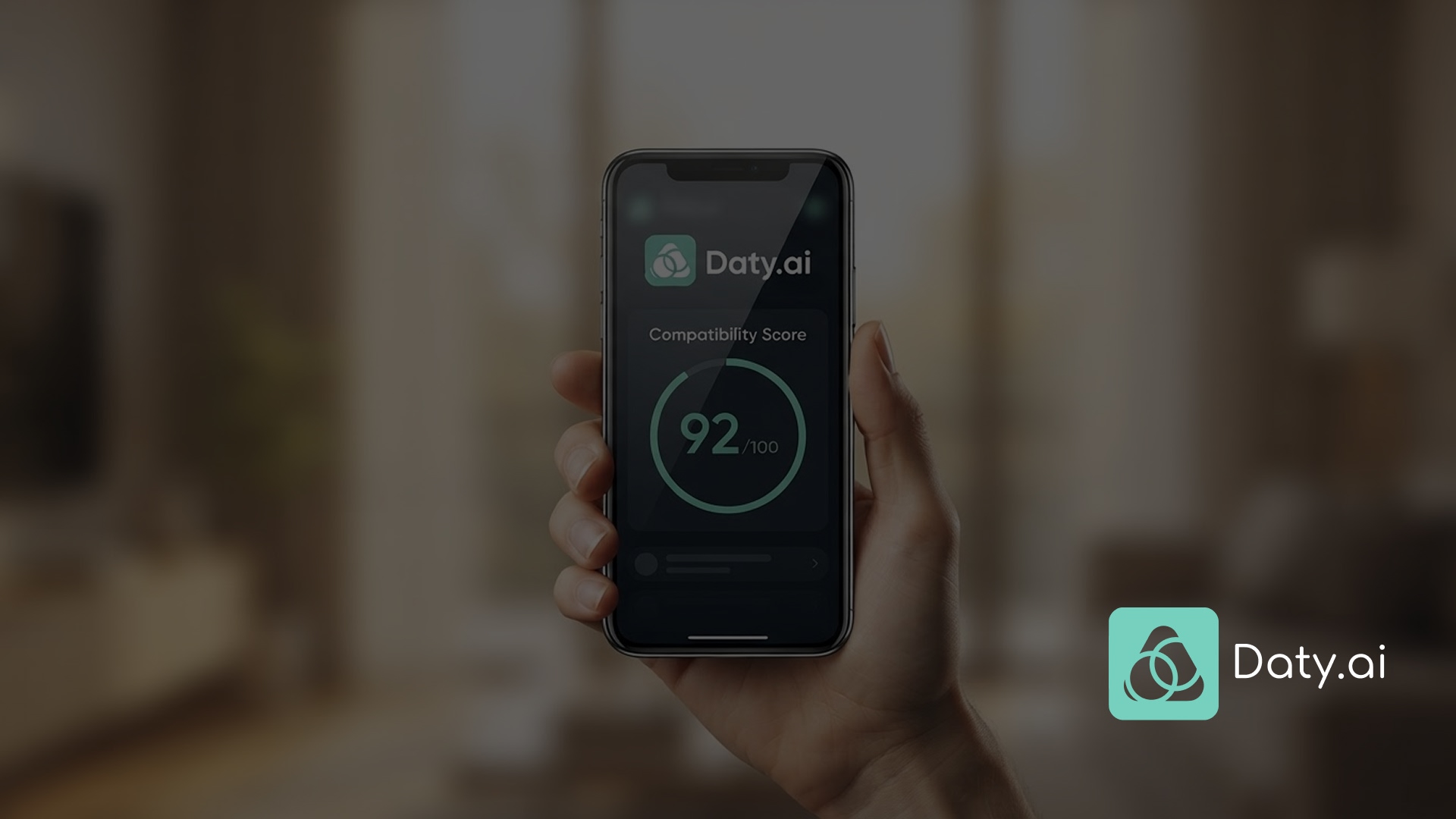
A better model gives you fewer options, but with stronger reasoning behind them. It looks at more than appearance and witty prompts. It considers personality patterns, relational habits, timing, intent, and behavioral signals that actually affect relationship outcomes. Most important, it explains why a match makes sense instead of forcing you to reverse-engineer compatibility from a handful of photos.
That’s the category shift. Dating should not be optimized for engagement. It should be optimized for decision quality.
This is exactly why companies like Daty.ai are pushing against the old marketplace model. The point is not to make swiping slightly less annoying. The point is to stop treating your love life like an infinite feed and start treating it like a high-stakes matching problem that deserves better inputs.
The emotional reset you probably need
There’s also a quieter piece of this that most dating advice ignores. Swipe fatigue changes how you feel about people before you even meet them. It can make you cynical, distracted, and less generous in your own perception. You start expecting mediocrity. You skim faster. You trust less. You engage with one foot out the door.
That mindset is understandable, but it becomes self-reinforcing. Burnout makes everyone look interchangeable. And once that happens, even potentially good matches can feel like more work.
Part of stopping swipe fatigue is admitting that you may need to pause long enough to recover your standards and your curiosity. Not forever. Just long enough to stop operating from depletion. Dating works differently when you’re evaluating from clarity instead of exhaustion.
Better matches start with better decision design
The dating industry has spent years blaming users for the outcomes its products create. You’re too picky, too impatient, too distracted, too unrealistic. That story is convenient for platforms that profit when nothing resolves.
But serious daters are not broken. The model is. If you keep placing thoughtful people inside shallow, high-volume systems, fatigue is the expected result.
So if you want to stop swipe fatigue, don’t just tweak your profile and hope for a better week. Raise the standard for the process itself. Choose tools and habits that reduce noise, increase signal, and make compatibility visible earlier. The right relationship is hard enough to build. Finding it should not feel like an endurance sport.