If you have ever stared at a dating app and thought, I cannot do one more dead-end chat with someone who looked right for three seconds, you are not the problem. The system is. A personality based matchmaking app matters because most dating platforms still sort people by fast attraction signals and then call the result compatibility. That is not matchmaking. That is browse behavior with romantic branding.
The real issue is not that people are bad at dating. It is that the dominant product model was built to maximize activity, not outcomes. More swipes, more profiles, more micro-decisions, more time spent. If you are serious about finding a relationship, those incentives work against you. They create motion without progress and volume without clarity.
A better model starts with a different premise. Romantic fit is not a guessing game powered by profile photos. It is a pattern recognition problem. Who tends to connect well with whom, under what conditions, at what stage of life, and for what reasons? That is where personality should enter the picture - not as a cute label, but as one layer in a broader compatibility system.
What a personality based matchmaking app should actually do
Most apps that claim to use personality stop at identity language. They give you a type, maybe show you a few compatible types, and leave the rest to chemistry and luck. That can feel smarter than swiping, but it is still incomplete.
A serious personality based matchmaking app should do more than classify you. It should interpret how your traits show up in relationships. That means looking at how you communicate under stress, how you handle closeness and independence, how you make decisions, how much novelty or stability you prefer, and what kind of partner dynamics tend to support your best self rather than trigger your worst patterns.
Personality matters because it creates structure. It explains why two people can be attracted to each other and still be wrong for each other in practice. It also explains why some pairings look mismatched on paper but work extremely well because their differences are complementary, not conflicting.
This is where the category often goes off track. Personality is useful, but not magical. It cannot replace context. It cannot tell you whether someone is emotionally available, whether your life rhythms align, or whether both people are ready for the same level of commitment. If a product treats personality as the whole answer, it is oversimplifying the problem.
Compatibility is bigger than personality
The strongest romantic matching systems treat personality as one signal among several. That distinction matters.
Two people can be highly compatible in temperament and still fail because their timing is wrong. One may be open to building a serious relationship while the other is recovering from a breakup, overloaded at work, or still structurally unavailable. Neither person is bad. The fit just is not strong right now.
Life stage matters too. A 29-year-old who wants geographic freedom and a 38-year-old optimizing for family planning may have real chemistry, but conflicting timelines. The same goes for lifestyle architecture. Sleep habits, social energy, financial orientation, conflict style, communication preferences, and long-term goals all shape whether attraction can become stability.
Behavior matters most of all because behavior is where stated preferences meet reality. People say they want depth, consistency, and emotional honesty. Then they repeatedly choose charisma, ambiguity, and excitement. A smarter matching model pays attention to that gap. It does not just ask what you want. It studies what you respond to, what patterns keep repeating, and where your decision-making may be helping or hurting you.
That is why the future of dating belongs to compatibility intelligence, not profile shopping. A system that combines personality, life-stage timing, and behavioral signals can make better recommendations than one that relies on self-description and photos. It can also explain those recommendations in a way users can actually trust.
Why swipe culture keeps producing weak matches
Swipe apps were not built to reduce romantic uncertainty. They were built to monetize it.
The more ambiguous your results, the more you keep searching. The more searching becomes your default behavior, the more the platform wins. That logic pushes product design toward endless choice, low-friction rejection, and fast visual sorting. It rewards novelty over depth and possibility over commitment.
This creates three predictable problems.
First, it overweights appearance in the first decision. Attraction matters, obviously. But when attraction is the gateway to every interaction, people get screened out before anything meaningful has a chance to register.
Second, it floods users with low-probability options. That sounds empowering until you realize it turns dating into inbox management. Too many options degrade discernment. You stop evaluating fit and start reacting to momentum.
Third, it gives almost no usable explanation for why a match should work. You matched because you both swiped right is not reasoning. It is coincidence with a notification.
People feel this failure intuitively. They do not need another app with better filters and prettier prompts. They need a system that reduces noise, increases signal, and gives them a rational basis for pursuing a connection.
What explainable matching changes
A recommendation becomes more powerful when it comes with reasoning.
Imagine being told not just that someone is a match, but why. You align on conflict recovery speed. Your communication styles are complementary rather than identical. Your long-term relationship goals are synchronized. Your behavioral patterns suggest mutual follow-through. Your life timing increases the odds that interest becomes commitment rather than drift.
That level of clarity changes user behavior. It slows down impulsive decisions and improves conversation quality from the start. Instead of opening with vague banter, people can enter a match with a framework. They know what the promising areas are, where tension might emerge, and what makes the connection worth exploring.
Explainability also creates accountability. If a system can tell you why it matched you with someone, it can be evaluated. It can improve. It can move beyond black-box mystique and become decision support. That matters in dating because trust is fragile. People are tired of being told to trust the algorithm when the algorithm keeps sending them into the same loop.
The trade-off: fewer matches, better odds
This is the part many platforms avoid saying clearly. Better matchmaking usually means fewer matches.
If a system is genuinely selective, it will not keep your queue full for entertainment value. It will narrow. It will prioritize alignment over stimulation. Some users find that relieving. Others initially read it as scarcity because they have been trained to associate abundance with quality.
But romantic outcomes do not improve because you saw 300 people this month. They improve because the few people you considered had a real chance of fitting your life.
A personality based matchmaking app built well will feel different from mainstream dating products. Less noisy. Less addictive. More demanding, maybe, because it asks for better data and more self-awareness. That is a fair trade if the result is less wasted time and a higher probability of something real.
This is also where self-knowledge becomes part of the product value. The best systems do not just help you find someone else. They help you understand your own relational patterns with more precision. That makes you a better chooser, not just a better user.
What intentional daters should expect next
The next generation of dating products will not win by adding more social features or making swiping feel fresher. That playbook is exhausted. The market does not need more engagement mechanics. It needs better judgment infrastructure.
That means systems that identify compatibility with more nuance, account for timing with more realism, and provide explanations people can act on. It means moving from attraction-first browsing to structured recommendation. It means treating dating less like content consumption and more like high-stakes decision-making.
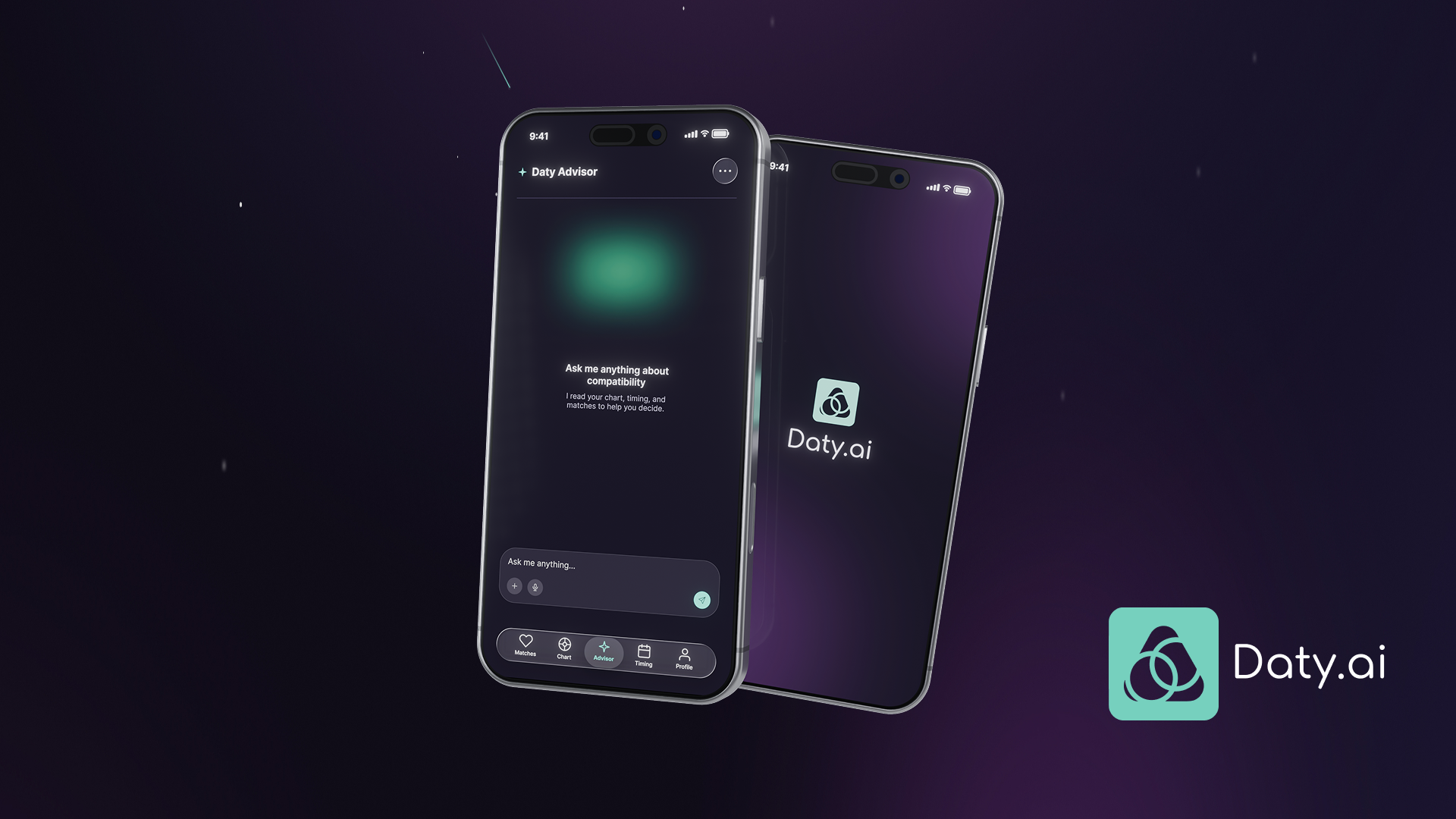
That is the shift companies like Daty.ai are betting on, and it is the right one. Not because personality is trendy, but because randomness has been overfunded for too long.
If you are serious about finding a partner, do not ask whether an app feels fun in the first five minutes. Ask whether it is designed to produce clarity, not compulsion. The right system should help you stop searching better, not search longer.