Most dating apps treat compatibility like a vibe check. You see a face, skim a few prompts, feel a spark, and hope the rest works itself out. That approach is exactly why so many people keep asking what makes people compatible in relationships after months or years of wasted dates, false starts, and almost-connections that never had real long-term potential.
The uncomfortable truth is that compatibility is not the same thing as attraction. Attraction gets people into the room. Compatibility decides whether they can build a life there.
That distinction matters more than most people admit. Plenty of couples have chemistry and still become miserable together. Plenty of people feel a strong pull toward each other and still clash on lifestyle, emotional needs, conflict patterns, or future goals. If you are dating with intention, not just chasing intensity, compatibility has to be defined more clearly than “we had a great first date.”
What makes people compatible in relationships?
Compatibility is the degree to which two people can function well together across the parts of life that actually shape a relationship. That includes emotional style, values, communication patterns, life direction, relational expectations, and timing.
Notice what is not on that list: perfect sameness. People do not need matching personalities, matching hobbies, or identical backgrounds to be compatible. In fact, some differences are healthy. One partner may be more spontaneous, the other more structured. One may be more verbal, the other more reflective. Differences stop being attractive when they create chronic friction in the areas that matter most.
Real compatibility is less about surface overlap and more about whether your systems can work together. Can you make decisions together without constant resentment? Can you repair after conflict? Do you want similar things from love, commitment, sex, family, and daily life? Can each person feel known without feeling managed? Those are not romantic extras. They are the operating conditions of a stable relationship.
Compatibility starts with values, not preferences
A lot of daters confuse shared preferences with shared values. Liking the same music, restaurants, or weekend plans can make early dating easier, but those things rarely determine whether a relationship lasts.
Values are deeper. They shape choices. They show up in how someone handles money, ambition, honesty, family boundaries, loyalty, health, religion, sex, and responsibility. Two people can have amazing banter and still be heading toward a wall if one values freedom above all else and the other values predictability and partnership structure.
This is where many relationships go wrong. The mismatch is not visible at first because both people are focused on chemistry. Later, they realize they were not aligned on the questions that actually govern a shared life. Do we want kids? How important is career mobility? What does commitment mean? How do we handle stress? Are we building a quiet life, a social life, a family-centered life, or an achievement-driven one?
Values do not have to match perfectly. But they do need to be compatible enough that neither person feels they must betray themselves to make the relationship work.
Emotional compatibility is where relationships either stabilize or burn out
Two people can want the same future and still be wrong for each other emotionally. This is why compatibility is not just about goals. It is also about how each person experiences closeness, stress, reassurance, and conflict.
Emotional compatibility often shows up in small moments before it shows up in big ones. How quickly does each person respond after tension? Does one need space while the other needs immediate resolution? Can both people express needs directly, or does one shut down while the other escalates? None of these patterns automatically disqualify a match, but they do affect how hard the relationship will be to maintain.
The strongest couples are not the ones who never trigger each other. They are the ones whose emotional patterns can be understood, respected, and worked with. There is a big difference between manageable friction and constant destabilization.
This is also why the old advice that “opposites attract” is incomplete. Opposites may attract, but they do not always regulate each other well. If one person seeks intensity and the other seeks calm, that can be balancing or exhausting. It depends on whether each partner experiences the difference as support or as threat.
Timing is not a side issue. It is a core compatibility factor.
People love to talk about the right person at the wrong time as if timing were separate from compatibility. It is not. Timing is part of compatibility because a relationship does not happen in theory. It happens inside real lives.
Someone may be emotionally impressive, attractive, kind, and aligned with you on paper, but still not be in a life stage where they can build something serious. They may be healing from a breakup, locked into career chaos, unsure about where they want to live, or not yet capable of the level of consistency a real partnership requires.
That does not make them bad. It makes the fit weaker now.
This is one of the biggest failures of swipe-based dating. It treats people like static profiles rather than dynamic humans moving through different stages of readiness. But relationship outcomes are heavily shaped by when two people meet, not just who they are in isolation. Good matching has to consider both person-level fit and timing-level fit.
Communication style matters more than communication volume
Many people say they want a partner who communicates well, but that phrase is usually too vague to be useful. Some people mean frequent texting. Others mean emotional honesty. Others mean conflict repair. These are not the same thing.
Compatible communication is not about talking all the time. It is about whether messages are sent, received, and interpreted in ways that create clarity rather than confusion. A highly expressive person and a more reserved person can work if they both understand the gap and adapt. But if one person sees silence as peace and the other sees silence as rejection, the relationship can become a constant translation failure.
Healthy communication compatibility includes pacing, directness, listening style, repair style, and emotional transparency. It also includes whether both people are willing to improve. A mismatch with flexibility can be workable. A mismatch plus defensiveness usually becomes a recurring wound.
Lifestyle fit decides whether love feels easy or expensive
This is the least romantic part of compatibility and one of the most important. Relationships are lived through routines. Sleep habits, spending habits, social energy, cleanliness, travel preferences, work schedules, and ideas about downtime all shape daily experience.
People often dismiss these differences early because they seem less meaningful than chemistry. Then six months later they are fighting about time, space, money, or energy. Not because anyone is wrong, but because their ways of living create ongoing strain.
Lifestyle fit does not require identical habits. It requires a level of coordination that does not make the relationship feel like a constant negotiation. You should not need a peace treaty to plan a weekend or split a grocery bill.
What compatibility is not
Compatibility is not the absence of conflict. It is not instant comfort. It is not liking all the same things. It is not astrology-level certainty, and it is definitely not a lightning-bolt feeling that bypasses every practical question.
It is also not a moral judgment. Someone can be a great person and still be a poor fit for you. That is not failure. That is precision.
The dating market trains people to optimize for attention, novelty, and surface appeal. That creates a terrible filter for serious relationships. It rewards what is easy to notice, not what is durable. The result is predictable: lots of matches, very little alignment.
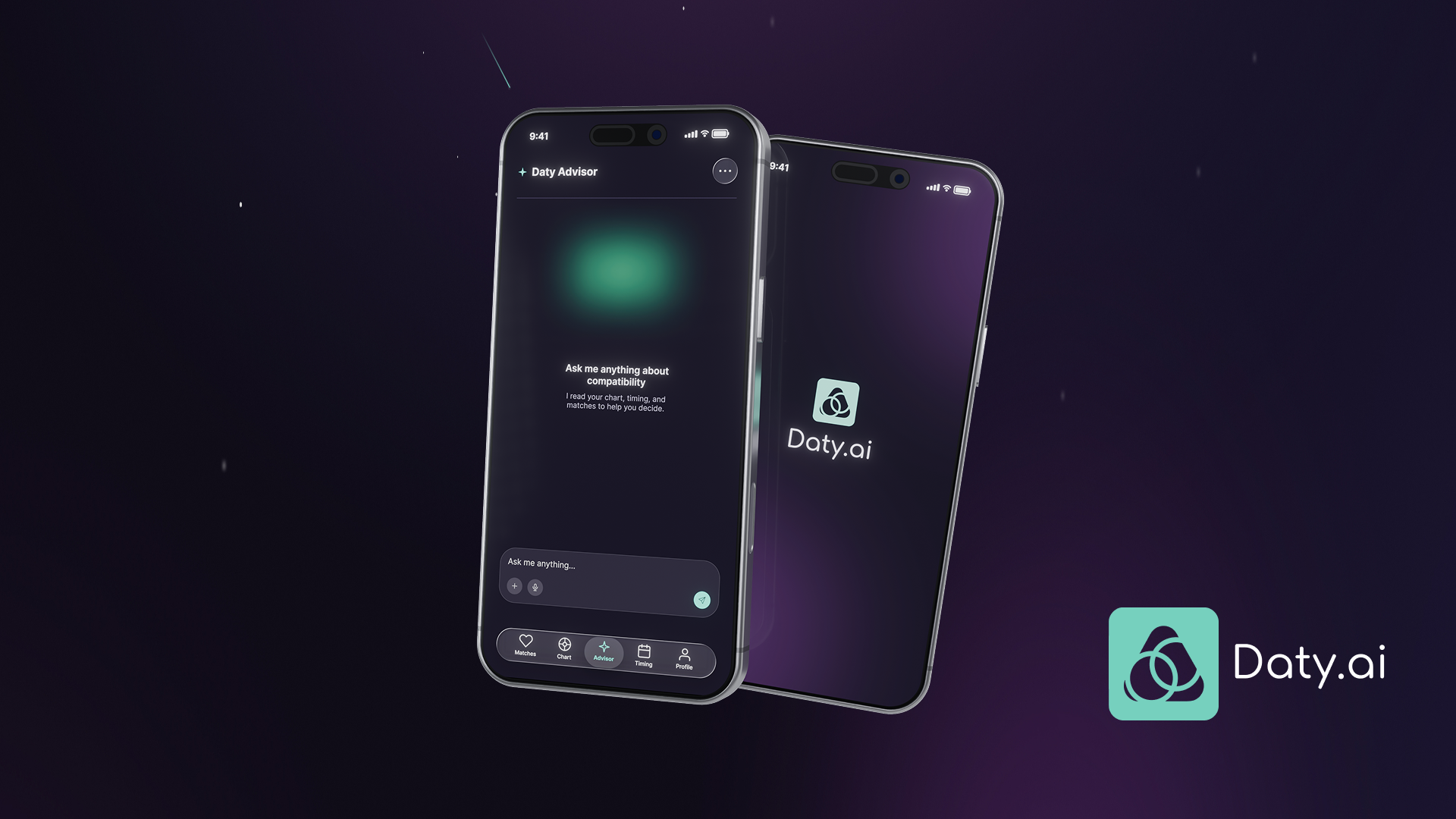
A smarter model asks different questions. Not just, “Are we drawn to each other?” but “Can our values, rhythms, needs, and timing actually hold under real life?” That is where better decisions start. It is also where systems like Daty.ai have a real advantage, because they treat compatibility as something to be explained, not guessed.
If you are tired of dating that feels random, the shift is simple but not easy: stop treating chemistry as evidence. Treat it as data. Then look at the deeper architecture underneath it.
The right relationship usually does not feel like maximum excitement and maximum confusion at the same time. More often, it feels clear. You understand why it works. And that clarity is not less romantic. It is what gives love a chance to last.