Most bad dates do not fail because attraction was missing. They fail because attraction showed up first and everything else showed up too late. That is the real tension inside algorithm matching versus human chemistry: people keep treating them like opposites, when the better question is which one should lead and which one should verify.
Swipe culture trained singles to trust spark as a sorting system. If the photos hit, if the banter lands, if the first date feels easy, we call it chemistry and move forward. But chemistry is not a complete signal. It can reflect curiosity, novelty, timing, attachment patterns, projection, and plain old physical attraction. Some of those are useful. Some are costly. None of them, on their own, answer the question serious daters actually care about: is this likely to work?
That is where better matching systems change the game. Not because they remove emotion, but because they stop emotion from carrying more weight than it deserves.
The myth behind algorithm matching versus human chemistry
The usual framing is lazy. Algorithms are cast as cold, mechanical, and overconfident. Human chemistry gets framed as magical, authentic, and impossible to model. That story survives because most dating apps built terrible algorithms and called it innovation.
If a platform rewards engagement instead of outcomes, its matching logic is not trying to help you build a relationship. It is trying to keep you active. More profiles, more swipes, more intermittent reinforcement. In that system, algorithmic matching deserves the skepticism it gets.
But that failure says more about the business model than the technology. A weak matching engine that optimizes for app activity is not proof that compatibility intelligence does not work. It is proof that most dating products were never designed to reduce randomness in the first place.
Human chemistry has a similar branding problem. People use the word as if it means emotional truth. Often it just means immediate ease or excitement. Those feelings matter, but they are highly sensitive to context. The right person at the wrong life stage can feel impossible. The wrong person who fits your old patterns can feel electric. Chemistry is real. It is just not always wise.
What algorithms can see that chemistry cannot
A serious matching system should not pretend to predict love with robotic certainty. What it can do is identify conditions that make connection more likely, more stable, and less wasteful.
It can look at personality structure beyond self-description. It can account for life-stage timing, which matters more than most singles admit. Someone can be emotionally mature, attractive, kind, and still be a poor fit if they want movement while you need stability, or if they are building a family timeline that does not match your own. A strong model can also observe behavioral signals rather than relying only on what people say they want.
That matters because daters are often directionally honest and operationally inconsistent. They say they want depth, but keep choosing chaos. They say they value communication, but respond best to unpredictability. They say they want commitment, but repeatedly match with people who are structurally unavailable. Chemistry tends to validate these loops because it reacts to what feels compelling now. Good matching systems can interrupt them by showing patterns the user cannot easily see alone.
This is the real value of compatibility intelligence. It does not replace intuition. It gives intuition better inputs.
Where human chemistry still wins
None of this means the heart should be outsourced.
An algorithm can estimate fit, but it cannot fully measure presence. It cannot tell you how your nervous system settles around someone after an hour together. It cannot perfectly model humor, cadence, sensuality, shared silence, or the small moments where affection becomes believable. It cannot simulate whether conflict feels productive or draining. Those things emerge in lived interaction.
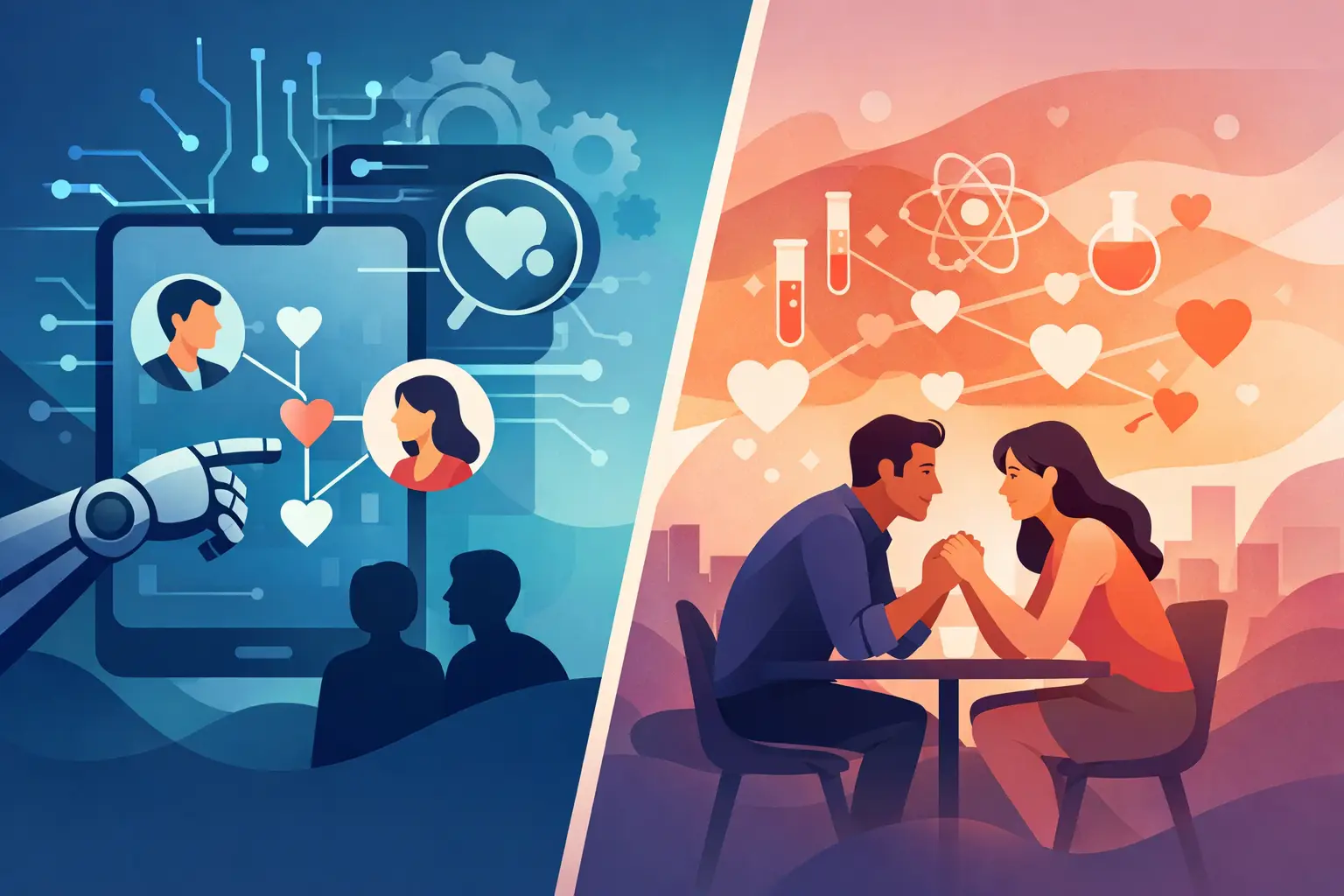
This is why the smartest answer in algorithm matching versus human chemistry is not either-or. Chemistry is what tells you whether compatibility can become embodied. Matching tells you whether the connection deserves serious attention before you sink time into it.
In other words, chemistry is a test. It should not be the entire screening process.
That distinction matters because many daters are exhausted not by dating itself, but by the cost of false positives. They keep entering situations that feel promising for two weeks, two months, sometimes six, before obvious incompatibilities surface. Different values. Different conflict styles. Different readiness. Different relational goals. Chemistry made the start feel convincing. It did not make the match durable.
Why serious daters need a different order of operations
If you want a real relationship, the sequence matters.
The old model says attraction first, clarity later. That works if your goal is momentum. It fails if your goal is outcome quality. The smarter model is structured alignment first, then lived chemistry. Not because romance should feel clinical, but because time is finite and attention is expensive.
This is the shift many intentional singles are already ready for, even if they have not named it yet. They are tired of performing openness while participating in systems designed around volume. They do not want more options. They want fewer, stronger possibilities with a reason behind them.
That is why explainability matters. If a match appears, the user should understand why. What dimensions align? Where are the likely strengths? What trade-offs exist? Where could tension emerge? Mystery is overrated when you are trying to make better relationship decisions.
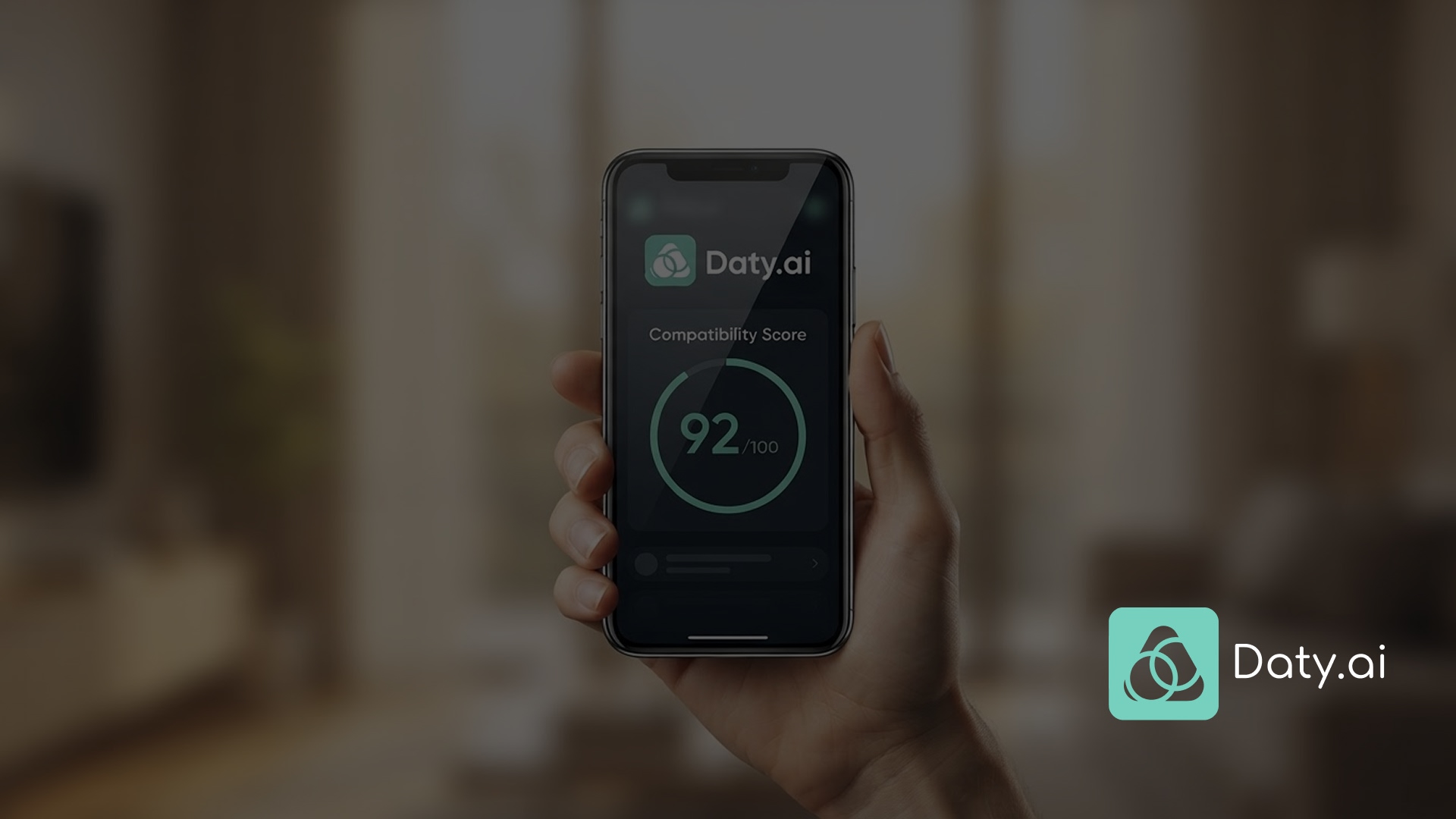
Daty.ai is built around that premise: dating should function less like a casino and more like intelligence. Not certainty, not control, but a better decision environment.
The trade-off people get wrong
Some people hear this and worry that too much structure will kill spontaneity. That fear makes sense if your reference point is sterile filtering or checkbox compatibility. But meaningful matching is not about reducing people to static labels. It is about increasing the probability that the people you meet can actually build something with you.
There is always a trade-off. If you optimize only for surprise, you will get more novelty and more waste. If you optimize only for theoretical fit, you may miss the weird, human unpredictability that turns good alignment into great connection. The right system respects both realities.
That means a strong model should be confident enough to narrow the field and humble enough to leave room for discovery. It should surface likely fit, not pretend to dictate destiny. It should help you avoid obvious misalignment without flattening romance into math.
For experienced daters, this is not restrictive. It is liberating. When bad options disappear earlier, you get more energy for the right conversations. When timing and values are considered upfront, first dates become less performative and more revealing. When compatibility is not left to chance, chemistry gets to do what it does best: deepen a promising connection instead of disguising a bad one.
So which matters more?
The honest answer is that human chemistry matters more after a strong match is identified, and algorithmic matching matters more before one is pursued.
That may sound unromantic until you compare it to the alternative. The alternative is what most singles already know too well: attraction-led sorting, low signal conversations, repetitive disappointment, and months lost to people who were never in position to build the relationship you wanted.
The future of dating will not belong to systems that manufacture more attention. It will belong to systems that create better relational odds. That requires a more mature view of both technology and emotion. Algorithms are not the enemy of chemistry. They are a defense against wasting chemistry on the wrong people.
The better question is not whether a model can replace the spark. It is whether your current process is good enough to deserve your faith. If it keeps delivering confusion, inconsistency, and mismatch, that is not intuition. That is poor infrastructure wearing a romantic disguise.
A useful dating system should help you meet someone who makes sense on paper and in person. Anything less is just more browsing with better branding.
The goal is not to date by spreadsheet. The goal is to stop confusing intensity with fit, and give real connection a better place to start.