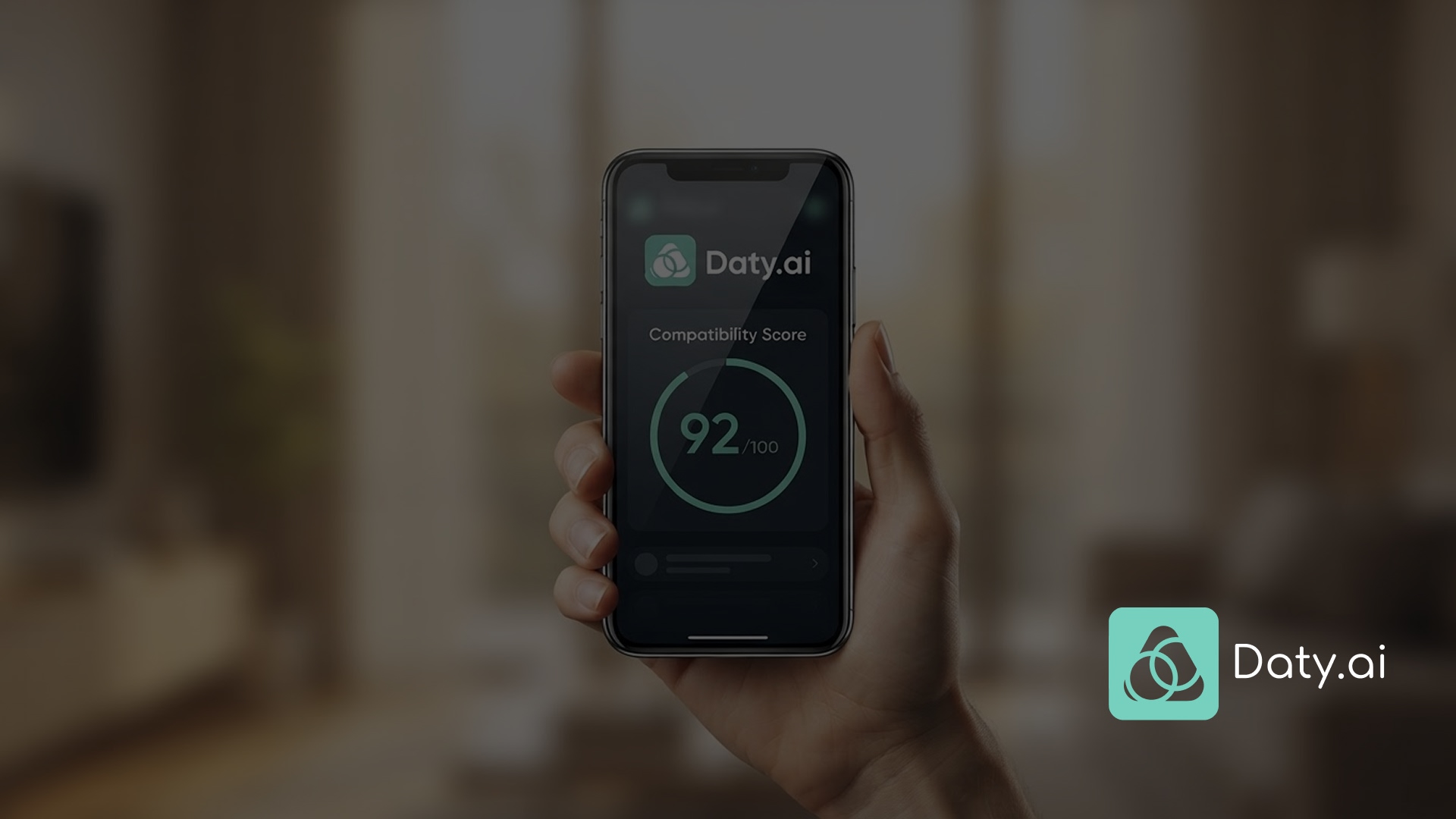
You can learn a lot about a dating system from what it asks you to do all day. In swiping versus compatibility based dating, that difference is the whole story. One model trains you to make fast judgments from thin information. The other tries to answer a harder question: who actually fits your life, your patterns, and your relationship goals?
That distinction matters more than most singles realize. A lot of dating frustration gets blamed on bad luck, bad communication, or bad options. Sometimes those things are real. But often the deeper problem is structural. If the system is built to keep you sorting, reacting, and returning, then wasted time is not a bug. It is part of the design.
Why swiping versus compatibility based dating feels so different
Swipe apps turned dating into a high-volume interface. You see a face, a few photos, maybe a joke, maybe a job title, and you decide in seconds whether someone deserves more of your attention. It feels efficient at first because it reduces complexity. But that simplicity comes with a cost.
Attraction is real, and first impressions matter. No serious person denies that. The problem is that swipe mechanics overweight what is immediately visible and underweight what actually determines relationship quality. Emotional regulation, values under pressure, lifestyle alignment, pacing, conflict style, and timing rarely show up in a profile card. Yet those are often the variables that decide whether something stable can form.
Compatibility-based dating starts from a different assumption. It treats dating less like browsing and more like pattern recognition. The question is not just, do you like this person on sight? The question is, given who you are, how you relate, where you are in life, and what kind of partnership you want, does this match have real structural promise?
That is a much better question. It is also less addictive, which is exactly why most apps did not build around it.
The swipe model optimizes activity, not outcomes
Swipe products are often framed as neutral tools. They are not. Every product has an incentive structure, and that structure shapes user behavior.
If a platform makes money from attention, then endless browsing is useful. A large volume of profiles is useful. Frequent re-entry is useful. Small bursts of hope followed by ambiguity are useful. This does not mean every dating app team is malicious. It means the product logic naturally rewards engagement signals over relationship outcomes.
That trade-off shows up everywhere. You get more options, but less clarity. More conversations, but lower intent. More matches, but weaker fit. Many users stay active not because the system is working, but because it keeps producing just enough possibility to prevent them from leaving.
For people who want a serious relationship, this creates a mismatch between user goal and platform goal. You want fewer dead ends. The system benefits from more motion.
What compatibility-based dating is actually trying to measure
Compatibility-based dating is not about pretending chemistry can be reduced to math. It is about refusing to build an entire romantic process around surface-level sorting.
A useful compatibility system looks at multiple layers at once. Personality matters, but not in a vague horoscope way. It matters in terms of decision patterns, communication tendencies, emotional needs, and behavioral consistency. Life stage matters too. Two people can look great on paper and still miss each other because one wants to build now and the other is still exploring identity, career, or geography.
Behavior also matters more than self-description. Plenty of people can say they want commitment, emotional maturity, or depth. The stronger question is whether their patterns support those claims. Do they follow through? Do they engage consistently? Do they handle ambiguity well? Do they show signs of readiness rather than just desire?
The strongest compatibility systems also explain their reasoning. That part is critical. If a match appears out of nowhere with no logic behind it, users are back in the same old guessing game. Explainable matching changes the experience because it gives people usable insight. Not just who fits, but why.
Swiping versus compatibility based dating is also a timing question
One of the biggest blind spots in mainstream dating is timing. People talk about compatibility as if it exists in a vacuum. It does not.
Someone can be highly aligned with you in values, intelligence, attraction, and long-term goals, then still be a poor match right now. Maybe they are recovering from a breakup. Maybe they want closeness but cannot create stability. Maybe their work life is so volatile that partnership keeps getting pushed aside. Timing is not a small detail. It changes the odds of success.
Swipe systems mostly ignore that. They present people as available inventory. Compatibility-based dating is more honest. It recognizes that fit is dynamic. Readiness, bandwidth, and life structure shape whether a connection can grow or stall.
That matters because many singles are not actually bad at choosing people. They are repeatedly choosing people who are attractive but misaligned in timing. Those are very different problems, and they require very different solutions.
Better dating decisions need more than preference
Most dating products ask what you like. That is incomplete.
Preferences are useful, but they are often noisy. People say they want one thing, respond to another, and build lasting relationships with something more nuanced than either. Height, age range, city, and profile aesthetic may influence initial interest, but they are weak predictors of long-term relational strength on their own.
Compatibility-based systems try to separate impulse from signal. They do not remove human judgment. They improve it. When a platform incorporates personality analysis, behavioral data, life-stage alignment, and transparent match logic, it gives users a more intelligent starting point. Instead of forcing you to search through thousands of maybes, it narrows the field toward people who make sense for you in ways you may not catch instantly.
That does not guarantee love. Nothing does. But it does reduce avoidable mismatch, and for serious daters, that is a major upgrade.
The trade-off: excitement versus precision
To be fair, swiping offers something compatibility systems often do not: immediacy. It is fast, visual, and emotionally stimulating. There is a reason people keep using it, even when they hate the outcomes. It creates motion. It makes you feel like something could happen in the next five minutes.
Compatibility-based dating can feel slower because it asks for more signal before making recommendations. It may present fewer matches. It may challenge your assumptions. It may even suggest that some of the people you usually chase are wrong for you in predictable ways.
For some users, that feels limiting. For others, it feels like relief.
This is the real split in swiping versus compatibility based dating. Do you want constant options, or a better filtering system? Do you want to browse chemistry, or increase the probability of meaningful alignment? There is no universal answer for every person at every stage. But for intentional daters, precision usually beats volume.
Why this shift is bigger than app fatigue
People often describe frustration with modern dating as burnout. That is true, but it is not the whole truth. Burnout is the symptom. Misaligned infrastructure is the cause.
When dating tools reward superficial sorting, endless ambiguity, and low-accountability behavior, they do not just waste time. They distort decision-making. They train users to over-index on appearance, under-invest in context, and confuse availability with compatibility.
A smarter category is emerging because the old model is not simply annoying. It is strategically weak. Singles looking for serious relationships need systems that operate more like decision intelligence than entertainment. They need help understanding match quality, timing strength, and relational fit before sinking weeks into conversations that were never built to go anywhere.
That is the more ambitious promise behind platforms like Daty.ai. Not more dating activity. Better romantic judgment.
What to look for if you are done with swipe culture
If you are evaluating alternatives, do not just ask whether a platform claims to care about compatibility. Ask what it actually measures. Ask whether it uses multiple layers of signal or just repackages preferences. Ask whether it can explain why a match is strong. Ask whether it is designed to help you exit successfully or simply stay engaged.
Those questions cut through a lot of marketing.
The future of dating will not belong to the app with the loudest feed or the biggest stack of profiles. It will belong to the system that can reduce randomness without flattening human complexity. That is a harder product to build, but it is the one serious singles have been waiting for.
If dating has felt noisy, repetitive, or weirdly uninformative, trust that reaction. You are not failing at modern dating. You may just be using a system optimized for motion when what you really need is a system built for fit.