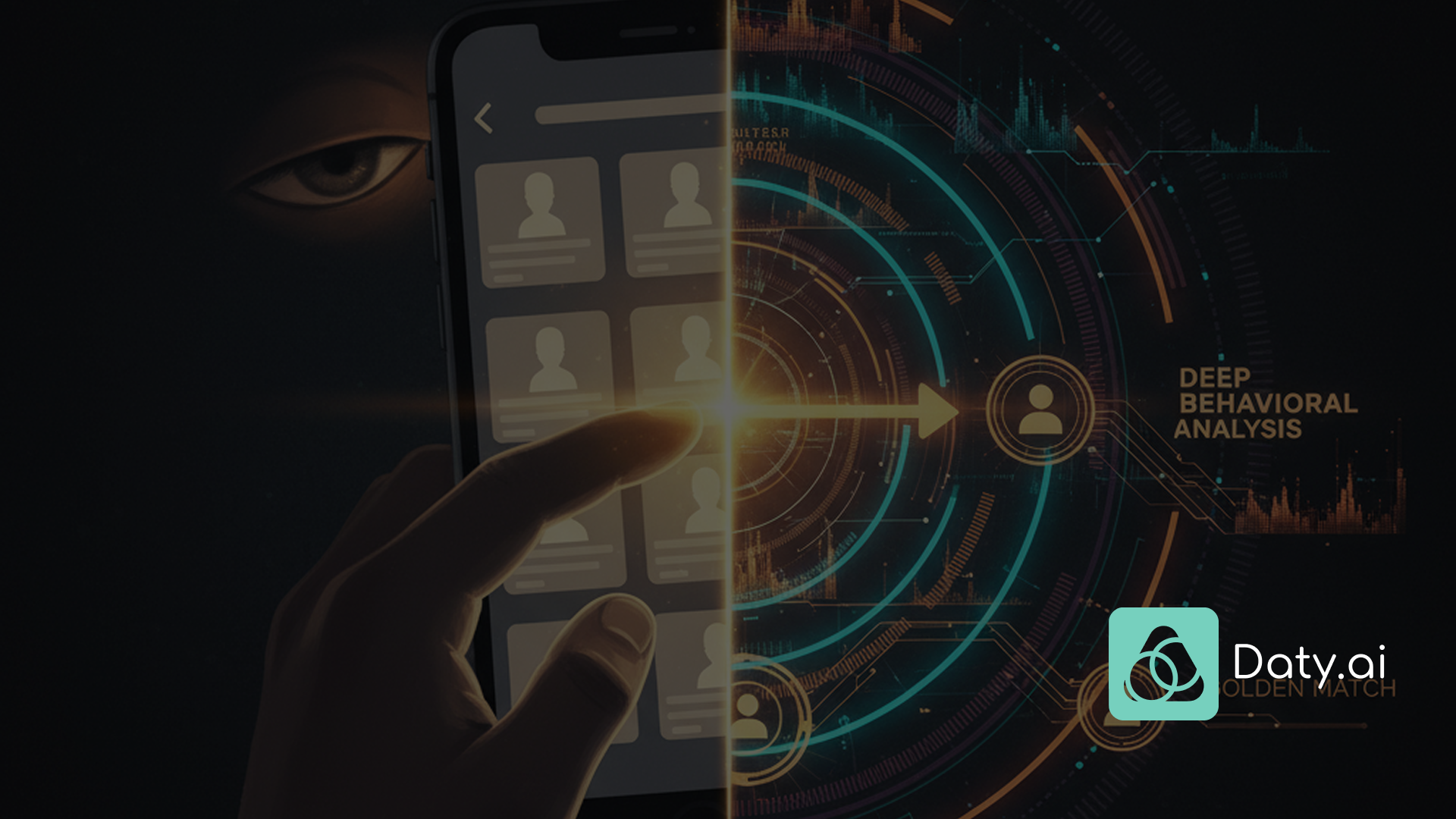
A dating app can know your age, photos, location, and favorite cocktail, then still introduce you to someone who disappears after three messages. That is not a dating problem. It is a signal problem. Behavior based matchmaking changes the question from “Who looks promising in a feed?” to “Who is most likely to build a real relationship with you - and why?”
Swipe apps were designed around availability and attraction at a glance. Serious relationships require more: emotional patterns, communication style, life priorities, readiness, and the way two people actually make decisions. If you are tired of spending your Sunday night sorting strangers into yes, no, and maybe, that distinction matters.
The Swipe Model Optimizes Attention, Not Alignment
The standard dating app gives users an endless catalog and calls it choice. But more options do not automatically produce better outcomes. Often, they create decision fatigue, shallow filtering, and the feeling that a better option might be one more swipe away.
That is not an accident. The traditional model is built to keep people active. More browsing creates more opportunities for engagement. Yet the incentives of an engagement-driven platform and an intentional dater are fundamentally different. The platform benefits when you keep searching. You benefit when you stop needing to.
Photos still matter. Attraction is real, and pretending otherwise would be dishonest. But attraction is only one layer of compatibility. It cannot tell you whether someone handles conflict directly or withdraws, whether they want the same kind of future, or whether their current life has room for partnership.
A profile is a self-description. Behavior is evidence.
What Behavior Based Matchmaking Actually Means
Behavior based matchmaking uses patterns in how people communicate, choose, relate, and move through life to make better compatibility recommendations. It does not reduce a person to whether they liked a hiking photo or selected the right prompt answer. It looks for the underlying operating system.
That can include personality dynamics, attachment-related tendencies, communication preferences, decision-making style, relationship values, and patterns of follow-through. It can also account for life-stage timing: a powerful match on paper may be a poor match in practice if one person is building a startup, moving across the country, recovering from a breakup, or unsure whether they want commitment.
The goal is not to predict romance with false certainty. Human connection is too complex for that. The goal is to replace low-information guessing with a clearer, more useful starting point.
A strong system also needs to distinguish between similarity and complementarity. Two highly similar people may share values and rhythms but reinforce the same blind spots. Two different people may bring balance, provided the differences are workable rather than destabilizing. There is no universal formula where opposites always attract or where shared traits always win. Context decides which differences create growth and which create friction.
Why Timing Belongs in the Match
Most dating platforms treat timing as a checkbox. You are either “looking for a relationship” or you are not. Real life is not that clean.
Two people can both say they want commitment while living in radically different realities. One may be emotionally available and prepared to build a shared life. The other may want the idea of partnership but lack the capacity to prioritize it. Neither person is necessarily wrong. They may simply be out of sync.
Behavior-based systems can treat readiness as a meaningful compatibility variable rather than an awkward surprise revealed on date six. They can recognize that a relationship is not just a match between personalities. It is a match between personalities at a particular moment.
This matters especially for people who are dating with intention. When you want a serious outcome, wasted time is not just inconvenient. Repeating the same early-stage patterns can make you cynical, guarded, or tempted to settle for chemistry that does not translate into stability.
Better timing will not eliminate disappointment. It can, however, reduce the number of connections that were structurally unlikely to go anywhere from the start.
Explainability Is the Difference Between Help and Hype
AI can make recommendations. That alone is not impressive. Plenty of systems can generate a score, rank profiles, or declare that two people are 92 percent compatible. A number without reasoning is just a more polished version of “trust us.”
Explainable AI gives users the logic behind a recommendation. Instead of presenting a match as a black box, it can show the dimensions that appear aligned: perhaps both people value direct repair after conflict, want a similar relationship pace, and have complementary social energy. It can also name areas worth discussing early, such as financial attitudes, family expectations, or lifestyle structure.
That transparency does two things. First, it gives people a more intelligent first conversation than “How was your weekend?” Second, it keeps the user in control. A recommendation should inform human judgment, not replace it.
There is a trade-off here. More data can create better context, but only if the system handles it responsibly and the user understands what is being considered. Compatibility intelligence should feel clarifying, not invasive. The best model is not the one that claims to know everything about you. It is the one that uses meaningful inputs to help you see your own patterns more clearly.
Fewer Matches Can Be a Better Dating Experience
The swipe economy trained people to think volume equals opportunity. More likes. More chats. More dates. More chances.
But dating is not a sales funnel. Every low-quality conversation costs attention. Every lukewarm date takes time, energy, money, and a little more optimism. For people who have already spent years cycling through apps, the promise of infinite options can feel less like freedom and more like unpaid labor.
Behavior based matchmaking makes a different bet: fewer, better-supported recommendations create a stronger path to a meaningful relationship than endless exposure to loosely filtered strangers.
That does not mean every match should feel preordained. It means each introduction should have a reason behind it. You should know what may work, what could be challenging, and what questions deserve an honest answer before emotional momentum takes over.
A good match is not someone with zero friction. Zero friction often means you are both staying on the surface. A promising match is someone whose values, capacity, and behavioral patterns give the connection a credible foundation - even when real differences need to be navigated.
The New Standard for Matchmaking Intelligence
The future of dating should not ask people to become better content creators, better profile optimizers, or faster judges of strangers. It should ask better questions on their behalf.
That is the premise behind compatibility intelligence: moving from surface-level discovery to structured alignment across personality, behavior, life stage, and relationship goals. Daty.ai is building this category around an outcome mainstream dating apps have long treated as secondary: helping people make more informed decisions about who fits, when the fit is strongest, and why.
No model can manufacture shared effort, emotional maturity, attraction, or courage. People still have to show up honestly. They still need to communicate, set boundaries, and leave when the evidence says a relationship is not right.
But people deserve tools that respect those realities instead of monetizing confusion. The next time a dating platform promises more choices, ask a harder question: does it help you make a better one?