A person can spend three years on dating apps, go on dozens of dates, and still feel like they have learned nothing useful about who actually fits their life. That frustration is powering the rise of intentional dating. Singles are no longer asking for more profiles, more matches, or another clever opening line. They are asking for a process that respects their time and produces better decisions.
Intentional dating is not about making romance clinical or demanding commitment before a first drink. It is about replacing random, engagement-driven discovery with clarity: clarity about what you need, who can meet it, what season of life you are in, and whether the connection has a credible path forward.
Swipe Culture Optimized for Activity, Not Outcomes
The swipe model made dating available at any hour, in any city, from any couch. But convenience came with a hidden design choice: most apps were built to keep people browsing. More profiles create more decisions. More decisions create more screen time. Screen time becomes the product metric.
That logic is fundamentally misaligned with someone looking for a serious relationship. A person seeking a partner does not benefit from an infinite catalog. They benefit from a smaller set of people with a real likelihood of alignment.
Attraction matters, of course. But attraction is a poor first filter when it operates alone. It cannot tell you whether two people want the same kind of relationship, handle conflict in compatible ways, have room for a relationship in their current lives, or share an honest definition of commitment. Swipe culture asks users to make a high-stakes decision with low-quality information, then blames them when the process feels exhausting.
The result is dating fatigue. Not because people have become unwilling to date, but because they are tired of repeating a system that confuses motion with progress.
What Intentional Dating Actually Means
Intentional dating means dating with a stated purpose and a decision process that supports it. It starts before the first match, with a more demanding question than, “Who seems attractive?” The better question is, “What kind of partnership am I building toward, and what conditions make it possible?”
For some people, the answer includes marriage and children. For others, it means a committed, independent partnership without a traditional timeline. Intentionality is not one prescribed life plan. It is the willingness to name your priorities rather than hide them behind vague preferences.
That distinction matters. Saying you want “someone kind, funny, and ambitious” is easy. Understanding how you respond under stress, what makes you feel secure, how much social energy you need, how you manage money, and whether you are emotionally available is harder. It is also far more useful.
Intentional daters do not treat every date as a job interview. They leave room for chemistry, surprise, and play. But they stop pretending that ambiguity is inherently romantic. When goals, timing, or values are badly misaligned, recognizing it early is not a failure. It is efficiency with emotional integrity.
The Rise of Intentional Dating Is a Response to Waste
The rise of intentional dating is often described as a cultural preference, but it is more accurately a market correction. People have experienced the cost of low-intent systems firsthand: conversations that disappear, dates with no shared direction, and months spent trying to infer whether another person is even available for the kind of connection they claim to want.
The old advice was to cast a wider net. The new reality is that a wider net often catches more noise.
Intentional dating pushes back on the belief that abundance automatically creates better choices. Too much choice can reduce discernment. When the next profile is always one swipe away, people may delay vulnerability, overvalue minor imperfections, or keep a promising connection at arm’s length. The system trains users to compare people rather than understand them.
A more intentional process asks for fewer, better inputs. It values depth over volume. It recognizes that compatibility is not a single score based on shared hobbies or a photo that lands well. It is multi-layered: personality, communication patterns, relationship goals, practical realities, values, and life-stage timing all shape whether a connection can grow.
Timing Is Not a Footnote
Two people can be genuinely compatible and still be wrong for each other right now. One may be recovering from a breakup. Another may be launching a business, relocating, caring for family, or unsure whether they want a committed relationship. These are not flaws. They are realities.
Most dating products treat timing as a basic profile field, if they acknowledge it at all. Intentional daters know it deserves more weight. A match becomes meaningful not simply when two people look good on paper, but when their capacity, pace, and priorities can meet in the same moment.
This is where self-awareness becomes practical. If you know you are seeking consistency, it makes little sense to invest heavily in someone whose life currently cannot support it. If you are ready to build a relationship, you should not have to decode whether “seeing where things go” means openness or avoidance.
Timing should not become a reason to reject everyone who is imperfectly situated. Life is messy, and real relationships require flexibility. But it should be visible enough to inform the decision. Pretending timing does not matter is how strong chemistry becomes a long detour.
Better Matching Requires Better Questions
The dating industry has spent years refining ways to show people more options. The next era will be defined by systems that help people make better choices among fewer options.
That requires asking questions that conventional apps often avoid. How do you repair after conflict? What kind of closeness feels natural to you? What does a balanced life look like? How much structure do you want in a relationship? Are you aligned on pace, family, ambition, lifestyle, and emotional expression?
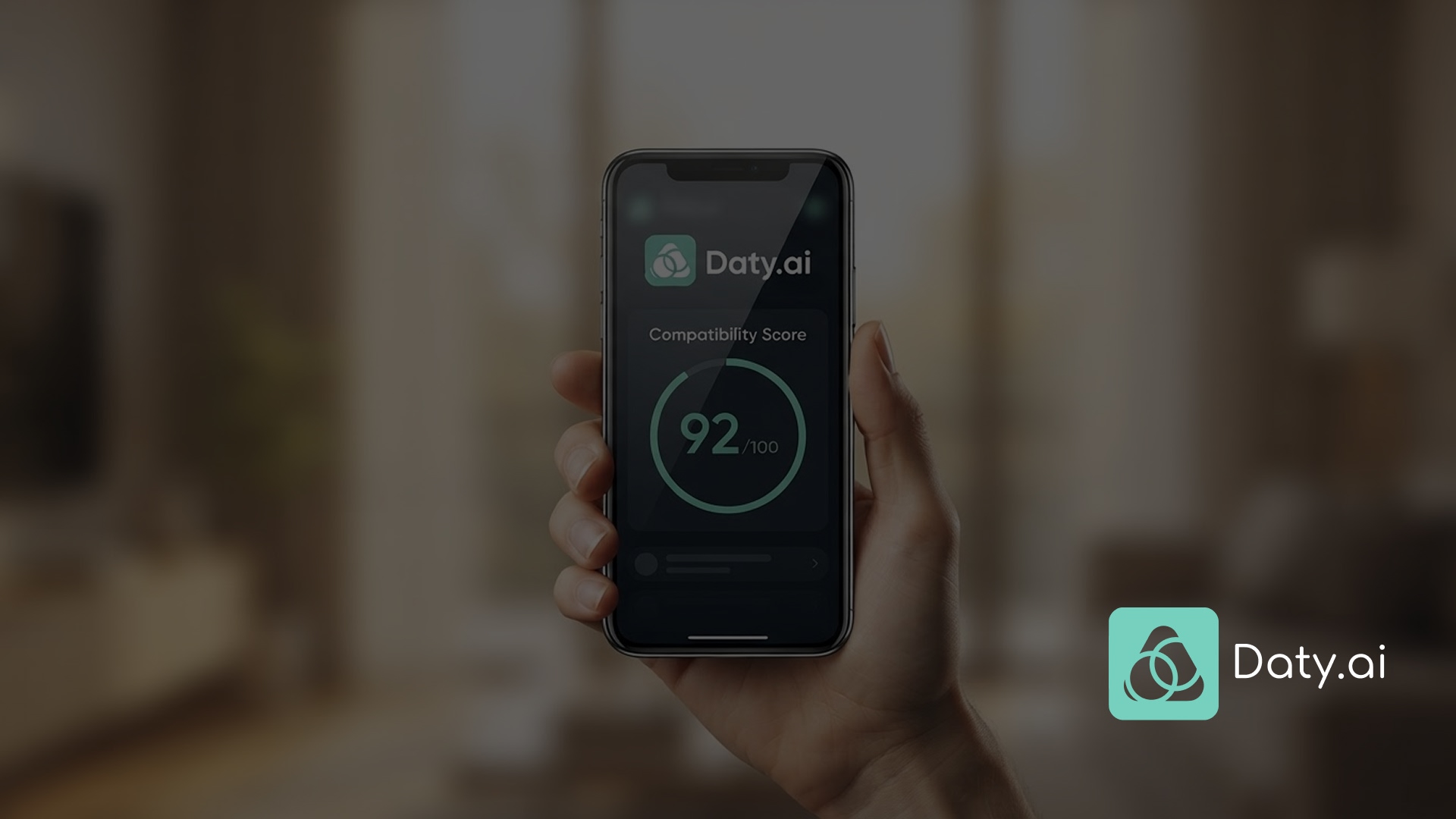
None of these questions should be used to reduce people to a label. Personality frameworks and behavioral signals are useful only when they create context, not false certainty. A compatibility system cannot promise a perfect partner because people are not static data points. It can, however, surface meaningful alignment, identify likely friction, and explain why a match may be worth exploring.
Explainability is critical. A recommendation that says “you might like this person” is weak. A useful recommendation can articulate the likely fit: shared relationship goals, complementary communication styles, similar expectations around commitment, or timing that supports follow-through. That gives people agency instead of asking them to trust a black box.
Daty.ai is built around that premise: dating is not a discovery game. It is a compatibility intelligence problem that deserves more than a feed designed to be endlessly consumed.
Intentional Does Not Mean Overcontrolled
There is a trade-off. Some people hear intentional dating and imagine rigid checklists, premature pressure, or trying to optimize love like a spreadsheet. That version misses the point.
A good process should make dating lighter, not heavier. It reduces the draining uncertainty around obvious misalignment so that people can bring more curiosity to the connections that remain. Compatibility creates a stronger starting point. It does not replace the experience of sitting across from someone and seeing whether the energy is there.
Chemistry without alignment can be thrilling and unstable. Alignment without chemistry can become a polite dead end. Intentional dating holds both truths at once. It asks people to respect the emotional signal while also respecting the evidence.
The New Standard Is Fewer, Clearer Choices
The future of dating will not belong to the platform with the largest stack of profiles. It will belong to the system that helps people understand themselves, recognize real fit, and act when the timing is right.
For anyone burned out by swiping, the next move is not necessarily to try harder. Start by getting more precise. Name what you are building toward. Notice the patterns that have cost you time. Look for clarity in the people you meet, and offer it in return.
The goal is not to make dating effortless. The goal is to stop wasting effort on a process designed to keep you searching.