A dating app can make you feel productive while keeping you stuck. You review profiles, send openers, trade a few messages, and repeat. The best alternatives to dating apps do not simply move dating offline. They replace a system built for attention with one built for context, compatibility, and actual momentum.
That distinction matters. Meeting someone at a bar, joining a running club, or asking a friend for an introduction can all be better than swiping. But none of them automatically solve the central problem: most people are still making high-stakes relationship decisions with too little signal.
The better question is not, How do I meet more people? It is, Where can I meet people in situations that reveal who they are, what they want, and whether our lives can genuinely fit?
Why Dating Apps Create So Much Friction
Swipe-based dating reduced the barrier to meeting strangers. It also stripped away the information that makes attraction sustainable. A few photos and prompts can signal style, humor, and surface-level preferences. They cannot reliably show emotional availability, conflict habits, life-stage alignment, or whether two people want the same kind of partnership.
That gap creates dating fatigue. You may have plenty of matches and very little evidence that any of them belong in your life. The app calls this abundance. Your calendar calls it wasted time.
Leaving apps is not a magic fix, either. Unstructured socializing can be inefficient, especially for adults with demanding jobs, established routines, and a serious desire for partnership. The strongest alternatives create repeated contact, shared context, and enough intentionality to separate a pleasant conversation from a viable connection.
7 Best Alternatives to Dating Apps for Intentional Daters
1. Build a recurring social life, not a one-time outing
The most underrated way to meet a partner is to become a regular somewhere. A weekly climbing group, neighborhood run club, language class, recreational league, book discussion, or community choir gives people time to become familiar before romance enters the picture.
Repeated exposure changes the quality of information available. You see how someone handles disappointment, follows through on commitments, treats other people, and participates when no one is trying to impress a date. They see you the same way.
Choose an activity you would continue even if you met nobody. Otherwise, the pressure will make every interaction feel transactional. The goal is not to turn a hobby into a hunting ground. It is to build a life where compatible people can actually observe you in context.
2. Ask for introductions with precision
Friends can be excellent matchmakers, but vague requests produce vague results. Saying you are open to meeting someone puts the burden on them to guess what might work. Give them a clearer picture instead.
Describe the kind of relationship you are building, the season of life you are in, and the values that shape your decisions. You do not need a checklist of physical traits or a fantasy biography. You need the characteristics that make a relationship workable: emotional steadiness, shared relationship goals, curiosity, family expectations, pace of life, or ambition.
A good introduction has one powerful advantage over a cold match: accountability. There is social context around both people. That does not guarantee compatibility, but it can reduce performative behavior and make the first conversation more grounded.
3. Join a cohort where people have to show up
Short workshops and multi-week programs are better relationship environments than isolated events. Think cooking series, professional development cohorts, improv classes, community education, group fitness challenges, or creative studios. The activity matters less than the cadence.
One-off mixers reward speed and first impressions. Cohorts reward consistency. Over several weeks, people reveal their energy, attention, openness, and ability to contribute. That is far more useful data than whether someone can deliver a polished elevator pitch over a loud drink.
There is a trade-off: these spaces often have fewer immediately available singles than apps. But smaller pools can be an advantage when the pool is richer in context. High-quality dating is not a volume game.
4. Volunteer where values become visible
Volunteering is not a shortcut to romance, and treating it like one is a fast way to make a meaningful space uncomfortable. But it can be a powerful place to meet people whose priorities are expressed through action.
Choose a cause you genuinely care about and commit to it consistently. Community gardens, food distribution, mentorship programs, animal rescue, environmental work, and local advocacy all attract different kinds of people. More importantly, they reveal what people do when there is nothing to gain socially.
Shared values are not enough on their own. Two people can care about the same cause and still be wrong for each other. Yet values in action create a better starting point than a clever prompt about weekend plans.
5. Treat professional communities carefully
Industry groups, alumni networks, conferences, and coworking communities can introduce you to motivated, intellectually compatible people. For some adults, especially those whose work is central to their identity, this is a meaningful source of connection.
The caution is obvious: work-adjacent spaces require judgment. Do not pursue people you manage, people with power over your career, or anyone who cannot comfortably decline. Keep the initial interaction respectful and low-pressure. If there is no reciprocal interest, let it go immediately.
Used well, professional communities offer a clearer view of how someone thinks, collaborates, and handles responsibility. Used badly, they turn networking into a dating pipeline and damage trust for everyone involved.
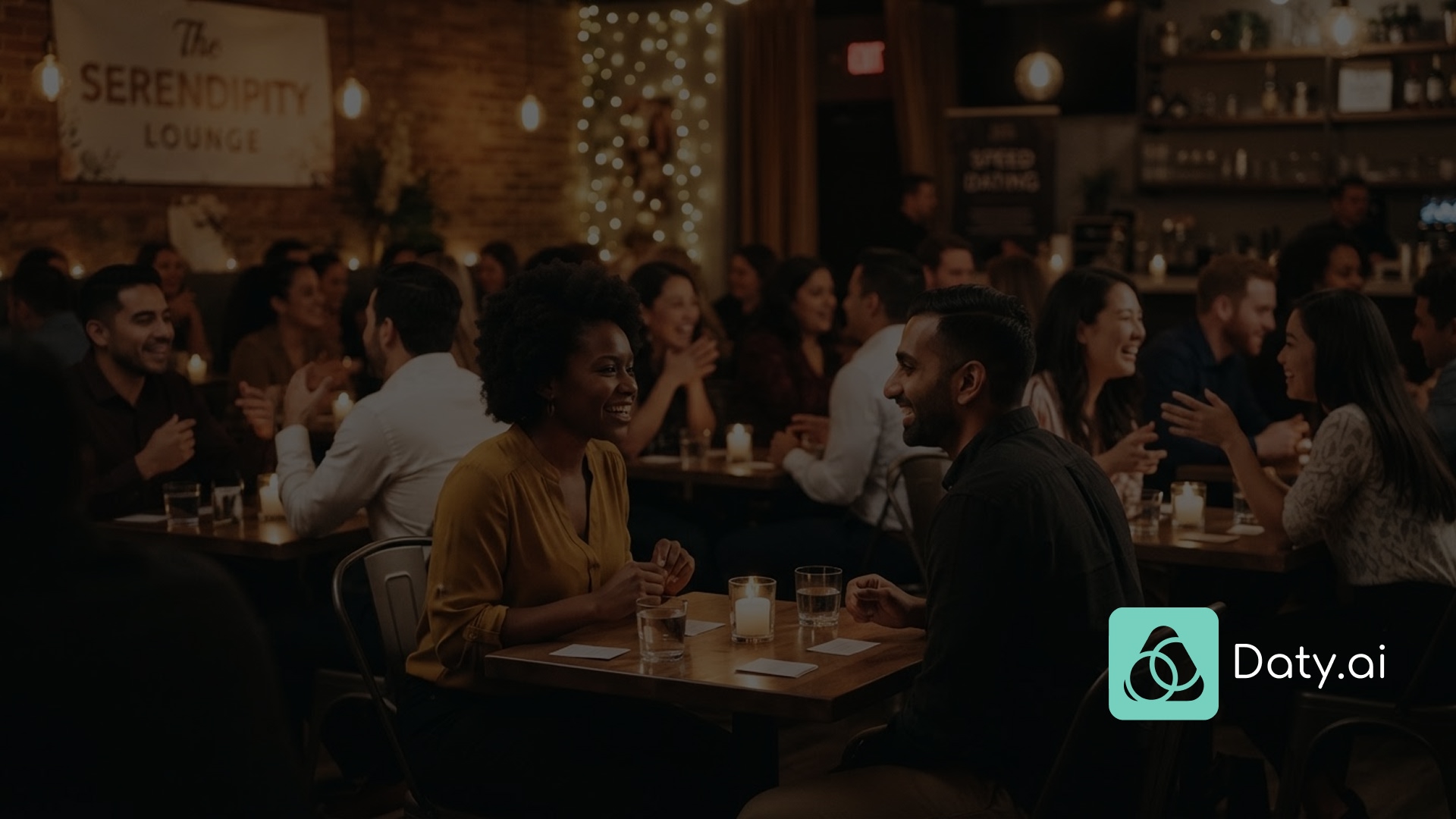
6. Choose smaller, curated singles events
Not every singles event deserves your time. Huge mixers often recreate the worst part of apps in physical form: rapid judgments, shallow conversations, and a room full of people optimizing for attention.
Look for formats with structure. Small dinner groups, activity-based gatherings, speed dating with thoughtful pre-event questions, and events organized around age range or relationship intent tend to create better conditions than an unfiltered crowd at a crowded venue.
The event itself is only the first filter. The real test is whether it encourages substantive conversation and makes follow-up easy without forcing chemistry. A good event gives you enough information to decide whether a second conversation is worth having. It does not pretend to manufacture a connection in seven minutes.
7. Use compatibility intelligence instead of endless browsing
The strongest digital alternative is not necessarily deleting technology. It is refusing technology that profits when you stay undecided.
A relationship decision system should help you understand the fit beneath the profile. That means looking at personality patterns, behavioral signals, life-stage timing, relationship expectations, and the reasons a match may or may not work. It should offer fewer recommendations with clearer reasoning, not an infinite feed designed to keep you searching.
This is the category Daty.ai is building toward: compatibility intelligence rather than a conventional dating marketplace. The premise is direct. Attraction matters, but attraction without alignment creates expensive confusion. Better dating technology should explain why a connection makes sense and when it is likely to be strongest.
AI is not a crystal ball, and no model can remove the need for judgment, communication, or chemistry. But it can improve the inputs. It can surface patterns you may miss when you are tired, hopeful, or reacting to a photo in half a second.
What Makes an Alternative Actually Better?
The best alternatives to dating apps have three things in common: repeated contact, meaningful context, and mutual intent. Repeated contact lets trust develop. Meaningful context reveals behavior instead of branding. Mutual intent prevents you from investing weeks in someone who was only looking for entertainment.
Not every alternative needs all three from the first meeting. A run club may provide context but no declared intent. A curated singles dinner may provide intent but limited context. The point is to build a dating process with multiple sources of signal instead of expecting one channel to do everything.
That may mean meeting people through your life while using a compatibility-led tool to make more deliberate introductions. It may mean saying yes to a friend's dinner while declining another endless-message match. The right mix depends on your schedule, location, comfort with social risk, and the kind of relationship you want.
Stop Optimizing for Matches
A match is not progress. A date is not proof. Even chemistry is not compatibility.
Start designing your dating life around evidence: Who shows up consistently? Who makes your life calmer rather than more confusing? Who shares not just your interests, but your direction? The answer is rarely found by swiping faster. It is found by putting better signals at the center of the decision.