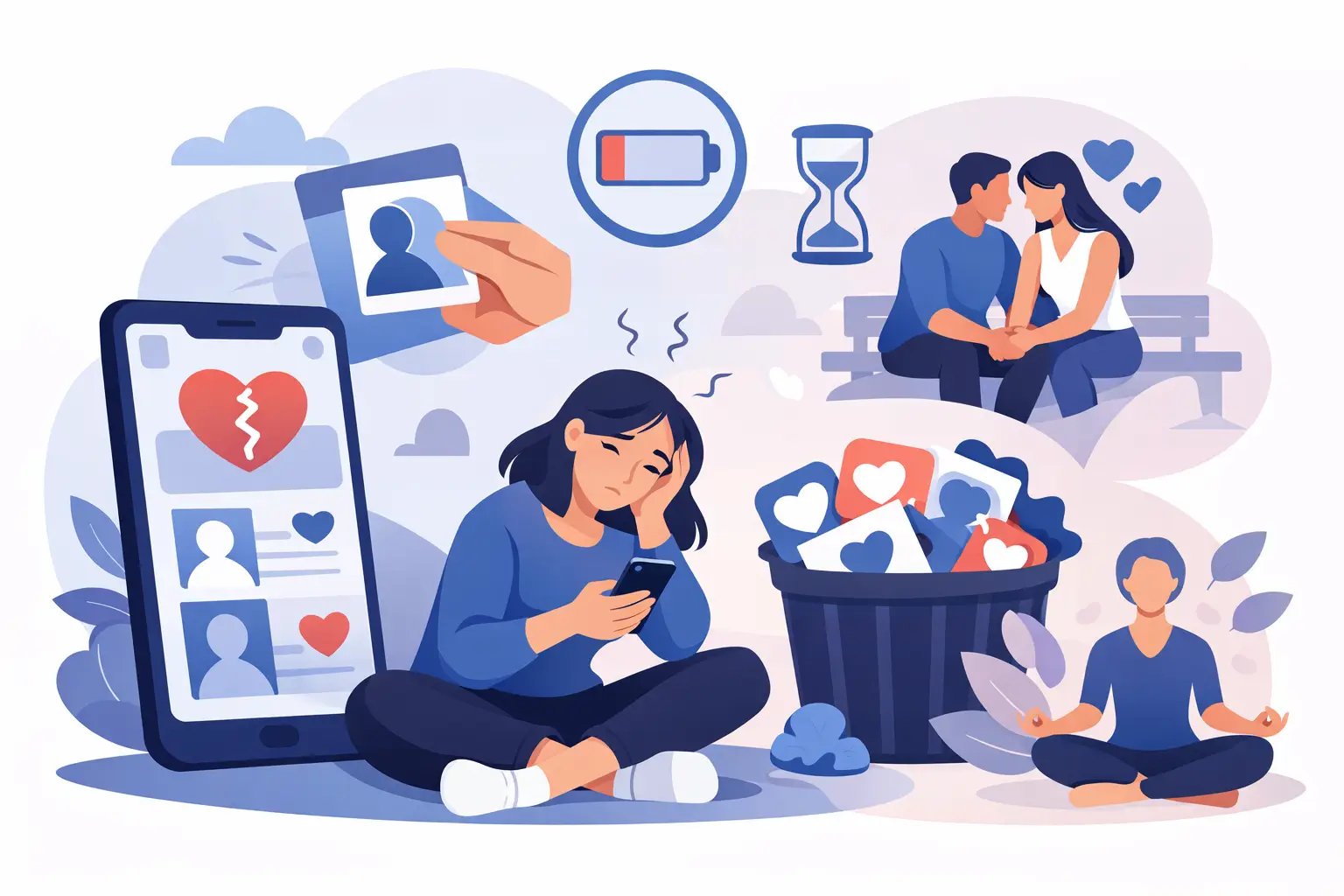
You know the feeling. Another match, another half-started chat, another week of spending attention on people you will never meet. Dating app burnout solutions matter because the problem is not just emotional fatigue. It is decision fatigue, pattern fatigue, and system fatigue. When the structure of dating keeps producing low-signal interactions, your energy is not the issue. The process is.
Most advice treats burnout like a mindset problem. Take a break. Be more positive. Update your photos. Lower your expectations, or raise them, depending on who is talking. That misses the point. If a system rewards volume over fit, more effort usually creates more exhaustion, not better outcomes.
This is the real shift serious daters need to make. Stop asking how to become better at swipe culture. Start asking how to date in a way that protects attention, sharpens judgment, and increases the odds of a meaningful match.
Why dating app burnout happens so fast
Burnout is not random. Dating apps are often built like engagement machines, not compatibility systems. They reward repeated checking, endless browsing, and fast judgments based on thin information. That design keeps people active, but it does not necessarily move them toward a strong relationship.
For intentional daters, this creates a brutal mismatch. You are trying to make one of the most important decisions in your life inside a product environment optimized for activity. The result is predictable. You feel busy without feeling closer to anything real.
There is also a hidden cognitive cost. Every profile asks for a tiny decision. Every conversation asks for more interpretation. Every date requires emotional setup, logistical effort, and post-date analysis. When that stack repeats with weak filtering, your brain starts to associate dating with waste.
That is why burnout can show up even when you still want a relationship. You are not tired of love. You are tired of low-quality processing.
Dating app burnout solutions that actually change the experience
The best dating app burnout solutions do not start with motivation. They start with system correction. If your current process creates noise, your first job is to reduce noise.
1. Shrink the top of the funnel
Most people think dating success requires more exposure, more profiles, and more conversations. For serious relationships, that logic often backfires. A wider funnel can produce more options, but it also produces more ambiguity, more distraction, and more emotional leakage.
Instead, get narrower on purpose. Define the non-negotiables that actually affect long-term fit. Think in terms of relationship structure, communication style, life-stage timing, emotional availability, and values under stress. Not just hobbies, not just chemistry, and definitely not just profile polish.
This does not mean building a fantasy checklist. It means separating what feels exciting from what holds up over time. Better filtering at the beginning saves enormous energy later.
2. Stop treating every match like a live possibility
One major source of burnout is premature emotional allocation. A match is not momentum. A good opener is not compatibility. Even a strong first date is not evidence of fit yet.
When people get drained, it is often because they are mentally projecting too early. They are evaluating potential before enough real data exists. That creates a cycle of hope, interpretation, and disappointment from interactions that were never substantial enough to carry that weight.
A better approach is simple. Stay curious, but keep early interactions in the evidence-gathering phase. Ask better questions. Notice consistency. Pay attention to effort, clarity, and pace. Serious dating gets easier when you stop giving imagined futures more power than observed behavior.
3. Put hard limits on app time
If you use a system with no boundaries, the system will set them for you. Usually by expanding into every idle moment.
Open-ended app use is one of the fastest paths to burnout because it keeps your attention fragmented. You are never fully dating, and never fully off. That middle state is exhausting.
Set defined windows for checking messages and reviewing matches. For many people, 20 to 30 minutes a day is enough. Some will do better with three scheduled sessions per week. It depends on your temperament. The point is not discipline for its own sake. The point is preventing dating from becoming a background process that drains focus all day.
If a platform punishes you for not being constantly active, that tells you something about the platform.
Build a process that favors signal over stimulation
Burnout gets worse when dating becomes reactive. Better results usually come from introducing structure.
4. Move to real conversation faster
Texting is useful up to a point. After that, it becomes theater. Long chat threads can create the illusion of progress while hiding the thing that matters most - whether the two of you can actually connect in real life.
If someone seems aligned on the basics, move toward a call or a date sooner. Not immediately, and not recklessly, but before the interaction becomes a performance. You learn more in 20 minutes of live conversation than in days of clever messaging.
This is one of the most effective dating app burnout solutions because it cuts out dead-end investment. You stop spending hours maintaining possibilities that collapse on contact.
5. Review patterns, not just people
Burned-out daters often focus on individual disappointments. The more useful move is pattern analysis. What kinds of profiles keep attracting you? Where do conversations stall? Which early signals have you been overlooking? Are you repeatedly choosing chemistry-first dynamics that cannot support long-term stability?
This is where dating becomes an intelligence problem, not a self-esteem problem. The goal is not to blame yourself for bad outcomes. The goal is to identify repeatable mismatches in your selection process.
When you do that, frustration becomes data. Data can improve strategy. That is very different from just accumulating more stories about why dating is terrible.
6. Date according to your actual life-stage timing
Compatibility is not only about who fits. It is also about when the fit is strongest. Two people can like each other and still be badly timed for the kind of relationship they both say they want.
This is one reason app dating feels so inefficient. Profiles flatten timing. Everyone appears equally available for the same outcome, even when they are not. One person is ready for real partnership. Another is healing, relocating, overworked, or emotionally undecided. The app surface treats those situations as equivalent. They are not.
If you want to avoid burnout, start screening for timing as seriously as you screen for attraction. Ask whether the person has room in their life for what they claim to want. Ask whether their behavior matches that claim. Timing will not fix incompatibility, but bad timing can make even good potential feel impossible.
7. Use tools that are designed for outcomes, not addiction
This is the bigger strategic answer. Some dating products are built to keep you searching. Others are built to improve the quality of the decision itself. That difference matters more than most people realize.
If your dating process depends on endless browsing, vague attraction sorting, and guesswork about intent, burnout is not a side effect. It is a natural outcome of the model. You are being asked to do too much filtering with too little intelligence.
A better system should reduce randomness, explain why a match makes sense, and narrow your focus toward people who align on deeper variables. Personality, behavioral patterns, and life-stage timing are not fringe details. They are core components of relationship quality. Daty.ai was built around that premise because modern dating does not need more swiping. It needs better decision infrastructure.
What to do if you are already burned out
If you are at the point where opening an app feels irritating, forcing yourself to push through is usually the wrong move. Burnout is a signal that your process has fallen below your standards.
Take a short reset, but make it an analytical reset, not just a disappearance. Decide what you are no longer available for. Maybe that means no more pen-pal conversations. Maybe it means only engaging with people who show clear intent. Maybe it means leaving environments that create volume without traction.
The goal is not to become colder. It is to become more precise. Precision protects hope better than constant exposure ever will.
There is also a trade-off worth naming. A more selective process may reduce the number of interactions you have. Good. That is often the point. If your current approach gives you lots of activity and little progress, less can be a serious upgrade.
Dating should not feel like a second job built on false positives. The strongest dating app burnout solutions are not hacks for enduring a broken system longer. They are ways to reclaim your attention and direct it toward something better. Protect your energy, raise the quality bar, and let your process reflect what you actually want.