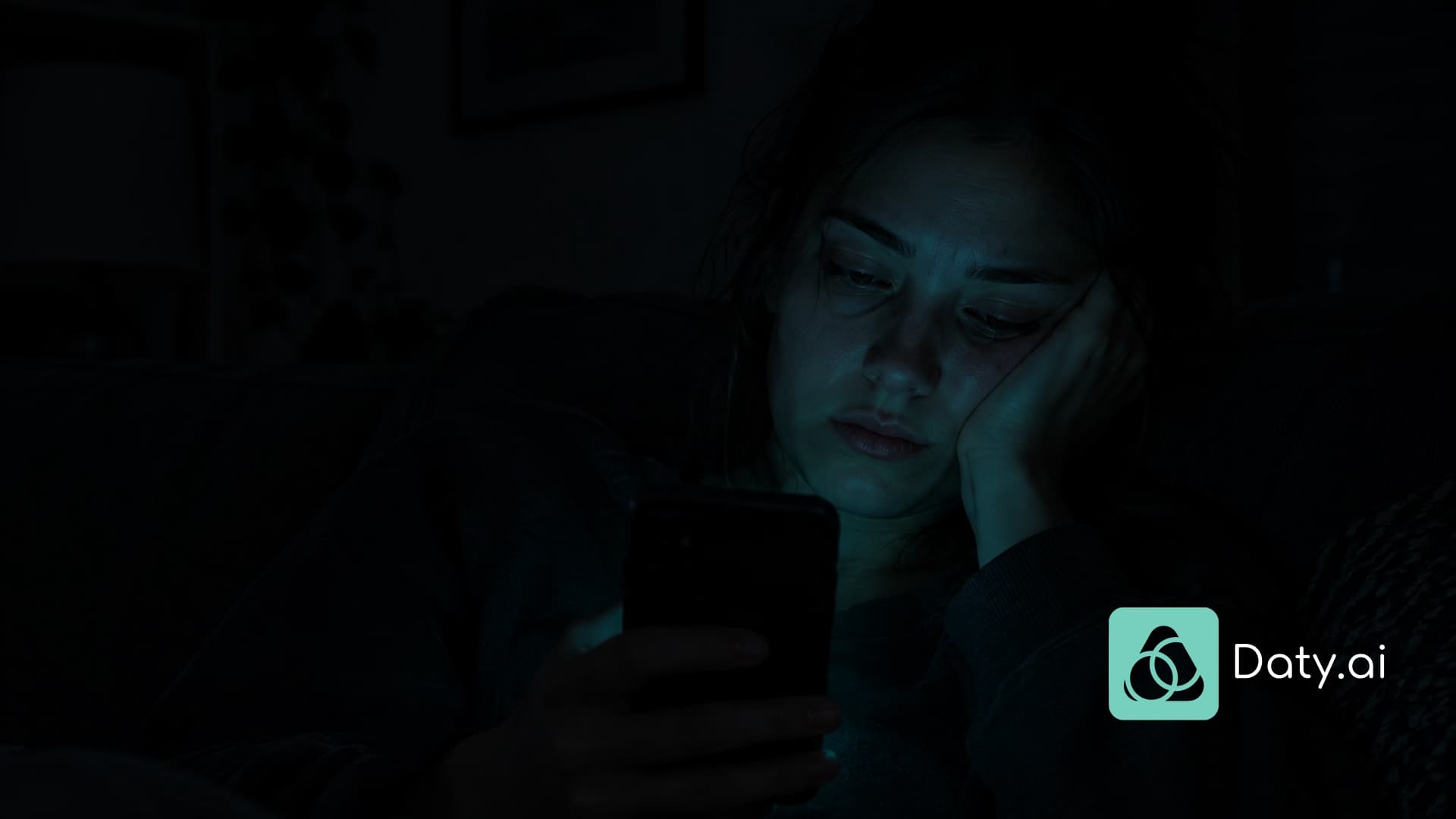
Dating burnout causes are often framed as a personal problem: you are too picky, too guarded, too tired, or not trying hard enough. That diagnosis is convenient for the dating app industry. It keeps the responsibility on the user while the system keeps serving more profiles, more chats, and more reasons to stay engaged.
But burnout is not a character flaw. It is what happens when a process demands constant emotional effort while producing too little useful information. For people looking for a serious relationship, the issue is not that dating requires effort. The issue is that swipe-based dating turns effort into repetitive, low-confidence labor.
The 7 dating burnout causes hiding in plain sight
1. Infinite choice creates decision fatigue
A feed of seemingly unlimited people feels empowering at first. Then it becomes mentally expensive. Every profile asks for a fast judgment with limited context: attraction, lifestyle, intent, values, communication style, and potential all compressed into a few photos and prompts.
The brain is not built to make hundreds of romantic micro-decisions without a cost. More options do not automatically create better odds. Past a certain point, they create comparison, second-guessing, and the persistent fear that a better option is one more swipe away. You stop evaluating fit and start managing inventory.
That is a bad trade for someone who wants a relationship, not a catalog.
2. Attraction-first sorting leaves out the variables that matter
Photos matter. Chemistry matters. Pretending otherwise would be dishonest. But attraction is only one signal, and it is a weak predictor of whether two people can build a workable life together.
Most apps place visual appeal at the front of the decision process and push deeper compatibility to the margins. That creates a predictable pattern: a strong initial spark, a few engaging messages, then a discovery that your priorities, communication rhythms, relationship readiness, or future plans do not align.
Those failed starts are not always failures. They can provide clarity. But when the same mismatch happens repeatedly, users begin to feel that dating itself is a dead end. The real problem is a matching model that asks the wrong questions too late.
3. Low-context conversations become unpaid emotional labor
The familiar opening exchange is rarely difficult because people lack social skills. It is difficult because both people are working with almost no context and little reason to believe the interaction will go anywhere.
You repeat the basics: where you live, what you do, what you like to do on weekends, what you are looking for. You decide how much warmth to show, whether a delayed reply means disinterest, and whether asking to meet will feel premature. Then the conversation disappears without explanation.
One stalled chat is forgettable. Twenty of them train people to protect their energy by investing less. The result is a dating environment where everyone wants a genuine connection but behaves cautiously because the cost of hoping has become too high.
4. Inconsistent behavior forces users to become detectives
Modern dating asks people to interpret weak signals constantly. A person can be enthusiastic one day and vanish the next. They can say they want commitment while avoiding any conversation that would reveal whether they are prepared for one. They can keep a connection alive just enough to preserve an option.
Some inconsistency is human. People get busy, uncertain, overwhelmed, or simply realize there is not a fit. The problem is not that every interaction needs perfect certainty. The problem is that many platforms normalize ambiguity at scale.
When there is no shared structure for intent, users compensate by overanalyzing. They read response times, punctuation, social media activity, and vague phrases for evidence. Dating starts to feel less like meeting someone and more like conducting an investigation with missing data.
5. Rejection arrives faster than recovery
Dating contains rejection. Any honest approach to relationships has to make room for it. What changes on apps is the speed and volume. A person may experience dozens of non-matches, unreturned messages, canceled plans, and quiet disappearances in a short period.
Each event might be small. Together, they can distort self-perception. Users begin to translate platform outcomes into personal verdicts: I am not attractive enough, interesting enough, successful enough, or easy enough to choose.
That conclusion is usually false. A non-match may reflect timing, location, preferences, an inactive account, or a stranger's momentary attention span. Yet systems built around rapid sorting provide almost no meaningful feedback. They deliver rejection without context, then encourage users to keep playing.
6. The app is optimized for activity, not resolution
This is the structural cause most dating brands avoid discussing. An engagement-driven platform benefits when people browse, return, react, and keep conversations alive. A user who quickly finds a stable, compatible relationship is a user who leaves the product.
That does not mean every dating app intends to exhaust its users. It means incentives shape design. Endless feeds, variable rewards, read receipts, streak-like behaviors, and superficial filtering keep attention moving even when they do not improve decision quality.
Serious daters feel this conflict instinctively. They want fewer conversations with higher potential. The system keeps offering more exposure, more choices, and more reasons to stay uncertain. Burnout is the rational response to a process that measures activity when the user measures outcomes.
7. Timing is treated as an afterthought
Compatibility is not static. Two people can share values, attraction, and life goals yet still be a poor match at a particular moment. One may be rebuilding after a breakup, starting a demanding career chapter, caring for family, or unsure of what kind of relationship they can sustain.
Traditional matching tends to flatten timing into a single label: looking for a relationship. That label is not useless, but it cannot capture readiness, pace, availability, or emotional capacity. Without those signals, people spend months pursuing alignment that existed only on paper.
Better dating decisions require a fuller view of fit: who someone is, what they need, how they relate, and whether their current life can support the kind of partnership they say they want.
What reduces burnout without making dating joyless
The answer is not to become detached, lower your standards, or treat people like data points. It is to demand a process that respects both emotion and evidence.
Start by reducing volume. A smaller number of well-reasoned introductions is usually more valuable than a large queue of vague possibilities. Look for early clarity around relationship goals, communication preferences, life-stage realities, and non-negotiable values. These conversations do not need to feel like an interview. They simply should happen before either person has spent weeks building a story around potential.
It also helps to set a decision boundary. If an interaction stays vague, inconsistent, or one-sided after a reasonable amount of time, step back. Do not keep extending emotional credit to a connection that has not demonstrated reciprocity. The right timeline depends on your situation, but the principle is stable: attention is valuable, and it should be earned through mutual effort.
Most of all, separate your worth from the mechanics of the platform. A feed cannot measure your capacity for partnership. It can only measure how you perform inside its narrow interface.
Daty.ai is built on a different premise: dating is not a discovery game. It is a compatibility intelligence problem. Better outcomes come from understanding the reasons a match may fit, the conditions that could make it work, and the risks worth seeing before your time and energy are already spent.
The goal is not to make dating effortless. A meaningful relationship still asks for openness, discernment, and courage. The goal is to stop spending that effort on systems designed to keep you searching.