Swipe apps turned dating into a volume problem: more profiles, more chats, more first dates, more frustration. But if you want a real relationship, volume is rarely the missing variable. A guide to compatibility driven dating starts with a different premise: the right relationship is not found by sorting strangers faster. It is built by identifying the patterns that make two people likely to thrive together.
That shift matters because attraction alone is cheap. A great photo can create interest. A clever opener can create momentum. Neither can tell you whether someone handles conflict with maturity, wants the same shape of life, or has the emotional capacity for the relationship they say they want.
Compatibility-driven dating replaces the discovery game with better decision-making. The goal is not to generate infinite options. It is to reduce noise, understand fit, and spend your time where the odds are genuinely stronger.
What Compatibility-Driven Dating Actually Means
Compatibility is often reduced to a shared interest or a personality label. You both like hiking. You are both ambitious. One quiz says you are a good match. Those details can be useful, but they are not a relationship model.
Real compatibility is multi-layered. It considers whether your values point in the same direction, whether your lifestyles can coexist without one person constantly compromising, and whether your emotional patterns work together under pressure. It also considers timing, because two highly compatible people can still fail when one is unavailable, unhealed, overwhelmed, or pursuing a different life chapter.
Compatibility-driven dating does not promise a conflict-free relationship. That is fantasy. It aims to identify the kind of differences a couple can navigate and the kind that become recurring structural problems.
A person who needs frequent reassurance may pair well with someone communicative and emotionally steady. That same person may struggle with a partner who values independence but withdraws whenever intimacy increases. Neither person is defective. The fit may simply demand more friction than either wants to carry.
Why Swipe Culture Produces So Much Dating Fatigue
Most mainstream apps optimize for engagement, not outcomes. Their mechanics reward browsing, novelty, and intermittent validation. The result is a system that asks users to make high-stakes judgments from low-quality signals.
Photos are not useless. Physical attraction matters. But attraction-first sorting gives appearance disproportionate power while burying the variables that determine whether a relationship can last. You can spend weeks building chemistry with someone before learning that they want different things, communicate in incompatible ways, or are not emotionally ready for what they claim to seek.
This creates the familiar cycle: match, message, meet, hope, uncover a fundamental mismatch, repeat. The problem is not that you are too selective or not selective enough. The system is asking you to do relationship due diligence after emotional investment has already begun.
Compatibility-driven dating moves more of that work upstream. It does not eliminate uncertainty, because people are not spreadsheets. It gives uncertainty better boundaries.
The Four Signals That Matter Most
A useful compatibility model looks beyond attraction without pretending attraction does not exist. Four categories deserve serious attention.
Values and relationship goals
Values determine what each person considers nonnegotiable. This includes family plans, money attitudes, faith, ambition, location, monogamy, community, and the role partnership should play in daily life.
The question is not whether you agree on every preference. It is whether your core priorities can support the same future. One person may want a flexible, travel-heavy life while another wants deep local roots and a predictable routine. Both paths are valid. They may not be easily combined.
Be especially careful with vague agreement. “I want something serious” means almost nothing without context. Serious can mean marriage within two years, exclusivity without cohabitation, or simply no casual hookups. Compatibility requires definitions, not assumptions.
Emotional and communication patterns
How people behave when things get difficult matters more than how charming they are when things are easy. Pay attention to repair, not just chemistry.
Can this person name what they feel? Do they make room for a concern without becoming defensive? Do they follow through after a misunderstanding? Are they able to state a boundary directly instead of disappearing, testing, or punishing?
No one communicates perfectly. The meaningful distinction is between someone who can return to a hard conversation and someone who turns every hard conversation into instability. A strong match is not two people with identical styles. It is two people capable of building a shared style.
Life-stage timing
Timing is not an excuse for poor behavior, but it is a real compatibility variable. A person can be kind, attractive, aligned in values, and still be in a season that makes partnership unlikely.
Career upheaval, a recent breakup, caregiving responsibilities, an impending move, or uncertainty about parenthood can change what someone has to give. Compatibility-driven dating treats stated intentions and lived capacity as separate signals. Someone may sincerely want commitment while lacking the bandwidth to create it right now.
This is where self-honesty becomes a competitive advantage. If you want a stable relationship, do not date potential availability. Date demonstrated availability.
Behavioral evidence
Words are inputs. Patterns are evidence. If someone says communication matters but regularly goes silent for days, the behavior carries more weight. If they say they want to meet but never make a plan, treat the hesitation as data.
Behavioral signals should not turn dating into surveillance. They should help you see what is already in front of you. Consistency, curiosity, accountability, planning, and respect for boundaries are not glamorous signals. They are often the signals that predict whether a connection can become a relationship.
How to Date for Compatibility Without Making It Feel Like an Interview
The fear is understandable: if you screen for too much too early, dating can feel clinical. The alternative, however, is not spontaneity. It is often avoidable confusion.
Start by getting specific about your own relationship criteria. Separate true requirements from preferences. A requirement is something that materially affects the future you want, such as wanting children, sobriety, geographic stability, or emotional consistency. A preference might be a shared hobby, a certain career, or a preferred social style.
Then let early conversations reveal structure naturally. Ask what a good week looks like for them. Ask what they learned from their last relationship. Ask how they picture the next few years. Notice whether their answers are thoughtful, evasive, rigid, or grounded in reality.
You do not need to present a checklist over drinks. You do need to stop treating basic clarity as a mood killer. The right person will not be threatened by a direct conversation about what you both want. They may even be relieved that someone finally asked a real question.
Give early dates enough room for presence and surprise. Algorithms and frameworks can help identify promising alignment, but they cannot manufacture emotional resonance. A compatibility model should make your attention more valuable, not replace your judgment.
Explainability Is the Missing Standard
A match recommendation is only useful if you can understand why it exists. “You both liked the same three prompts” is not intelligence. It is metadata.
Better matching systems should be able to explain the relevant alignment: shared relationship intentions, compatible rhythms, complementary communication tendencies, or mutual readiness for the same next chapter. They should also acknowledge uncertainty and possible tension points instead of selling certainty where none exists.
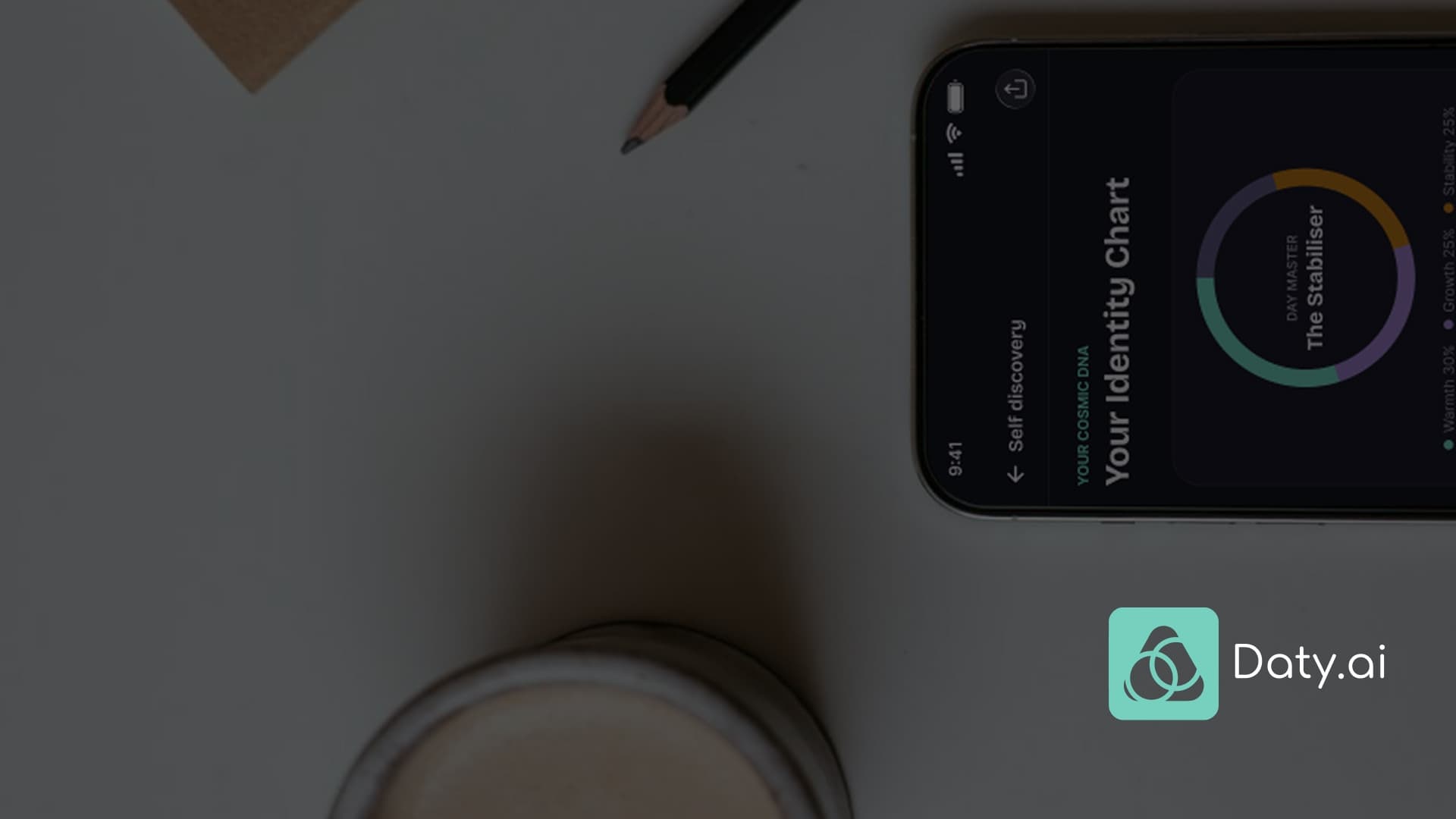
That is the category Daty.ai is building toward: compatibility intelligence that considers personality, timing, behavior, and the reasoning behind a recommendation. The ambition is not to automate love. It is to stop asking people to waste months learning what a better system could have surfaced earlier.
The Trade-Off: Fewer Matches, Higher Stakes
Compatibility-driven dating may produce fewer matches than a swipe app. That is not a flaw. It is the point.
Fewer options can feel uncomfortable if you have been conditioned to equate abundance with possibility. But an endless catalog often creates indecision, comparison, and the false belief that a better option is always one swipe away. High-quality dating asks for discernment, which means accepting that not every attractive person deserves more of your time.
There is also a risk in overrelying on compatibility scores. A model can identify probable fit, not dictate a future. Use it to ask better questions and make better choices, not to outsource your instincts. If a connection feels consistently unsafe, dismissive, or one-sided, a promising score does not override reality.
The smartest dating process is both analytical and human. It respects data, but it also respects your lived experience.
Stop measuring progress by how many people you matched with this week. Measure it by whether your conversations are clearer, your boundaries are stronger, and your time is moving toward the relationship you actually want.