Swipe culture trained people to treat dating like an endless feed: more profiles, more chats, more chances. Yet more access has not produced more clarity. These intentional dating tips are for people who are done confusing activity with progress and want a dating life built around a real outcome: meeting someone with whom a healthy relationship can actually grow.
Intentional dating is not about making every first date feel like a job interview. It is about making better decisions earlier, before chemistry, convenience, and messaging momentum pull you into something that does not fit. The point is fewer dead ends, not less openness.
12 Intentional Dating Tips for Better Decisions
1. Define the relationship you want before defining your type
Most people can describe their physical type in seconds. Ask them what daily partnership they want, and the answer gets vague. That gap creates expensive dating decisions.
Get specific about the life you are building: whether you want children, how you think about money, where you want to live, how much independence you need, and what commitment means to you. A great match is not just someone you enjoy on a Friday night. It is someone whose direction makes sense beside yours.
This does not mean writing a rigid checklist. It means distinguishing true requirements from preferences. A shared desire for parenthood may be nonnegotiable. A shared taste in music probably is not.
2. Stop treating attraction as a compatibility verdict
Attraction matters. Pretending otherwise is performative and unhelpful. But attraction is a signal, not a full assessment.
Sometimes intense early chemistry reflects novelty, uncertainty, or familiar but unhealthy patterns. Calm interest can feel less dramatic, particularly if you are used to chasing inconsistent people. Give yourself enough time to separate genuine attraction from the adrenaline of being chosen.
The trade-off is real: you should not force yourself to date someone you do not desire. But you also should not eliminate a potentially strong fit because the first interaction lacked a cinematic spark.
3. Make your profile a filter, not an advertisement
A generic profile is optimized for attention. An intentional profile is optimized for alignment.
Say something that reveals how you live and what you value. “Looking for someone genuine” tells no one anything. “I want a committed relationship with room for ambition, Sunday dinners, and direct communication” gives the right person something concrete to recognize.
You may receive fewer likes. Good. Volume is not the goal. Every vague profile invites people to project their own assumptions onto you, then act surprised when those assumptions collapse.
4. Ask questions that reveal operating systems
Early conversations do not need to be interrogations, but they should reveal more than favorite restaurants and travel photos. Ask questions that show how a person thinks, regulates stress, and makes decisions.
You might ask what they learned from their last relationship, what an ideal week looks like, or how they handle conflict with people they care about. Listen for ownership, self-awareness, and consistency. A polished answer matters less than whether it sounds lived-in.
The goal is not to catch someone saying the wrong thing. It is to understand their operating system before you invest heavily in the fantasy of who they might become.
5. Move from messaging to a date with purpose
Long texting stages create a false sense of intimacy. They also reward people who are excellent at banter but unavailable in real life.
If the conversation is respectful and reciprocal, suggest a low-pressure date within a reasonable window. Coffee, a walk, or one drink is enough to evaluate presence, curiosity, and basic ease. You are not auditioning for a relationship in 60 minutes. You are gathering better data than an app can provide.
If scheduling a simple date becomes confusing, evasive, or consistently one-sided, believe the signal. Interest that cannot become action is not useful relationship potential.
6. Date one person at a time when depth is the goal
Multi-dating can make sense at the earliest stage, especially when no one has earned exclusivity. But endlessly rotating through options trains the mind to compare people like products and avoid emotional risk.
Once you see credible potential, narrow your focus long enough to learn who the person is. You do not need to declare exclusivity after one date. You do need to decide whether your habits support the kind of connection you say you want.
For some people, seeing multiple matches prevents premature attachment. For others, it becomes a way to stay detached forever. Know which pattern is yours.
7. Watch for reciprocity, not just enthusiasm
A person can be charming, attentive, and highly enthusiastic for a week. Reciprocity is more durable. It appears in follow-through, emotional effort, scheduling, repair, and curiosity about your experience.
Notice whether you are always initiating plans, carrying difficult conversations, or adapting to their availability. Do not overcorrect by keeping score on every message. Instead, look for the overall shape of the connection. Does it feel mutual, or are you creating momentum alone?
Intentional daters stop interpreting minimal effort as hidden potential. They assess the pattern that is actually present.
8. Discuss the big topics before attachment makes them harder
Timing is not a minor detail. Two compatible people can still be a poor match if one wants commitment now and the other is undecided for years. The same is true for children, geography, lifestyle, faith, finances, and relationship structure.
Bring these topics up naturally, not defensively. You are not demanding a promise from a stranger. You are checking whether continuing makes sense.
Directness can feel risky because it may end a promising connection. That is precisely why it works. A mismatch discovered at date three is clarity. A mismatch discovered after six months is pain with a longer receipt.
9. Learn your patterns before blaming the pool
Yes, modern dating platforms often create bad incentives. Endless choice, superficial sorting, and engagement-first design can make everyone less decisive. But a broken system does not remove your responsibility to notice your own patterns.
Do you choose emotionally unavailable people because consistency feels boring? Do you stay too long because you fear starting over? Do you over-function in relationships, then resent the other person for accepting it? Honest answers change whom you pursue and whom you allow access to you.
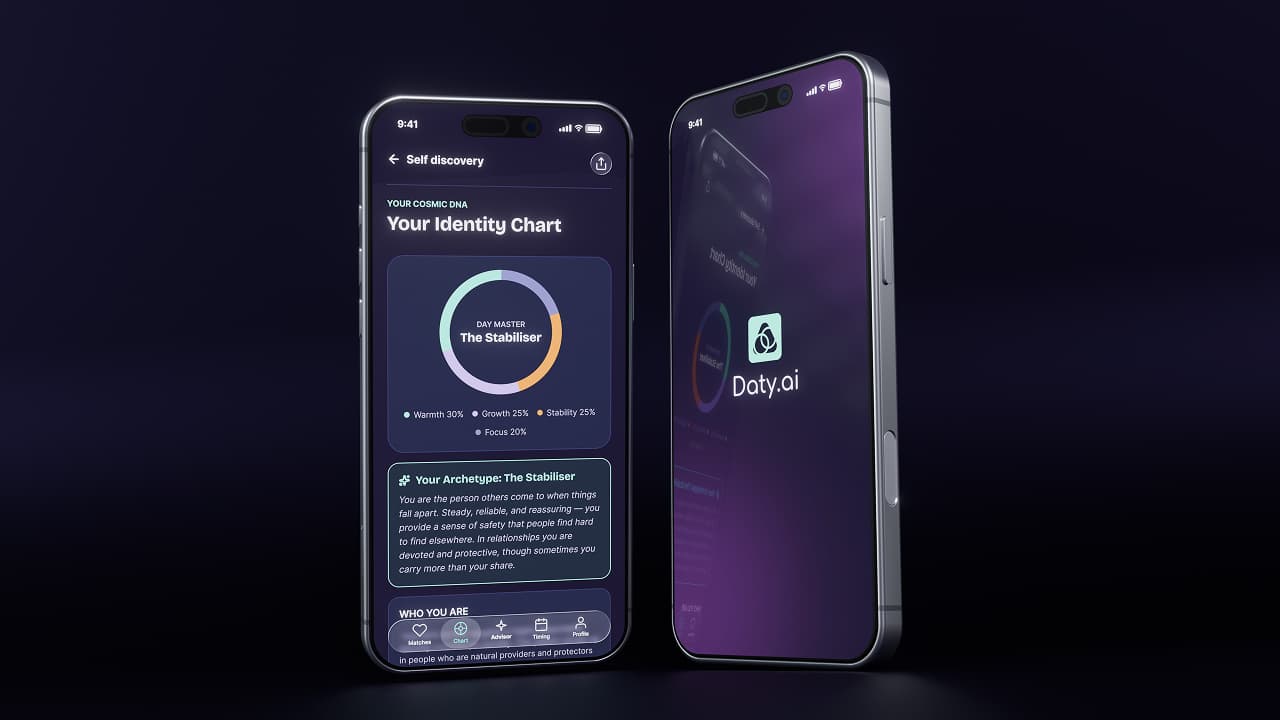
This is where compatibility intelligence matters. Daty.ai is built on the premise that better matches require more than surface preferences. Personality, behavior, life stage, and timing all affect whether a connection can work.
10. Treat boundaries as information, not a negotiation tactic
A boundary is not a test designed to make someone prove they care. It is a clear statement about what works for you.
If you need advance planning, say so. If late-night invitations do not match what you are seeking, decline them. If someone repeatedly disappears and reappears, do not explain your way into accepting it.
The right person may not share every preference, but they will respond to your clarity with respect. Their response tells you more than their initial apology or promise ever could.
11. Use post-date reflection instead of post-date overanalysis
After a date, avoid the familiar spiral: rereading texts, decoding response times, and asking whether they were “the one.” Ask more useful questions. Did I feel like myself? Was there mutual curiosity? Did their words and behavior align? Can I see enough shared direction to learn more?
Pay attention to your body, but interpret it carefully. Feeling calm can be a sign of safety. It can also mean there was no connection. Feeling nervous can signal excitement, or it can signal that something felt off. Reflection gives sensations context.
Write down a few observations if you tend to romanticize people after the fact. Memory is easily edited by loneliness.
12. Leave clearly when the answer is no
Intentional dating includes intentional endings. If you know you do not want another date, say so with kindness and finality. Do not fade out because you want to avoid discomfort, and do not keep someone around as a backup source of validation.
A simple message is enough: “I enjoyed meeting you, but I do not feel the connection I am looking for. I wish you well.” You do not owe a debate, a detailed critique, or an opening for negotiation.
Clear endings protect your time, their time, and the standard you are trying to create in your own dating life.
Build a Process That Respects Your Future
The best intentional dating tips are not tricks for getting a relationship faster. They are decision rules that keep you from abandoning yourself in pursuit of one. They help you choose based on evidence, not scarcity; alignment, not attention; and long-term fit, not just short-term excitement.
There will still be uncertainty. People are not spreadsheets, and no compatibility model can guarantee a lasting partnership. The goal is not perfect prediction. It is a smarter process that gives good connections room to develop and lets poor fits end before they consume another season of your life.
Your dating life does not need more noise. It needs a standard strong enough to make the wrong options feel easy to release.