Swipe apps made dating feel infinite. That was never the same thing as making it effective. The future of dating algorithms is not a faster way to browse strangers or a sharper prediction of who will earn a right swipe. It is a shift from attention engineering to compatibility intelligence: systems built to help people make better relationship decisions with less noise, less repetition, and more clarity.
For serious daters, that shift cannot arrive soon enough. The old model rewards activity, not outcomes. It keeps people moving because movement is measurable. But another stalled conversation, another mismatched first date, and another week of scrolling do not signal progress. They signal a system optimized for engagement rather than alignment.
Why swipe-based matching hit its ceiling
Most dating apps begin with a thin layer of information: photos, a short bio, location, and a few stated preferences. The algorithm then learns from surface behavior, such as who users like, skip, message, or meet. That can be useful for showing more profiles that look familiar. It is far less useful for identifying the conditions that support a lasting relationship.
Attraction matters. So do shared values, emotional availability, communication patterns, lifestyle expectations, conflict habits, relationship goals, and the timing of a person’s life. A person can be highly attractive, geographically convenient, and completely wrong for the kind of partnership you want to build.
The limitation is structural. Swipe systems treat dating as discovery at scale. They assume that more exposure creates better odds. For people seeking a serious relationship, more exposure often creates a different result: decision fatigue, shallow filtering, and a growing inability to tell the difference between genuine compatibility and momentary chemistry.
The next generation of dating technology has to reject that premise. The goal should not be an endless catalog of possibilities. It should be a smaller number of credible opportunities, paired with reasoning people can understand.
The future of dating algorithms is multi-layered
A meaningful compatibility system cannot reduce a person to a type, a photo, or a single questionnaire score. It needs to evaluate fit across several layers that interact with one another.
Personality is one layer. How someone restores energy, handles uncertainty, expresses affection, makes decisions, and responds under stress can shape the lived experience of a relationship. But personality alone is not destiny. Two people with similar traits may want different lives. Two people with contrasting traits may work exceptionally well when their needs and communication styles align.
Life-stage timing is another layer, and it is frequently underestimated. Someone ready to build a committed partnership now may not be compatible with someone who is still deciding whether they want one at all. Career intensity, family plans, location flexibility, financial priorities, and emotional bandwidth are not boring logistics. They are relationship conditions.
Then there are behavioral signals. What someone says they value matters, but patterns matter too. Do they follow through? Are they consistent? Do their conversation habits reflect curiosity and reciprocity? Over time, well-designed systems can help users recognize the gap between stated preferences and choices that repeatedly lead to dissatisfaction.
The point is not to judge people or declare anyone a perfect match. It is to model compatibility with more honesty. Real fit is layered, contextual, and dynamic. The best algorithms will reflect that reality instead of pretending a photo and a swipe can capture it.
Better timing may matter more than better chemistry
People often describe a failed connection as bad timing, as though timing were a vague excuse outside anyone’s control. In reality, timing is one of the clearest variables in dating. Readiness changes what people can offer, what they can receive, and what kind of relationship they are willing to prioritize.
A future-facing algorithm should account for this without becoming intrusive or deterministic. It should recognize that compatibility is not only about who makes sense on paper. It is also about whether two people are in a position to act on that potential.
That distinction changes the recommendation itself. Instead of saying, “You may like this person,” a smarter system can say, “This connection appears aligned because you share relationship intent, complementary communication needs, compatible lifestyle expectations, and similar readiness for the next step.” That is a fundamentally different product promise.
It also protects users from a common dating trap: trying to force a strong spark into a situation that cannot support it. Chemistry can start a relationship. Capacity sustains one.
Explainability will become non-negotiable
Black-box recommendations are acceptable when an app is choosing the next song you hear. They are far less acceptable when the recommendation affects your time, emotions, safety, and future.
The best dating algorithms will not simply rank people. They will explain the meaningful factors behind a recommendation in plain language. Users should be able to see why a match was surfaced, what forms of alignment appear strongest, and where potential friction may exist.
Explainability does not mean claiming certainty. A responsible system should never promise that two people will fall in love or stay together forever. Human relationships are not a prediction contest. They involve choice, growth, circumstance, and the willingness to do difficult things well.
But uncertainty is not an excuse for opacity. Clear reasoning gives users agency. It lets them decide whether a potential match is worth their attention based on more than an algorithmic score. It also makes it possible to challenge the system when its assumptions do not reflect their lived experience.
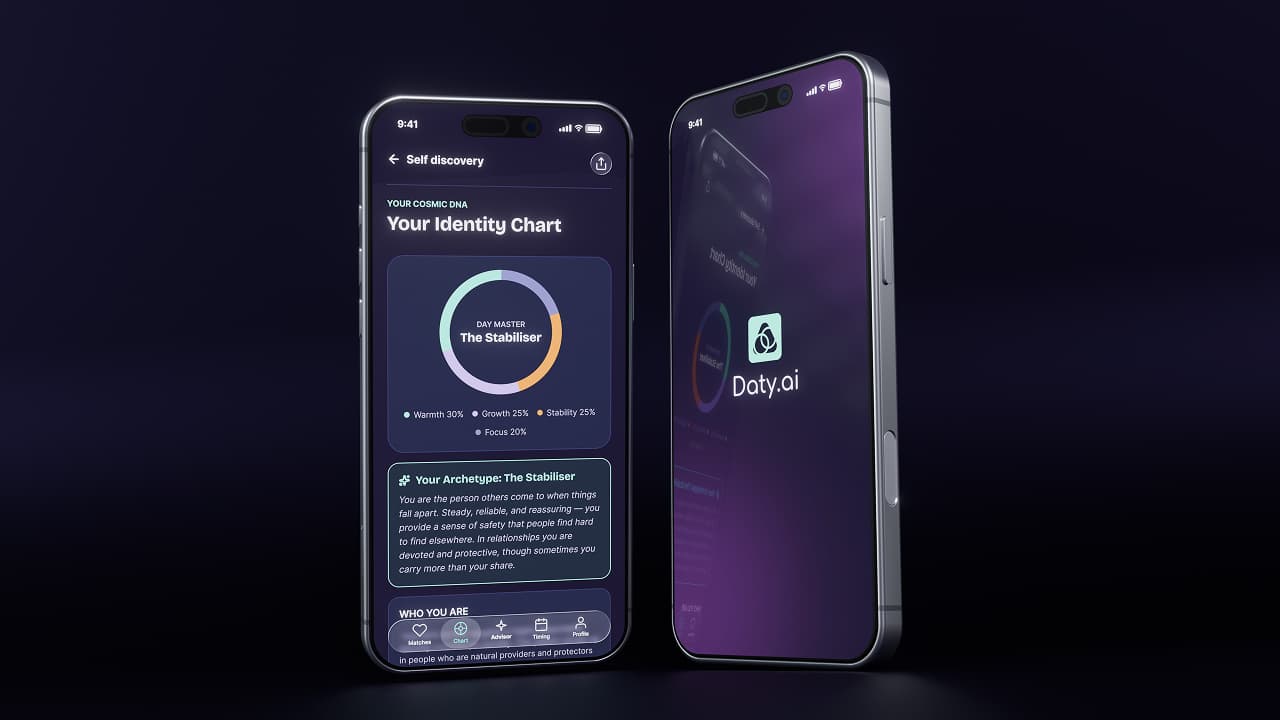
This is the direction Daty.ai is built around: compatibility intelligence that helps people understand who fits, when the fit is strongest, and why. The technology should make dating feel less like being processed by a feed and more like receiving useful decision support.
AI should create better conversations, not synthetic intimacy
Generative AI will play a larger role in dating, but there is a line the category cannot afford to blur. AI can help someone reflect on patterns, clarify relationship goals, prepare for a difficult conversation, or turn a vague preference into a more honest standard. Those are constructive uses of intelligence.
It should not become a substitute for human effort or authenticity. An AI-written opener may help a nervous user start a conversation, but it cannot build real connection on someone’s behalf. If one person is outsourcing their personality, the eventual date inherits the disconnect.
The strongest tools will use AI to improve self-awareness before they improve messaging. They will help users identify why they keep choosing unavailable partners, why certain interactions drain them, or why their stated goals and actual behavior are out of sync. That is not just better matching. It is better preparation for a relationship.
The hard trade-off: personalization versus privacy
More precise matching requires richer information. That creates an unavoidable responsibility. Dating platforms may hold deeply personal data about identity, values, emotional patterns, family goals, and private communication. Treating that information as fuel for ad targeting or compulsive engagement is a breach of trust, even when it is technically permitted.
The future of dating algorithms must be privacy-forward by design. Users need meaningful control over what they share, how it is used, and what they can remove. Sensitive inferences should be handled carefully, not silently converted into behavioral profiles that users never see.
There is also a fairness challenge. Algorithms learn from data, and data can carry cultural bias, narrow ideas of attraction, and assumptions about what a successful relationship should look like. A serious compatibility system needs ongoing scrutiny, diverse inputs, and mechanisms that prevent it from rewarding sameness as though sameness were the only path to connection.
Better intelligence is not just more data. It is better judgment about what data deserves to influence a recommendation.
Fewer matches will become a feature, not a failure
For years, dating apps trained users to equate abundance with value. Hundreds of profiles implied opportunity. A packed inbox implied desirability. Yet many people have never had more options and felt less optimistic about dating.
The next category leader may look quieter. It may recommend fewer people. It may ask more thoughtful questions before presenting anyone. It may encourage users to pause, reflect, and pursue one promising connection rather than keep one eye on the next option.
That will not suit everyone. People looking for casual experiences, novelty, or a high-volume social tool may prefer open browsing. But intentional daters are not asking for more choices. They are asking for better judgment.
A relationship is not improved by the number of alternatives waiting behind it. It is improved when two people have enough alignment, readiness, and curiosity to give it an honest chance.
The practical move is simple: stop measuring your dating progress by matches, likes, or time spent in an app. Measure it by the quality of what you learn, the standards you clarify, and whether each interaction brings you closer to the relationship you actually want. The systems worth trusting will help you do exactly that.