A great first date can create a dangerous illusion: the conversation runs late, the eye contact lands, and suddenly you are mentally rearranging your weekend. Attraction is real. It matters. But compatibility scoring vs attraction is not a contest between logic and desire. It is the difference between noticing a spark and deciding whether that spark belongs in your life.
Swipe-based dating taught people to treat attraction as the whole qualification process. A photo earns attention. A clever prompt earns a message. A good date earns another. Then, weeks or months later, fundamental mismatches surface: different relationship goals, incompatible lifestyles, emotional patterns that clash, or timing that makes a promising connection impossible to build.
That is not bad luck. It is a broken sequence. Attraction should open the door. It should not be asked to do the work of long-term judgment.
Attraction Is a Signal, Not a Strategy
Attraction is fast because it has to be. Your brain is constantly making rapid assessments based on appearance, energy, voice, humor, confidence, familiarity, and a hundred subtle cues you may never consciously name. That instant response can be exciting, useful, and deeply human.
It can also be wildly incomplete.
You may feel drawn to someone because they represent a pattern you know well, not because they are good for you. Familiar emotional dynamics can feel like chemistry. Inconsistent attention can feel like intensity. A person who looks perfect in a profile can still be unavailable, misaligned, or unable to build the kind of relationship you actually want.
None of this means people should date like they are hiring for a spreadsheet. Romance without desire is not the goal. The problem is assuming desire proves fit.
Attraction answers a narrow question: “Do I want to move closer?” It does not answer, “Can we make decisions together, repair conflict, support each other’s lives, and want the same future?” Those are different questions, and modern dating apps tend to blur them because endless attraction-based browsing keeps people browsing.
Compatibility Scoring vs Attraction: What Changes?
Compatibility scoring is not about declaring that a person is objectively an 87 and another person is a 62. Human connection is too contextual for that kind of false precision. A meaningful score is a structured way to identify patterns of alignment, tension, and uncertainty before you confuse momentum with evidence.
The right system looks beyond whether two people share favorite movies or both enjoy hiking. Surface overlap can make conversation easier, but it rarely predicts whether a relationship will hold under pressure. Compatibility lives in deeper layers: values, attachment and communication tendencies, relationship intentions, lifestyle realities, life-stage timing, and the behavioral signals that show how someone actually engages.
Consider two matches. With the first, there is immediate attraction, magnetic banter, and a strong physical pull. But one person wants to move toward commitment soon while the other is newly out of a relationship and emotionally noncommittal. Their lifestyles run on incompatible schedules, and direct conversations keep getting replaced by ambiguity.
With the second, attraction may build more gradually. The conversation has substance. Both people are aligned on what they are looking for, handle directness well, and have room in their actual lives for a relationship. They may not produce the same dramatic first-date rush. They may produce something much rarer: momentum that does not require self-abandonment.
A compatibility score should make that distinction visible. Not to eliminate choice, but to give choice better inputs.
Chemistry Can Be Real and Still Be Wrong for You
The dating industry has spent years selling a shallow idea of chemistry: instant attraction, effortless texting, constant excitement. That version is highly marketable because it is easy to package into profiles, likes, and notifications. It is also a poor proxy for relationship potential.
Healthy chemistry can feel calm. It can include curiosity, respect, playfulness, physical desire, and the relief of not having to decode every interaction. For people accustomed to chasing inconsistent partners, that calm may initially register as a lack of spark. Sometimes it is a lack of spark. Sometimes it is simply the absence of anxiety masquerading as passion.
This is where self-awareness matters. Compatibility intelligence cannot decide what you feel, and it should not try. It can help you separate a genuine attraction from an old pattern, identify where your stated preferences conflict with your dating behavior, and ask better questions before investment gets expensive.
The goal is not to suppress instinct. It is to stop letting instinct operate without context.
What a Useful Compatibility Model Should Measure
A serious compatibility model needs more than a questionnaire and a personality label. Personality is valuable, but it is only one layer. People also need alignment in timing, intentions, emotional capacity, and day-to-day reality.
First, there is core orientation: values, beliefs about partnership, desired level of commitment, family plans, independence, money, and what a meaningful life looks like. These are not small preferences. They shape the decisions a couple will make repeatedly.
Then there is relational style. How do two people communicate needs? How do they respond to conflict? Do they seek reassurance, retreat, overfunction, or make room for repair? Difference is not automatically incompatibility. Two people can have different styles and still work well if they understand the difference and both have the willingness to meet in the middle.
Timing deserves equal weight. A strong match on paper can fail if one person is overwhelmed by a career transition, caring for family, processing a breakup, or simply not ready to prioritize partnership. Timing is not an excuse for poor behavior, but it is a real constraint. Dating systems that ignore it create avoidable disappointment.
Finally, look at behavior. What someone says they want matters. What they repeatedly do matters more. Do they follow through? Can they sustain a reciprocal conversation? Do they make plans? Are they clear when something changes? Behavioral signals turn compatibility from a static profile claim into a living picture of readiness and intent.
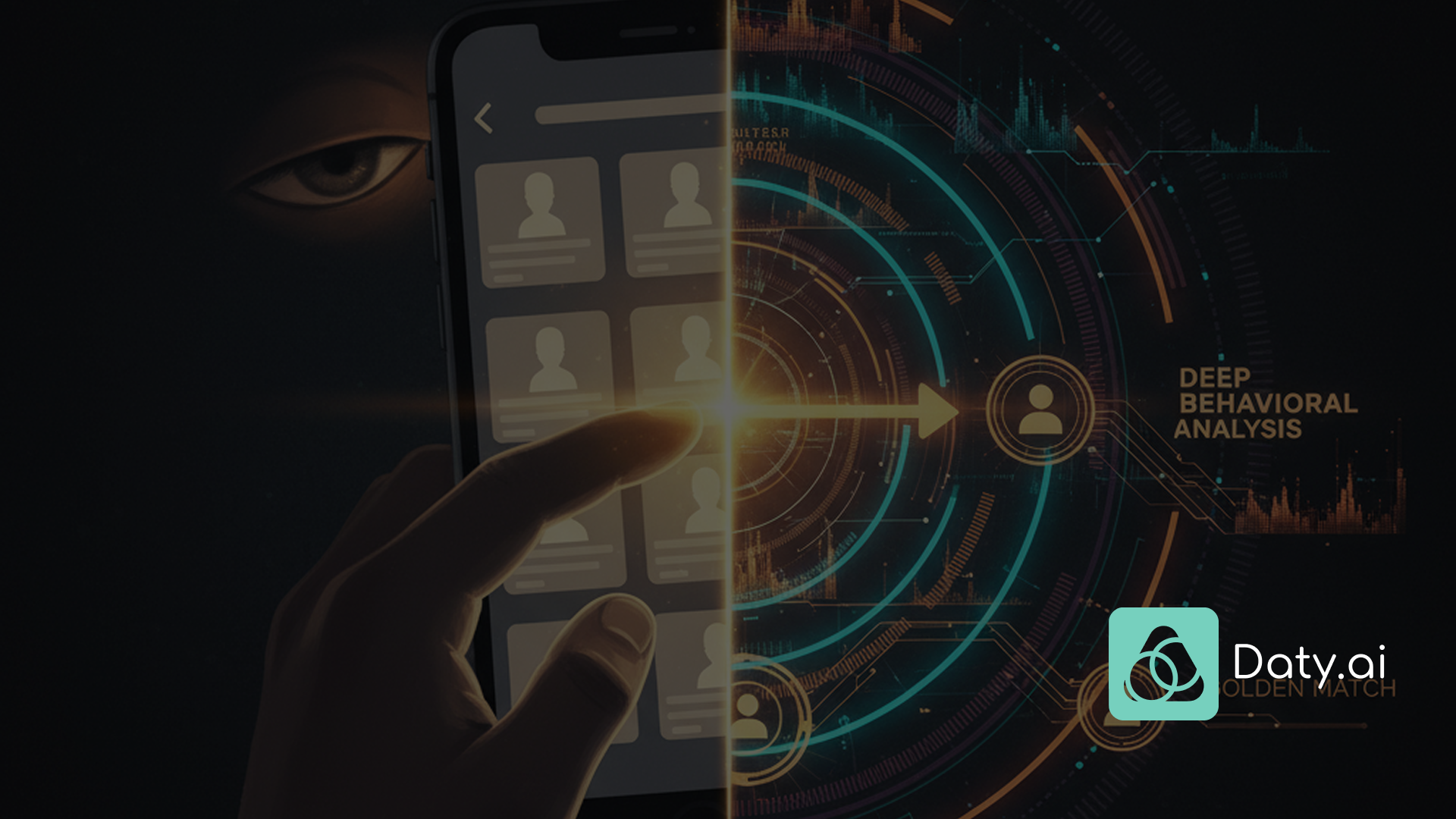
That is the premise behind systems like Daty.ai: fewer superficial signals, more explainable alignment. A recommendation should not just tell you that someone might fit. It should help you understand why, where the fit is strongest, and where you may need to pay attention.
The Risk of Treating Scores as Verdicts
Scoring has its own failure mode: people can mistake a model for a mandate. A high score is not a command to date someone you do not want. A lower score is not proof that a relationship cannot work. Models identify likelihoods and trade-offs. They cannot account for every lived detail, every moment of growth, or the particular way two people choose to show up for each other.
There is also no universal definition of compatible. Someone who values spontaneity may thrive with a partner who creates structure. Another person may experience that same dynamic as constraining. The useful question is not whether difference exists. It is whether the difference creates balance, friction, or resentment over time.
A credible compatibility system should be transparent about this. It should explain the dimensions behind a recommendation, acknowledge uncertainty, and leave room for human judgment. Black-box matching is just swipe culture with more expensive vocabulary.
Use Attraction to Begin, Compatibility to Decide
The strongest dating process gives both signals their proper role. Let attraction create openness. Let conversation test the story you are telling yourself. Let compatibility reveal whether the connection can hold weight outside a well-lit bar and a string of enthusiastic texts.
Instead of asking only, “Am I excited about this person?” add a few harder questions. Do I feel more like myself around them or less? Are our intentions aligned right now, not hypothetically? Is the connection reciprocal in actions as well as words? Can I name the reasons this might work without relying on chemistry alone?
Those questions do not make dating less romantic. They make it less wasteful.
The next time a match gives you a rush, do not dismiss it. Enjoy it. Then give the connection enough honesty to find out whether it is attraction worth following or compatibility worth building.