A person can look exceptional on paper and still be the wrong partner to build with right now. That is the uncomfortable truth behind the question, does timing shape relationship outcomes? Yes. Not because timing is mystical or because the right relationship should require perfect stars to align, but because relationships need more than attraction and theoretical compatibility. They need two people with the capacity to choose the same future at the same time.
Swipe-based dating trained people to treat connection as a discovery problem. Keep browsing until you find someone more attractive, more interesting, more compatible. But many relationships do not fail because the people were impossible together. They fail because one person was building while the other was recovering, drifting, avoiding, relocating, or still attached to a life they had not outgrown.
Timing is not a minor variable. It is part of compatibility itself.
Does Timing Shape Relationship Outcomes Beyond Chemistry?
Chemistry answers a narrow question: do we feel something? Compatibility goes further: can our values, habits, communication styles, and visions for life coexist? Timing adds the question most dating products ignore: can we actually act on that fit now?
Someone may want a committed relationship in the abstract while lacking the practical or emotional availability to sustain one. They may be fresh out of a long partnership, overwhelmed by a demanding career transition, co-parenting through instability, dealing with grief, or quietly unsure of what they want. None of these realities make them a bad person. They do make a serious relationship harder to build.
The same is true on the other side. You might meet a kind, aligned, emotionally aware person, but if you need clarity and momentum while they need months of ambiguity, the mismatch is real. Waiting for potential to become readiness is one of the most expensive habits in modern dating.
This is why “we had such a strong connection” is not always evidence that a relationship should have worked. Connection without mutual capacity often becomes a cycle of hope, confusion, and repeated disappointment.
Timing Is More Than Age or a Calendar
People often reduce timing to simple milestones: one person wants children soon, the other does not; one wants to move, the other is rooted. Those differences matter, but timing runs deeper than a timeline.
Life-stage timing is about the structural conditions around a relationship. Are both people able to make space for partnership? Are their near-term priorities compatible? Can they make decisions together without one person feeling pressured to abandon a necessary chapter of their life?
Emotional timing is different. A person can have time on their calendar and still have no room in their emotional life. They may be guarded after betrayal, addicted to novelty, unable to tolerate closeness, or still measuring every new connection against an ex. A polished dating profile cannot reveal that. Consistent behavior eventually does.
Intent timing is the third layer. Two people can both say they want a relationship while meaning entirely different things. One may mean, “I want to meet someone and build a shared life.” The other may mean, “I am open to something if it remains effortless and does not require difficult decisions.” Those are not interchangeable intentions.
The problem is not that every dater must arrive fully healed, financially complete, and perfectly certain. That standard is unrealistic. The question is whether both people can be honest about the chapter they are in and accountable for how that chapter affects another person.
The Difference Between a Hard Season and a Closed Door
Real relationships are not reserved for people with uncomplicated lives. A hard season can reveal generosity, resilience, and teamwork. Job loss, family strain, health challenges, and big transitions do not automatically disqualify someone from partnership.
The decisive factor is how a person handles the season. Do they communicate directly? Do they set realistic expectations? Do they make room for you where they can? Or do they use life complexity as a permanent explanation for inconsistency?
A hard season says, “I have a lot going on, but I want to be clear and intentional with you.” A closed door says, “I cannot give you what you need,” then keeps accepting the benefits of your attention anyway.
That distinction protects people from a common dating trap: romanticizing unavailability. Intensity can feel meaningful when access is scarce. It can create a false sense that earning someone’s commitment would prove the connection was special. Usually, it proves only that the situation was difficult.
Why Dating Apps Keep Missing the Timing Problem
Most dating apps are designed to maximize activity, not relationship outcomes. Their core system asks who is nearby, who fits a few filters, and who might produce a quick mutual reaction. It treats timing as an afterthought because timing is harder to capture than a photo, age, or location.
But the signals are there. Patterns in communication, consistency, stated priorities, relationship history, decision-making, and emotional responsiveness all say something about readiness. The issue is that swipe systems have little incentive to interpret those signals carefully. Endless choice performs better for engagement than fewer, more explainable recommendations.
That design creates a costly illusion: if a match stalls, there must be another one a thumb-scroll away. People keep restarting instead of learning. They repeat the same attraction patterns, overlook the same incompatibilities, and call it bad luck.
Dating does not need more volume. It needs better diagnosis.
What to Look for When Timing Actually Matters
You cannot interview your way into certainty on a first date. Nor should you turn early dating into a high-stakes audit. But intentional daters can pay attention to whether words, behavior, and circumstances point in the same direction.
Start with pace. A person who is genuinely available does not need to rush intimacy, but they generally create forward movement. Plans happen. Conversations deepen. Questions are answered without strategic vagueness. You do not have to decode whether interest exists every week.
Then look at their relationship with commitment. This is not about demanding labels immediately. It is about noticing whether they can talk about partnership without retreating into irony, defensiveness, or empty future talk. People who are ready may have fears, but they do not make their fears your permanent project.
Finally, watch for congruence. If someone says they value a serious relationship but consistently deprioritizes dates, cancels without repair, avoids difficult conversations, or keeps options conspicuously open, believe the pattern. Intent is not a statement. It is a pattern of decisions.
Compatibility Without Readiness Is Not Enough
This point can feel harsh, especially when there is real affection involved. But treating readiness as optional does not make a relationship more compassionate. It often creates an unequal arrangement where one person provides patience, emotional labor, and flexibility while receiving uncertainty in return.
There are exceptions. Some relationships begin during messy periods and become extraordinary because both people are willing to adapt, communicate, and make shared choices. Timing is not fate. It is a condition that can improve when people take responsibility for it.
Still, no one should confuse possibility with probability. If the relationship requires one person to wait indefinitely for the other to become available, the current outcome matters more than the imagined future.
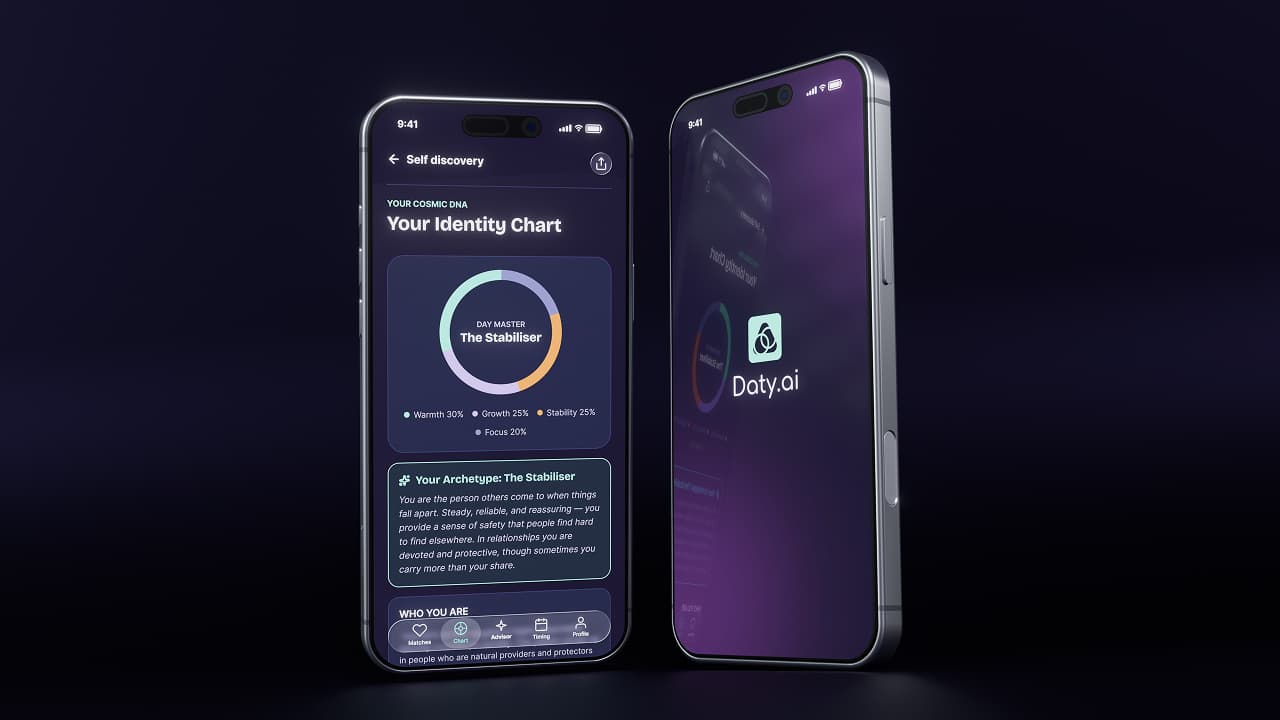
A smarter matching process should account for this from the beginning. Daty.ai is built around that premise: compatibility is not just who looks good together in a profile stack. It is personality, behavior, life stage, relationship intent, and the reasons a match may fit now rather than merely someday.
Better Timing Starts With Better Self-Honesty
The most useful timing question is not, “Are they ready?” It is also, “What am I ready for, and what am I repeatedly choosing?” Many people say they want stability while being drawn to distance. They say they want depth while giving their energy to people who cannot offer it. That is not a character flaw. It is a pattern worth understanding.
Be specific about your non-negotiables, but do not confuse them with a rigid checklist. A compatible life stage may matter more than a matching hobby. Emotional consistency may matter more than instant chemistry. A person who is clear about building may be a stronger fit than someone who creates a stronger first-date spark but leaves you guessing afterward.
The goal is not to engineer romance into a spreadsheet. It is to stop pretending that randomness is wisdom. The right relationship does not require perfect timing. It requires two people willing and able to make time, make choices, and make the relationship real.