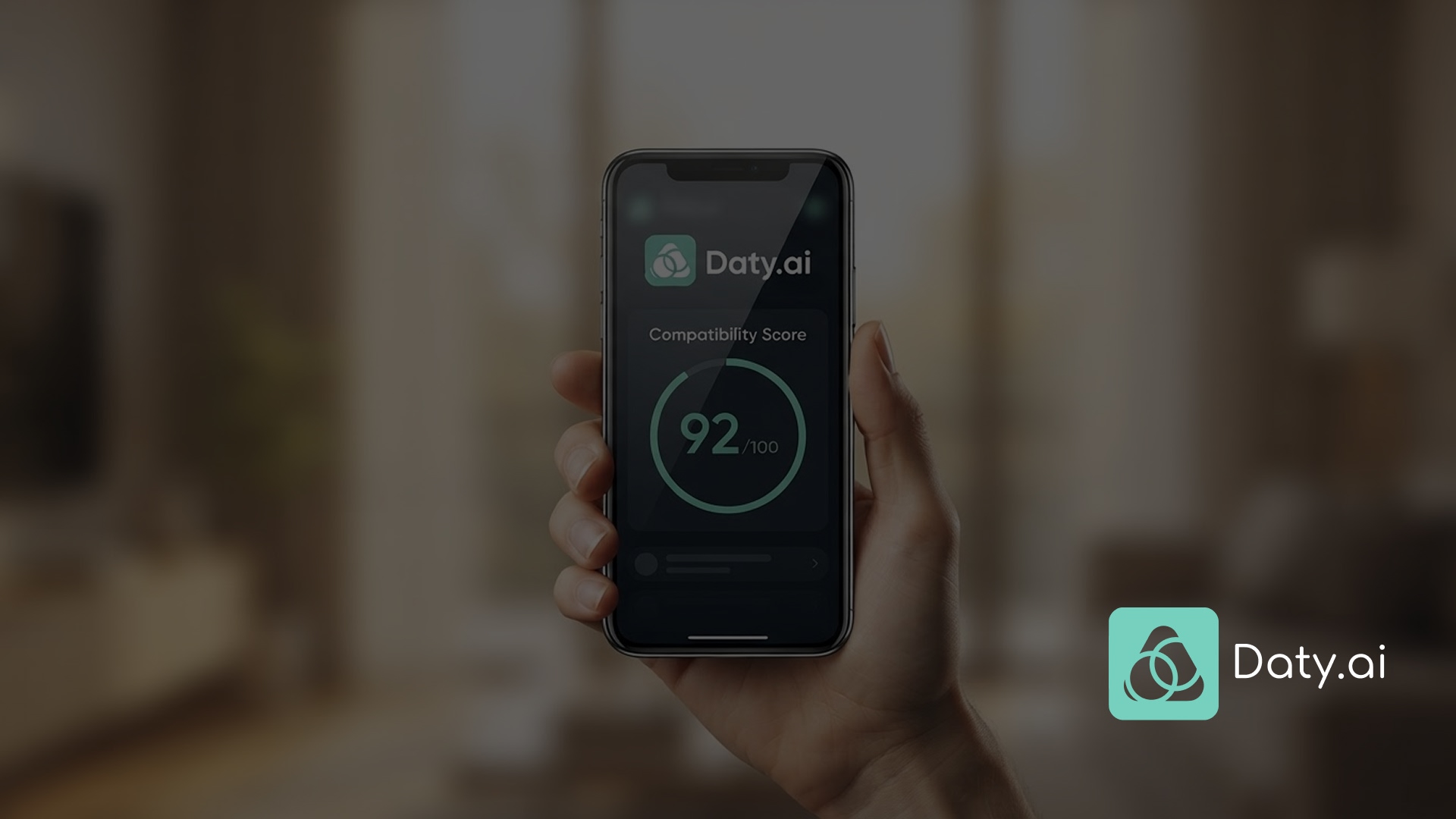
A dating app can show you thousands of available people and still leave you feeling like no one is actually within reach. That is not a dating problem. It is a decision problem. Modern matchmaking should not ask you to make life-shaping choices from six photos, a prompt about tacos, and a split-second reaction. It should help you identify who fits, whether the timing is real, and why the connection deserves your attention.
Swipe culture trained people to confuse access with progress. More profiles meant more possibility. More matches meant more validation. More conversations meant more chances. Yet the result for many serious daters has been the opposite: decision fatigue, repetitive small talk, unclear intentions, and a growing sense that dating takes more energy than it gives back.
The next version of dating cannot be a faster feed. It has to be a better system.
Why the swipe model keeps producing weak outcomes
Most mainstream dating platforms are built around engagement. Their incentive is simple: keep people browsing, reacting, returning, and generating more activity. A user who finds a healthy, lasting relationship is a success story, but not necessarily the ideal engagement pattern.
That mismatch matters. When a product is optimized for time spent, it will naturally reward novelty, volume, and immediate attraction. Those signals are easy to capture and easy to monetize. They are also weak predictors of whether two people can build a stable relationship.
Physical attraction matters. Shared interests matter. A good opening message can matter. But none of these signals answers the questions that decide whether dating becomes partnership: Do these two people handle conflict in compatible ways? Do they want similar lives? Are they equally ready for commitment? Does one person need a level of reassurance, structure, or independence the other cannot sustainably offer?
A feed cannot reason through those questions. It can only keep serving options.
The cost is not merely wasted evenings. It is the slow erosion of judgment that happens when every match feels interchangeable. People start treating real compatibility as a vague feeling instead of something they can understand, assess, and improve their odds around.
Modern matchmaking should explain the match
Modern matchmaking is not about adding AI-generated opening lines to the same old swipe mechanic. It is about changing the unit of value from a profile to a reasoned recommendation.
A meaningful match should be based on more than who looks appealing at the same moment. It should account for multiple layers of alignment, including personality patterns, relationship values, communication preferences, life-stage priorities, and behavioral signals. The purpose is not to declare that an algorithm knows someone better than they know themselves. The purpose is to surface patterns that are difficult to see when you are tired, hopeful, distracted, or sorting through too many options.
Just as crucially, the system should be explainable. “You may like this person” is not enough. Serious daters deserve clarity about why a match is being recommended.
Maybe two people share a similar appetite for direct communication but differ in how much social activity they need. Maybe their long-term goals align strongly, while their conflict styles require attention early. Maybe their values fit well, but one person is in a period of career transition that could make the timing less stable than it appears.
That kind of context does not remove uncertainty. Relationships are human, not mechanical. It does replace blind guessing with better questions.
Compatibility is more than similarity
One of the biggest misconceptions in dating is that compatibility means finding someone nearly identical to you. It does not. Two highly similar people can reinforce each other’s blind spots, avoid hard conversations in the same way, or want the same thing at fundamentally different speeds.
Compatibility is better understood as workable alignment. Some differences create energy and growth. Others create chronic friction. The distinction depends on the people involved and the role each difference plays in daily life.
For example, an introvert and an extrovert can be an excellent match if both respect recovery time, social needs, and boundaries. A planner and a more spontaneous partner can complement one another if neither turns their style into a source of control or resentment. But major misalignment around children, financial responsibility, emotional availability, or relationship structure is not a charming difference to overcome. It is information.
Better matchmaking systems should make that information visible before two people invest weeks trying to force a fit.
Timing is not a footnote
A match can be strong on paper and still fail because the timing is wrong. One person may be emotionally available while the other is still untangling a previous relationship. One may be ready to build a shared life while the other is only open to the idea in theory. One may have the capacity for a relationship, while the other is carrying a season of work, family, or personal upheaval that leaves little room for one.
Dating apps rarely treat this as a core signal. They generally classify people by basic preferences and proximity, then leave timing to chance. But timing affects not only whether a relationship begins. It affects how honestly people communicate, how consistently they show up, and whether early friction can be handled with maturity.
Modern matchmaking should treat readiness as a dynamic part of compatibility, not a checkbox. That does not mean judging people for being in transition. It means respecting that a promising connection deserves conditions where it can actually develop.
This is where self-awareness becomes an advantage. The more clearly you understand your current capacity, patterns, and priorities, the less likely you are to pursue chemistry that cannot become stability.
Fewer recommendations can create better decisions
The dating industry has sold abundance as a benefit for years. For someone seeking a serious relationship, abundance without judgment often becomes noise.
A smaller number of high-quality recommendations can be more valuable than an endless inventory of faces. It gives people the space to be present, curious, and intentional. It also reduces the impulse to abandon a potentially good connection the moment a newer option appears.
This does not mean a system should overcontrol the process or pretend it can identify one predetermined soulmate. Human attraction has context. People can surprise themselves. A smart matching model must leave room for agency, instinct, and the unexpected.
But agency works better with signal than with chaos. The goal is not to choose for people. It is to help them spend their attention where the probability of meaningful alignment is materially higher.
That is a very different promise from “keep swiping and see what happens.”
What AI should and should not do in dating
AI can help identify patterns across the information people share, from communication preferences to stated goals to recurring behavioral signals. It can reduce the administrative burden of dating and offer a structured perspective when a user is overwhelmed by options.
It should not become a black box that makes emotional decisions on someone’s behalf. It should not manipulate people into engagement, pressure disclosure, or treat intimate personal information as a commodity. The more personal the data, the higher the standard for privacy, consent, transparency, and user control.
The right role for AI is decision intelligence. It can show the reasoning, highlight potential strengths and tensions, and help users approach a match with better context. Then people do what people must do: talk, observe, listen, set boundaries, and decide whether the reality matches the recommendation.
Daty.ai is built around that premise. The objective is not more dates for the sake of activity. It is better-informed opportunities for people who are done mistaking motion for progress.
The future is not more dating. It is better matching.
The shift from swipe apps to modern matchmaking is a shift in what the category is designed to produce. One model creates attention. The other aims to create alignment. One turns dating into a discovery game with infinite rounds. The other treats romantic partnership as a high-stakes decision that deserves better inputs.
For intentional daters, the question is no longer whether technology belongs in dating. It already does. The real question is what that technology is optimizing for.
Choose systems that respect your time, make their reasoning clear, and help you see more than surface-level appeal. The right match may still require courage, patience, and a real conversation. But you should not have to fight a broken product just to get to one.