You matched with someone who looks promising. You exchange a few messages, the conversation loses momentum, and you reopen the app before the disappointment has even landed. Three new faces appear. The cycle restarts.
If you are asking when should you stop swiping, the answer is rarely “when you run out of options.” It is when the process stops producing useful information and starts consuming your attention. Swiping can feel like action. But more action is not the same as more progress toward a relationship that actually fits.
For intentional daters, the real question is not whether dating apps are bad. It is whether their design is helping you make better romantic decisions or training you to keep postponing them.
Swipe Culture Is Built for Motion, Not Outcomes
Most dating apps frame abundance as a benefit. More profiles, more likes, more possibilities. On the surface, that sounds rational. In practice, infinite choice creates a different problem: you are asked to make high-stakes judgments from low-quality signals.
A photo can tell you whether you feel an immediate pull. A clever prompt may hint at humor. Neither can reliably tell you how someone handles conflict, whether their life is compatible with yours, whether they are emotionally available, or whether they want the same kind of partnership at the same stage of life.
That gap matters. Swipe-based systems make attraction the entry point and compatibility an afterthought. They reward fast sorting, frequent returns, and a constant sense that a better option could be one more swipe away. The result is not necessarily connection. Often, it is decision fatigue dressed up as possibility.
There is nothing wrong with wanting physical attraction. It belongs in dating. The problem starts when attraction becomes the only signal strong enough to survive the app’s first filter. A relationship is not built from a first impression. It is built from the patterns that appear after one.
When Should You Stop Swiping? Watch for These Signals
You do not need to delete every app after one bad date. Dating involves uncertainty, and no matching method can eliminate it. But there is a clear point at which more browsing becomes a costly habit rather than a useful strategy.
The first signal is repetition. You keep seeing the same type of profile, having the same opening conversations, and reaching the same dead ends. If the outcomes repeat, the issue may not be your effort. It may be the filtering system that keeps sending you toward familiar but poorly aligned dynamics.
The second is emotional depletion. A dating process can be challenging without making you feel numb, cynical, or strangely detached from the people on the screen. When every new match feels like another task to manage, your judgment gets worse. You become more reactive, more superficial, and less able to recognize genuine potential.
The third is a widening gap between attention and action. Maybe you spend an hour swiping but avoid setting dates. Maybe you collect matches because choosing one person feels risky. Maybe you keep checking the app while talking to someone you genuinely like. This is not always a sign that you are unavailable for a relationship. Sometimes it is a predictable response to a product designed to keep alternatives in view.
The fourth is that you cannot explain what you are optimizing for. If your standard is mostly “I will know it when I see it,” every profile becomes a guess. You may have preferences, but preferences are not yet a decision framework. Without clarity on values, relational needs, timing, communication style, and long-term direction, more profiles simply create more noise.
The Problem May Not Be Dating Fatigue
Dating fatigue is real, but it is often treated as a personal failure. People blame themselves for being too picky, too hopeful, too guarded, or too tired. That story misses the structural problem.
You can be open-minded and still reject a poor match. You can want commitment and still need time to trust someone. You can enjoy meeting new people and still refuse a process that turns human connection into an endless feed.
The more useful diagnosis is decision fatigue. When an app gives you hundreds of thin data points, your brain looks for shortcuts. You overvalue chemistry, status, familiarity, or a perfectly polished profile because those signals are easy to process. The traits that predict whether a relationship can work are harder to see and easier to overlook.
This is why swiping can create the illusion that you are becoming more selective while making you less discerning. Selectivity asks, “Does this person fit what matters?” Swipe culture often asks, “Can I rule this person out in two seconds?” Those are fundamentally different questions.
Stopping Does Not Mean Settling
There is a fear underneath endless browsing: if you stop looking, you may miss someone better. That fear is understandable. It is also one of the strongest forces keeping people in low-return dating loops.
Stopping the swipe cycle does not mean committing to the next available person. It means refusing to confuse volume with standards. You can hold high standards while changing the way you evaluate people.
A better process gives attraction its proper place without letting it run the entire system. It considers whether your lifestyles can coexist, whether your relationship expectations match, whether the timing is viable, and whether your communication patterns create safety or friction. It also makes room for the fact that compatibility is not a static score. Two people can share values and still be poorly matched because one is ready for partnership while the other is still undecided about what they want.
This is the trade-off worth making: fewer possibilities at once, but more meaningful information about each possibility. Less novelty, more signal. Fewer conversations that go nowhere, more conversations with a reason to continue.
Replace Browsing With Better Questions
Before you decide to pause or leave swipe-based apps, get specific about what has not been working. Do not settle for “the apps are terrible.” Identify the failure point.
Are you matching with people who are attractive but unavailable? Are your dates pleasant but directionless? Are you choosing partners based on chemistry and discovering major incompatibilities weeks later? Or are you dismissing people too quickly because the app has taught you that another option is always waiting?
Then shift the questions you ask. Instead of asking whether someone is impressive, ask whether your lives are capable of moving in the same direction. Instead of asking whether the conversation is perfectly effortless, ask whether both people show curiosity, consistency, and the ability to repair small misunderstandings. Instead of asking whether someone checks every box, ask which conditions are truly nonnegotiable for a healthy relationship.
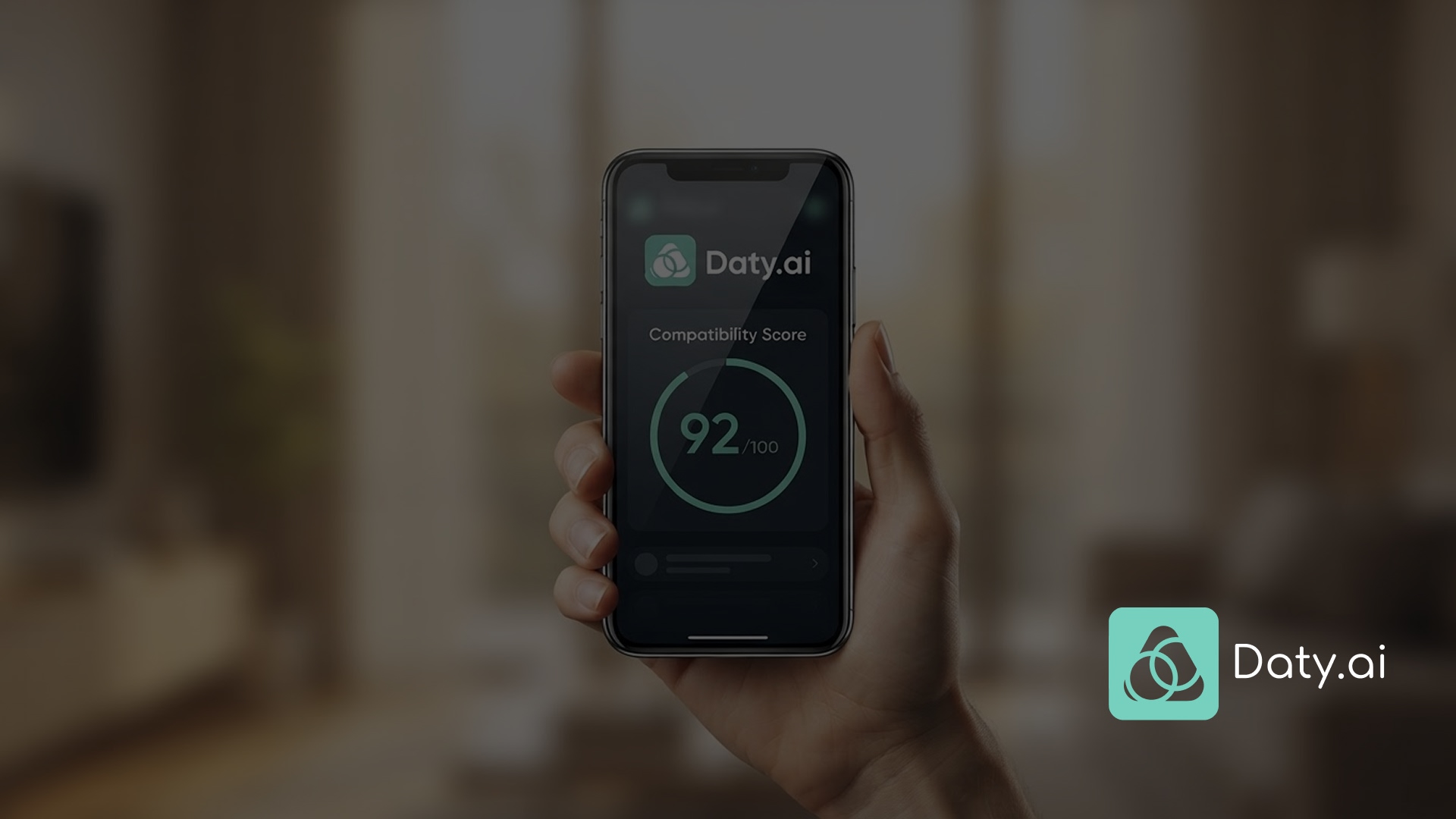
This is where compatibility intelligence changes the category. A system such as Daty.ai is built around the idea that dating should help people make sense of fit, timing, and behavioral patterns, not simply generate another queue of profiles. The point is not to outsource your judgment to an algorithm. It is to give your judgment better inputs and clear reasons behind a recommendation.
Explainability matters because a match should not feel like a black box. You should be able to understand why someone may align with your values, where the likely friction points are, and what kind of conversation could reveal whether the potential is real.
What to Do Instead of Swiping Tonight
If you feel the loop taking over, do not make a dramatic decision in a moment of frustration. Run a short experiment. Take a defined break from browsing and use that time to audit your dating pattern.
Review your last few connections. Look for the moments when interest faded, plans stalled, or incompatibility became obvious. Notice what you knew early but ignored because you were hopeful, lonely, attracted, or simply tired of starting over. That is not evidence that you failed. It is data about the signals your current process does not surface soon enough.
Next, define what a good first date is supposed to accomplish. It does not need to prove lifelong compatibility. It should help both people learn whether there is enough mutual interest, emotional ease, and practical alignment to continue. That is a far healthier goal than trying to manufacture certainty from one drink and a handful of texts.
Finally, protect your attention. If you are actively getting to know someone promising, let that experience breathe. You do not need to shut down your life or force exclusivity before it is earned. But constant browsing makes presence harder. It keeps your mind evaluating a hypothetical future instead of learning from the person in front of you.
The Right Time Is When You Want a Different Outcome
You should stop swiping when it becomes clear that the mechanism is working against the result you want. If you want casual discovery, the feed may still serve a purpose. If you want a serious, high-quality relationship, an engagement machine is a poor substitute for a thoughtful decision process.
The goal is not to date less. It is to waste less of yourself on a system that mistakes your attention for progress. Choose a process that helps you see people more clearly, understand your own patterns, and make room for the kind of connection that cannot be reduced to a left or right swipe.