A great first date can create a dangerous illusion: chemistry feels like compatibility. It is not. Chemistry can tell you that conversation is easy, attraction is present, or someone knows how to make an evening feel electric. It cannot tell you whether you want the same life, handle stress in compatible ways, or have the capacity to build something real.
That is what serious dating questions are for. Not to turn dinner into an interrogation, and not to force premature certainty. They help intentional people replace vague potential with useful signal before they spend months hoping a mismatch will resolve itself.
Swipe culture trains people to optimize for a spark, then calls it fate. A better dating process asks a harder question: does this person fit the life I am actually trying to build?
Why serious questions belong earlier, not later
Many daters delay the conversations that matter because they do not want to seem intense. The result is usually worse. They discover a major mismatch after attachment has formed, when leaving feels more complicated and compromise starts to look like self-abandonment.
Bringing up meaningful topics early does not mean demanding a five-year plan on date one. It means being honest about the category of relationship you are available for. Someone who wants a committed partnership deserves to know whether the person across from them is dating with similar intent. Someone who does not know what they want deserves the space to say that clearly, too.
Timing matters as much as values. Two people may both want marriage, children, or a shared home someday, yet still be a poor fit if one is ready to make decisions now and the other is avoiding them indefinitely. Similar labels are not enough. Look for compatible direction, pace, and behavior.
Serious dating questions that create real signal
The strongest questions are open enough to invite honesty and specific enough to reveal how a person thinks. Ask them naturally across several dates. Listen for consistency, not polished answers.
What does a healthy relationship look like to you?
This is more revealing than asking whether someone wants a relationship. Most people will say yes. Their definition is where the signal lives.
One person may describe autonomy, direct communication, and regular quality time. Another may picture constant contact, merging every part of life, or avoiding conflict at all costs. None of those preferences make someone inherently wrong. But they can expose an attachment mismatch before it becomes a recurring fight about texting, independence, or emotional availability.
Follow-up matters here. Ask what they learned from their last relationship about what they need and what they contribute. A self-aware answer has texture. It includes ownership, not just a list of what an ex did wrong.
What are you building your life around right now?
This question gets beyond job titles and reveals priorities. The answer might involve career momentum, caring for family, community, health, creativity, faith, recovery, or a move they are planning. You are not looking for someone whose life mirrors yours exactly. You are learning whether there is realistic room for a relationship and whether the lives you are each building could coexist.
This is especially useful for people in demanding seasons. Ambition is not a red flag. Neither is a full life. The issue is whether someone can articulate how partnership fits into that life, rather than treating it as an accessory they will get around to later.
How do you handle conflict when you care about someone?
Every relationship has friction. The differentiator is repair.
Listen for whether they can name a process: taking a breather without disappearing, speaking directly, apologizing when needed, and returning to the issue. Be cautious with answers that celebrate withdrawal, scorekeeping, explosive honesty, or a belief that a good relationship should never feel difficult. Conflict avoidance can feel peaceful at first. Over time, it often becomes emotional distance with better branding.
You can make this less abstract by asking about a disagreement with a friend, colleague, or family member. Patterns tend to travel across relationships.
What does commitment mean to you in practice?
Commitment is not a vibe. It shows up in decisions, boundaries, consistency, and willingness to repair after disappointment.
For some people, it means exclusivity after a clear conversation. For others, it means integrating partners into their broader life, making plans in advance, or approaching money and living arrangements with shared responsibility. The answer does not need to match yours word for word. But if one person sees commitment as an emotional feeling and the other sees it as a series of deliberate choices, frustration is likely.
This question can also reveal whether someone is still carrying an undefined attachment to an ex, a situationship, or an imagined future they have not released.
What role do family, children, and location play in your future?
These topics do not need to arrive as a checklist. They do need to arrive before the relationship gains too much momentum.
People often soften their preferences here to keep a promising connection alive. That is a costly mistake. Wanting children, not wanting children, needing to live near family, planning to relocate, or having significant caregiving responsibilities are not minor details. They shape the architecture of a shared life.
Compatibility does not require identical backgrounds. It requires enough alignment to make practical choices without one person silently surrendering what matters most.
What does financial partnership mean to you?
Money questions can feel unromantic until money becomes the source of recurring resentment. Ask about lifestyle preferences, debt philosophy, generosity, risk tolerance, and what fairness looks like when two people earn different amounts.
You do not need account balances on an early date. You do need evidence that someone can discuss responsibility without shame, defensiveness, or fantasy. Financial compatibility is less about identical income and more about compatible habits and honest conversations.
How do you make space for your own life inside a relationship?
A lasting relationship needs connection and differentiation. People who abandon friends, interests, or personal boundaries at the start of dating can create intensity quickly, but intensity is not stability.
This question helps you understand whether a person values a partner as a whole human being or expects a relationship to become their entire emotional ecosystem. The healthiest answers usually include both closeness and a continuing individual life.
The question underneath every answer
Do not evaluate answers as though you are grading an application. Dating is not a courtroom, and nobody needs perfect language to be a good partner. What matters is the pattern underneath the answer: clarity, accountability, emotional range, and congruence between words and behavior.
Someone can say they value communication, then disappear whenever a conversation gets uncomfortable. They can claim to want commitment, then avoid making plans more than a few days ahead. They can describe themselves as ready for a relationship while treating dating as a low-effort option. Behavior is not a bonus data point. It is the evidence.
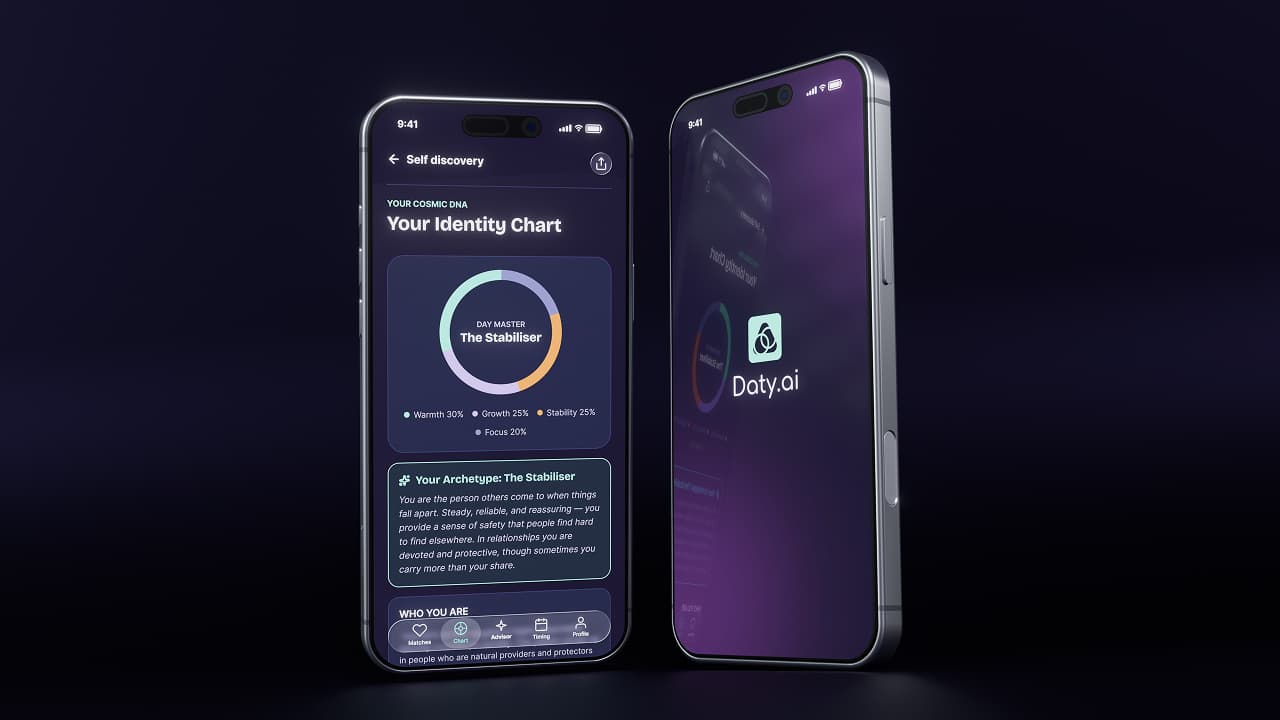
That is also why compatibility should never be reduced to a single shared interest or personality label. Real fit is multi-layered. It includes values, life-stage timing, relational habits, practical constraints, and the way two people make each other feel over time. Daty.ai is built around this premise: better dating decisions require more than an attractive profile and a mutual swipe. They require explainable alignment.
How to ask without making it feel like an interview
Lead with your own answer. If you ask what someone is looking for, offer your perspective first: "I am dating for a committed relationship, and I am trying to be more intentional about compatibility. What does that look like for you?" This creates openness instead of a test.
Choose the right moment. A question about conflict may flow naturally after discussing family dynamics or a past relationship. A conversation about location may belong on a third date, not in the first ten minutes. The goal is not speed for its own sake. The goal is to avoid investing blindly.
Then let silence do some work. People often rush to fill a pause, especially when a topic has emotional weight. Give them room to think. A thoughtful answer is more useful than a fast one.
Finally, let the questions work both ways. If you want emotional maturity, offer emotional maturity. If you want directness, be direct about your own limits, goals, and uncertainty. The point is not to find someone who says everything right. It is to build the conditions where both people can be known accurately.
The right connection will not be threatened by a real conversation. It will become clearer because of one.