You can feel immediate chemistry with someone and still spend six months wondering why every difficult conversation leaves you lonelier. That gap is where emotional compatibility lives. It is not the rush of attraction, shared music taste, or how easily you can talk for three hours on a first date. It is the less glamorous, more consequential question: Can two people make each other feel understood, safe, and respected when life stops being easy?
Swipe-based dating was built to optimize first impressions. Serious relationships are built on what happens after them. That is why so many promising connections burn bright, then collapse under pressure. The system selected for visibility and attraction. It did not assess how either person handles disappointment, asks for reassurance, sets limits, or repairs a rupture.
What emotional compatibility actually measures
Emotional compatibility is the degree to which two people can recognize, communicate, and respond to each other's emotional realities without abandoning their own. It does not mean you process feelings in identical ways. In fact, two highly similar emotional styles can intensify the same blind spots.
The real test is whether your styles can work together. One person may need time alone before discussing conflict; the other may need prompt reassurance that the relationship is still secure. That difference is workable when both people can name the need, honor the boundary, and return to the conversation. It becomes corrosive when space feels like rejection to one person and a request for closeness feels like control to the other.
Compatibility is not the absence of friction. It is the presence of a workable repair system.
Four signals that matter more than a perfect first date
Emotional alignment shows up in patterns, not declarations. Pay attention to how a connection behaves around these four conditions:
Emotional availability: Can each person express what they feel without disappearing, deflecting, or making the other person responsible for fixing it?
Conflict behavior: When there is tension, do you become opponents, or can you stay on the same side of the problem?
Responsiveness: Does each person notice and respond to bids for connection, from a vulnerable message to a request for support?
Repair capacity: After a misunderstanding, can you acknowledge impact, take responsibility, and rebuild trust without keeping score?
None of these signals requires perfection. Everyone gets defensive. Everyone has a bad week. The pattern matters because relationships do not fail from one imperfect response. They fail when the same emotional injury repeats and neither person has the capacity or willingness to address it.
Why chemistry can disguise emotional mismatch
Chemistry is real, but it is a poor standalone decision tool. Sometimes it reflects genuine mutual attraction and ease. Sometimes it reflects familiarity with a dynamic that is exciting precisely because it is unstable.
If unpredictability has been part of your dating history, inconsistency can register as intensity. A delayed reply creates anticipation. A hot-and-cold dynamic creates a chase. A distant partner may seem intriguing because winning their attention feels meaningful. Your nervous system is activated, so the connection feels significant.
That does not make you irrational. It makes you human. But it does mean that strong feelings are data, not a verdict.
A more useful question than “Do I feel a spark?” is “How do I feel after spending time with this person?” Are you clearer or more confused? More like yourself or more performative? Comfortable bringing up a concern, or already editing your needs to preserve the mood? Attraction matters. It simply cannot carry the entire weight of a relationship decision.
Emotional compatibility is not sameness
The internet often treats compatibility as a search for a mirror: same attachment style, same communication preferences, same emotional vocabulary. That approach sounds efficient, but it can be too simplistic.
A highly expressive person and a more reserved person can form a strong relationship. The trade-off is that they need more explicit agreements. The expressive partner cannot assume quiet means indifference. The reserved partner cannot expect their care to be automatically understood if they never articulate it.
Likewise, two independent people may value freedom and low-drama communication, but struggle to create enough closeness when one is hurting. Two deeply sensitive people may feel profoundly seen, but need stronger boundaries so every emotional wave does not become shared crisis management.
The goal is not identical wiring. It is mutual intelligibility. Each person needs to understand what the other person means beneath their behavior, and both need to be able to adjust without erasing themselves.
The questions dating apps rarely help you answer
Most apps give you a stack of profiles, a few prompts, and a dopamine loop disguised as choice. They ask whether someone is attractive, nearby, and available enough to message. They do not meaningfully help you identify whether you can navigate disappointment together.
That requires better inputs. Early on, listen for how someone describes past relationships. Not whether they have a flawless ex story, but whether they can hold complexity. Can they name what they contributed to a breakup? Do they speak about former partners with contempt? Can they describe a changed behavior, rather than just a painful lesson?
Notice what happens when plans shift, when you express a small preference, or when a conversation turns slightly uncomfortable. These are not traps. They are ordinary moments that reveal emotional operating systems. A person who responds with curiosity to a minor mismatch is giving you more useful information than someone who sends a perfect opening line.
You can also ask direct, grounded questions: What helps you feel supported when you are stressed? How do you prefer to handle conflict? What does reassurance look like to you? What have you learned you need in a relationship? The right match will not necessarily have the same answers. They will have answers they can own.
Compatibility needs timing and behavior
Emotional compatibility cannot be scored by personality alone. A person may be reflective, caring, and communicative, yet unavailable for a serious relationship because they are overwhelmed, newly out of a breakup, or unwilling to make room for partnership. Intent without capacity still creates disappointment.
This is the blind spot of conventional matching. It treats a match as a static comparison between two profiles. Real compatibility is dynamic. It depends on personality, values, relationship goals, life-stage timing, and the behavioral evidence that emerges once two people interact.
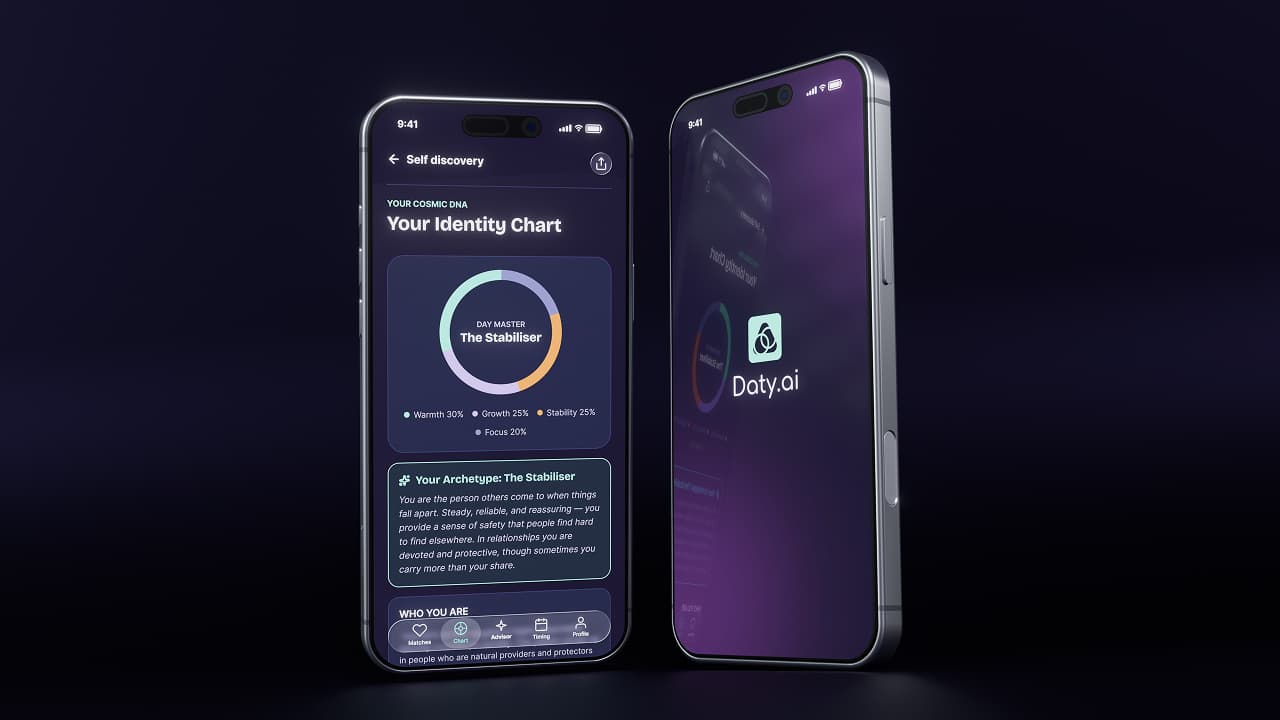
That is the problem Daty.ai is built to confront: dating is not a discovery game with better filters. It is a decision-intelligence problem. The point is not to generate more conversations. It is to create better reasons to invest in the few that have real potential.
Explainable matching matters here because “you are 87% compatible” is not insight. Knowing that you both value direct repair, want the same relationship trajectory, and have complementary approaches to closeness gives you something you can actually test in real life. Good technology should make your judgment sharper, not ask you to surrender it.
How to date for emotional compatibility
Do not try to assess everything on date one. Over-interviewing someone can create a polished performance rather than a genuine connection. Instead, treat early dating as a sequence of small observations. Let consistency accumulate.
Be honest about your own operating system, too. If you need regular communication, say so without apologizing. If you tend to withdraw when overwhelmed, name it and explain how you plan to reconnect. Self-awareness is not a demand that another person accommodate every pattern. It is the starting point for building a relationship where neither person has to guess the rules.
Then distinguish between a difference and a dealbreaker. Different social energy levels may call for planning. Different views on emotional honesty, respect, accountability, or commitment may signal a deeper incompatibility. You do not need to diagnose someone or prove they are wrong to decide that the fit is not strong enough.
The right relationship will still ask both people to grow. But growth should feel like becoming more honest, steady, and fully yourself - not becoming smaller so the connection can survive. Choose the person with whom difficult moments produce more understanding over the person who only makes easy moments feel electric.