A swipe tells you almost nothing about whether a relationship can work. It captures a split-second reaction to a photo, then asks you to spend hours sorting through the consequences. Next generation dating systems start from a different premise: dating is not a discovery game. It is a high-stakes decision problem involving compatibility, readiness, behavior, and timing.
For people who want a serious relationship, the current model is backward. Most apps give you a nearly infinite catalog, reward frequent checking, and call it progress. The result is familiar: too many conversations, too little context, and a growing suspicion that everyone is one swipe away from leaving. More choice has not produced more clarity. It has produced dating fatigue.
Swipe Apps Optimize the Wrong Event
Conventional dating apps are built to maximize engagement. That means more profiles viewed, more likes sent, more sessions opened, and more time inside the product. A great relationship may be the stated outcome, but it is not the mechanism the system is primarily trained to reward.
This creates a structural conflict. A user seeking a lasting partnership needs fewer decisions with better evidence. A swipe feed needs constant decisions with minimal evidence. One model values resolution. The other values repetition.
Attraction matters, of course. Chemistry is real, and no compatibility model should pretend a spreadsheet can manufacture desire. But attraction-first sorting turns one input into the whole process. It deprioritizes questions that often determine whether early chemistry becomes an actual relationship: Do your lives have room for the same kind of commitment? Do you handle disagreement in compatible ways? Are you building toward similar futures? Are both people emotionally available now, not hypothetically someday?
The swipe was never designed to answer those questions. It was designed to keep moving.
What Next Generation Dating Systems Should Actually Model
A better system does not promise a perfect match. Human relationships remain complex, changing, and deeply personal. What it can do is reduce avoidable mismatch by looking at the factors a profile grid ignores.
Compatibility Is More Than Shared Interests
Two people can love the same restaurants, travel destinations, and television shows and still be poorly aligned. Interests create conversation. Values, communication patterns, conflict preferences, ambition, family expectations, and emotional needs shape what happens after the first few dates.
Next generation dating systems should build a layered view of compatibility. That means considering personality patterns alongside relationship expectations and practical realities. The point is not to label someone as good or bad. It is to recognize that a person who needs frequent reassurance may struggle with someone who values extensive independence, unless both understand the difference and can meet each other with intention.
Good matching should make this visible before people invest weeks in ambiguity.
Timing Is a First-Class Variable
A strong fit at the wrong time can still fail. One person may be ready to build a committed partnership while another is recovering from a breakup, relocating, changing careers, or uncertain about what they want. Neither person is necessarily wrong. They may simply be out of sync.
Most dating products treat timing as a basic filter, such as age, distance, or whether someone has selected "looking for a relationship." That is not enough. Readiness has texture. It appears in priorities, availability, consistency, decision-making, and the life stage someone is actively navigating.
Timing should never become a rigid prediction or a judgment about a person's worth. It should be treated as context. The right question is not, "Are these two people compatible in theory?" It is, "Is there a credible path for them to build something together now?"
Behavior Matters More Than Self-Description
Everyone is capable of writing an idealized profile. They may genuinely believe it, too. But what people say they want and how they consistently show up are not always the same thing.
A meaningful system can learn from voluntary behavioral signals: whether a user follows through, how they engage with reflection prompts, what relationship priorities remain consistent over time, and which kinds of interactions create genuine momentum. It should not become surveillance, and it should not turn private vulnerability into a black box. Consent, clear data boundaries, and user control are nonnegotiable.
Used responsibly, behavioral insight adds a missing layer. It moves matching closer to real relationship patterns instead of relying solely on polished self-presentation.
Recommendations Must Be Explainable
A match score without reasoning is just a more sophisticated swipe. Serious daters deserve to know why a recommendation exists.
Explainable AI can show the alignment behind a match in plain language: shared relationship goals, complementary communication tendencies, compatible life-stage priorities, or a pattern of values that may support long-term stability. It can also surface areas that deserve an early conversation, such as different approaches to money, social energy, children, or where to live.
Explanation changes the role of technology. The system is no longer making a mysterious declaration about who you should date. It is presenting structured evidence so you can make a better decision. That distinction matters. AI should sharpen human judgment, not replace it.
Fewer Matches Can Create Better Dating
The dating industry taught people to equate volume with opportunity. More profiles, more chances. But volume has costs. It creates decision fatigue, makes people more disposable, and encourages low-effort conversations because another option is always waiting.
A system built around outcomes should be willing to recommend fewer people. That may feel counterintuitive after years of endless feeds. Yet for an intentional dater, a smaller set of high-context introductions is often more valuable than hundreds of shallow possibilities.
Fewer matches also create better conditions for attention. When each recommendation comes with a clear rationale, users can show up with curiosity instead of treating the interaction like another audition. Conversations become more specific. Early dates become more purposeful. Rejection, when it happens, becomes less likely to feel like evidence of personal failure and more like useful information about fit.
This does not mean every interaction must carry immediate pressure. A first date should still be a first date, not a negotiation for a five-year plan. The difference is that both people arrive with a stronger reason to explore than a mutually approved photo.
The AI Standard Should Be Higher Than Convenience
AI can make dating more intelligent, but only if the product is designed around the user's interests rather than the platform's appetite for engagement. A flashy chatbot or a generic personality quiz is not a compatibility system. Neither is a recommendation engine that cannot account for changing goals or explain its conclusions.
The standard should be higher. Users should be able to understand what data informs recommendations, correct inaccurate assumptions, update their priorities, and decline forms of analysis they do not want. Sensitive information must be handled with care. A model can identify patterns, but it cannot know the full texture of a person's history, values, or capacity for change.
There is also a risk of false certainty. Compatibility intelligence should not tell people that a relationship is guaranteed, or that a lower-ranked match is doomed. Human connection includes surprise, growth, and choices no model can fully predict. The value of the system is not certainty. It is better signal before emotional time is spent.
Dating Needs Decision Intelligence, Not Better Swiping
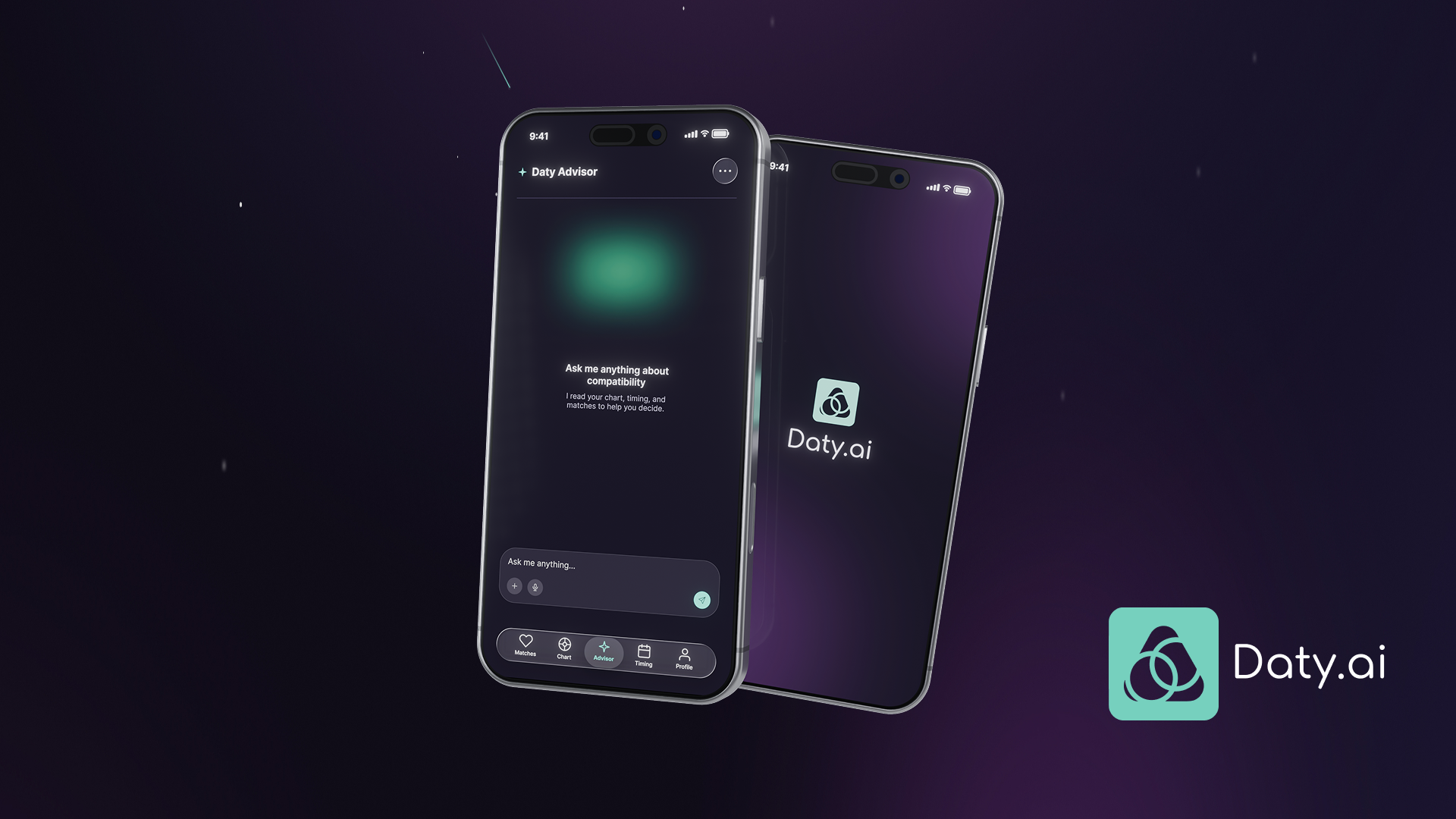
This is the category shift Daty.ai represents: moving from a marketplace of attention to an intelligence layer for relationships. The goal is not to make dating feel more transactional. It is to remove the transaction-like mechanics that have turned people into inventory.
A decision-intelligence approach combines self-understanding with match understanding. It helps someone see not only who may fit, but why certain patterns have worked or failed in the past. That can make dating more emotionally honest. Instead of repeatedly choosing familiar but unhelpful dynamics, users gain language for what they actually need and what they are ready to build.
For some people, this will mean prioritizing emotional steadiness over instant intensity. For others, it will mean recognizing that shared ambition or family goals deserve more weight than surface-level similarity. There is no universal formula for love. There are better questions, better evidence, and better ways to use both.
The future of dating should not ask you to swipe harder, perform better, or tolerate more noise. It should help you protect your time, understand your patterns, and meet people with a real reason to believe the connection is worth exploring.