A dating app can show you hundreds of people before breakfast and still leave you no closer to a relationship. That is the central failure behind ai matchmaking vs swiping: one system is built to keep choices flowing, while the other should be built to reduce noise and improve decisions.
Swiping made dating feel accessible, fast, and infinite. It also turned a deeply personal decision into a rapid-fire visual sorting exercise. For people looking for a serious partner, the result is often familiar: promising profiles, repetitive conversations, mismatched expectations, and the low-grade exhaustion of starting over.
The question is not whether technology belongs in dating. It already does. The real question is what that technology is optimizing for.
Swiping Optimizes for Activity, Not Alignment
Swipe-based apps begin with a simple interaction: see a profile, make a split-second judgment, move on. That design is efficient at generating engagement because it makes every decision feel low-stakes. There is always another profile, another possibility, another small hit of anticipation.
But attraction at a glance is not the same thing as compatibility. A photo can indicate style, physical appeal, or shared taste. It cannot reliably tell you whether two people handle conflict similarly, want the same kind of relationship, have compatible lives, or are emotionally available at the same time.
That gap creates a predictable pattern. Users make choices with limited information, match with people based on surface-level signals, and then spend time uncovering fundamental misalignment after the fact. The app calls this discovery. For many daters, it feels like preventable waste.
Swiping also creates a volume problem. When the system rewards more likes, more matches, and more time spent browsing, it has little incentive to help you leave. A meaningful relationship is a successful human outcome, but it is not always an engagement outcome for a conventional dating marketplace.
This does not mean swiping is useless. It can work for people who enjoy browsing, are open to casual connections, or have a clear type and plenty of time. It is less effective when the goal is a high-quality long-term relationship and the dater is tired of treating every conversation like a new screening call.
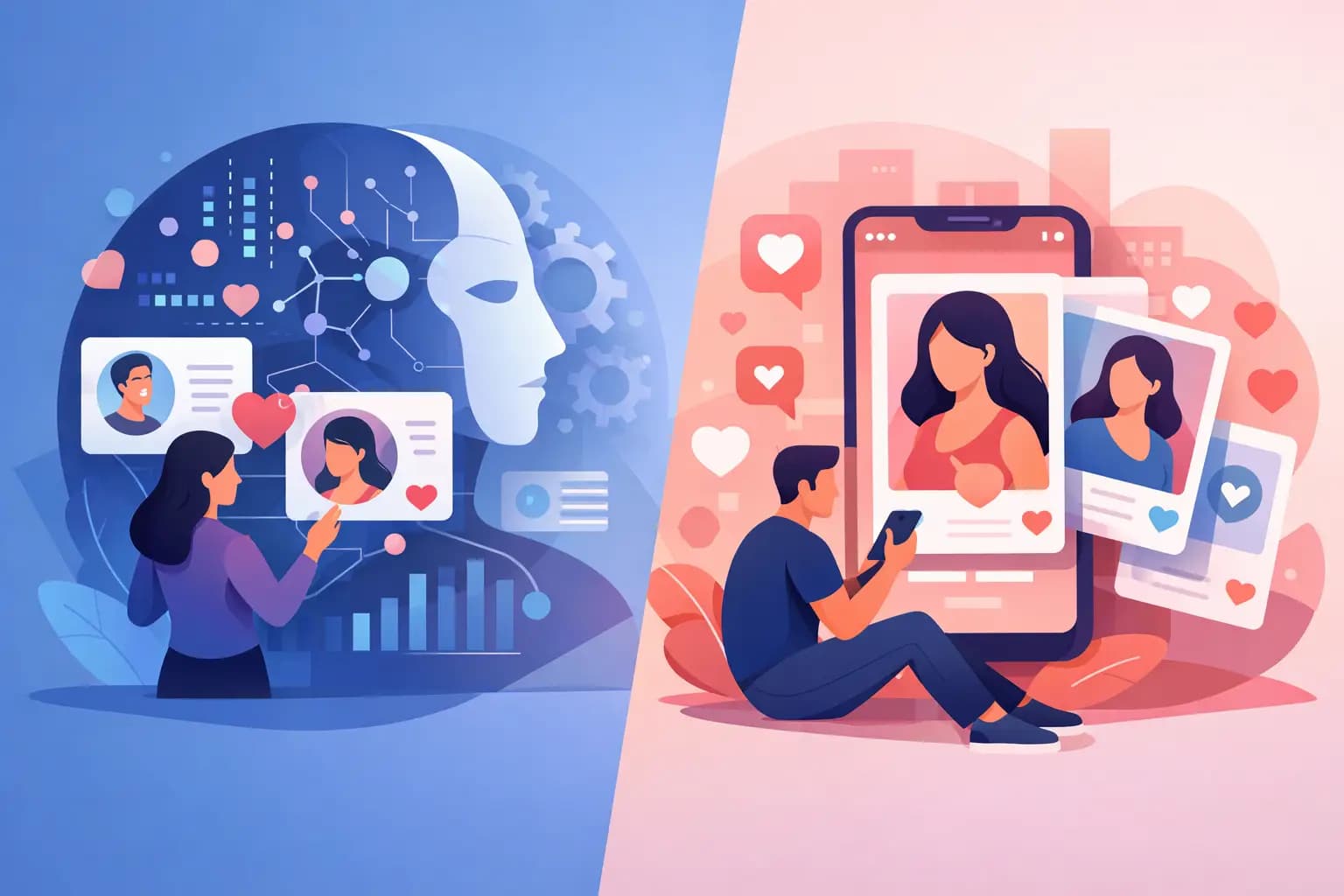
AI Matchmaking vs Swiping Is a Different Operating Model
AI matchmaking should not mean an algorithm quietly picks a stranger and asks you to trust the machine. That is not intelligence. That is a black box with better branding.
A credible matchmaking system uses AI to make the reasoning behind compatibility clearer. It looks beyond stated preferences and considers the patterns that influence whether a relationship can actually work: personality dynamics, communication tendencies, relationship goals, lifestyle constraints, life-stage timing, and behavioral signals that reveal what a person consistently values.
The objective changes completely. Rather than asking, “How do we keep someone browsing?” the system asks, “Who is most likely to create a healthy, mutual, sustainable connection with this person right now?”
That last phrase matters. Right now is part of compatibility. Two people may share values and still be a poor match if one is ready to build a committed partnership while the other is newly out of a relationship, overwhelmed by work, or uncertain about what they want. Timing is not a minor detail. It is often the difference between potential and an actual relationship.
A well-designed AI matchmaking model also gives users context. Instead of receiving an unexplained recommendation, they should understand why the match is being surfaced. Maybe both people value direct communication but differ in ways that create healthy balance. Maybe their relationship intentions and daily rhythms line up unusually well. Maybe their conflict styles require attention before a first date.
Explainability turns matching from a mystery into a more informed decision. It does not remove chemistry or free will. It helps people bring better questions to both.
Better Inputs Create Better Dating Decisions
Swipe apps tend to rely heavily on what users can state quickly: age range, location, photos, a few prompts, and broad preferences. Those inputs are easy to collect, but they are often poor predictors of relationship success.
People also do not always know how to describe what works for them. Someone may say they want spontaneity because it sounds exciting, while their happiest relationships have depended on reliability and calm. Someone may repeatedly select charismatic but unavailable partners without recognizing the pattern. A static profile is not designed to catch those contradictions.
AI can help identify the difference between a person’s stated preference and their deeper compatibility needs, provided the system has meaningful information and handles it responsibly. That requires more than analyzing photos or generating clever icebreakers. It requires a multi-layer model that treats dating as a relationship decision, not a content feed.
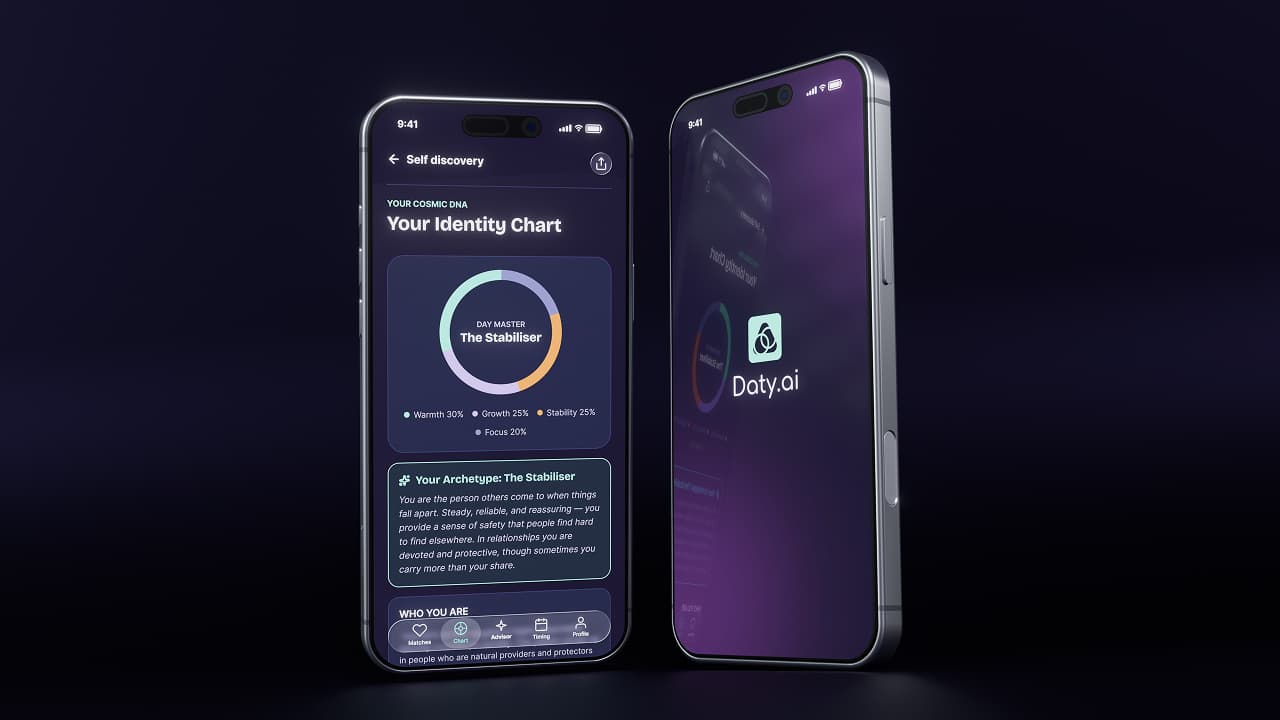
Daty.ai is built around this premise: compatibility is not a single score or a personality label. It is a structured picture of fit across who you are, how you relate, what your life can support, and why the connection makes sense.
The practical benefit is not an endless list of supposedly perfect people. It is fewer introductions with stronger reasons behind them. For intentional daters, fewer can be better. A smaller set of well-considered matches creates room for attention, curiosity, and real follow-through.
AI Cannot Promise Love, and It Should Not Pretend To
There is a limit to what any matchmaking system can know. No algorithm can guarantee attraction, predict every life change, or decide who you should love. Human relationships remain dynamic, surprising, and deeply personal.
That is why the strongest AI matchmaking systems should support judgment rather than replace it. They can identify likely alignment, flag areas worth discussing, and reduce obvious mismatch. They cannot manufacture shared desire, emotional maturity, or effort after the first date.
Privacy matters, too. Compatibility intelligence depends on personal information, which makes transparency nonnegotiable. Users should know what data informs recommendations, how it is used, and where they retain control. More personal insight is only valuable when it comes with clear consent and responsible boundaries.
There is also a risk in overcorrecting away from discovery. Sometimes a connection that looks unconventional on paper becomes meaningful in real life. Good systems should not eliminate surprise. They should eliminate the random, repetitive friction that keeps people from having better conversations in the first place.
Which Model Fits Your Dating Goal?
If dating is entertainment, exploration, or a low-pressure way to meet many different people, swiping may fit the moment. Its strength is access and speed. You can make a decision quickly and keep moving.
If your goal is a serious partnership, the trade-off looks different. More options do not automatically create better options. In fact, excessive choice can make people less decisive, more comparison-driven, and less willing to invest in a promising connection that is not instantly perfect.
AI matchmaking is better suited to people who would rather understand the signal than sift through the noise. They want to know not only who is attractive or nearby, but who is likely to fit their values, communication style, relationship pace, and real life.
That does not mean every match needs to be engineered into a checklist. It means the starting point should be more intelligent than a thumb moving left or right in less than a second.
Stop Asking for More Matches
The dating industry trained people to measure progress by match count. But matches are not momentum. Conversations are not compatibility. Dates are not relationships.
A better measure is whether the process helps you make clearer choices, learn something real about yourself, and meet people with whom a healthy relationship is genuinely plausible. That is the shift from dating as a discovery game to dating as decision intelligence.
The next time an app offers another stack of profiles, ask a more useful question: do I need more people to evaluate, or better reasons to invest in the right one?